

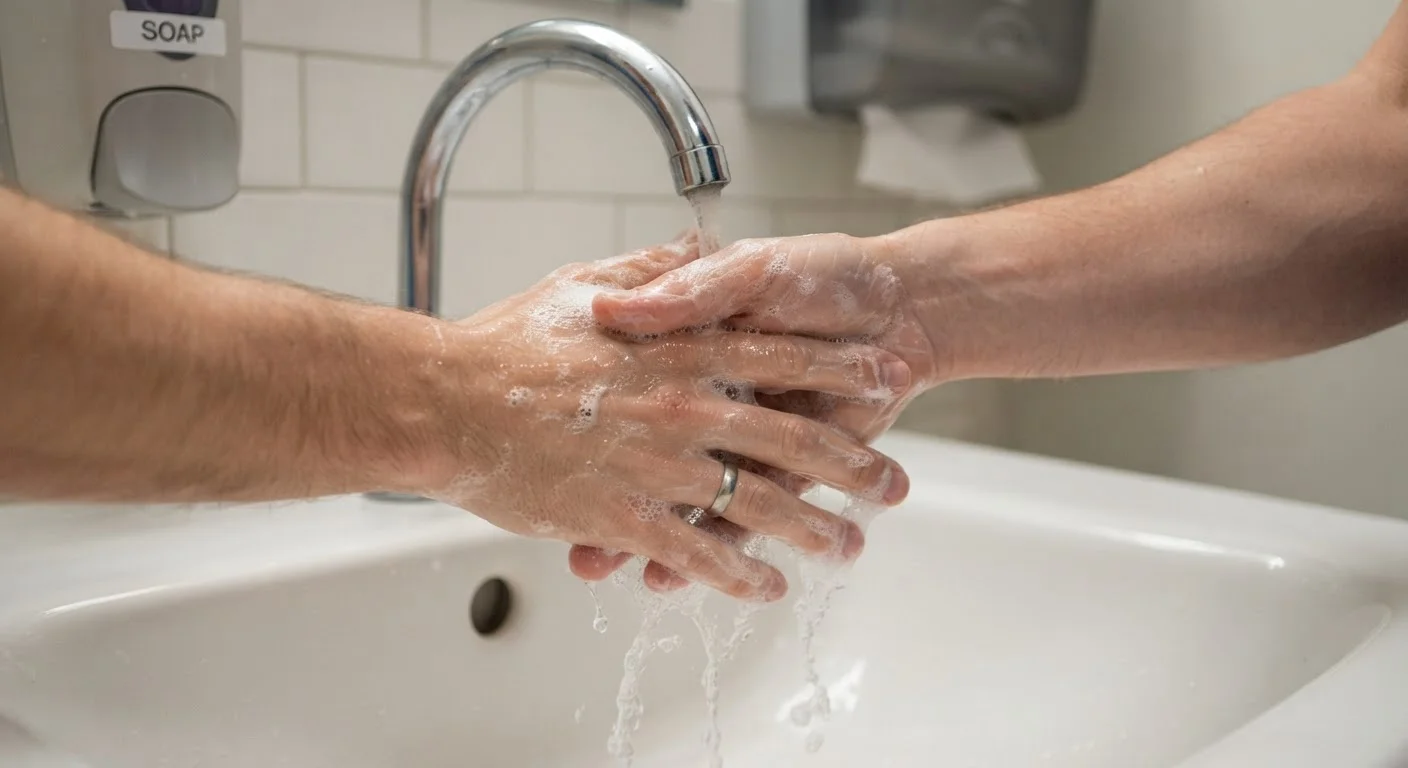
Key Takeaways
- Most people wash their hands for far less than the recommended 20 seconds, reducing effectiveness significantly.
- Skipping key zones — thumbs, fingertips, and wrists — leaves high-contact areas contaminated after washing.
- Hand sanitizer is not a universal substitute for soap and water, especially against certain pathogens.
- Rinsing without soap fails to disrupt the lipid membranes of many common viruses and bacteria.
- Drying hands completely after washing is a critical step most people rush or skip entirely.
Why Technique Matters More Than Frequency
Hand hygiene is widely recognized as one of the most effective, low-cost tools for reducing the transmission of infectious disease. The U.S. Centers for Disease Control and Prevention (CDC) identifies handwashing as a leading defense against illnesses ranging from the common cold to gastrointestinal infections. Yet despite widespread awareness, most people practice a version of handwashing that falls short of what the evidence supports.
The problem is rarely a lack of willingness — it's a gap between casual habit and informed technique. Understanding where technique breaks down, and why, gives people a practical foundation for genuine protection rather than a false sense of security.
20 sec
Minimum recommended handwashing duration
The CDC recommends scrubbing hands with soap for at least 20 seconds to effectively reduce pathogen load.
~6 sec
Average observed handwashing time
Studies published in peer-reviewed public health journals have found that the average person washes hands for only 6 to 8 seconds.
60%+
Minimum alcohol concentration in effective sanitizers
The CDC specifies that hand sanitizers must contain at least 60% alcohol to meaningfully reduce common germs.
The Most Common Handwashing Mistakes
The errors below are among the most frequently observed in both clinical research and public health studies. Each one reduces the mechanical and chemical action needed to dislodge and neutralize pathogens effectively.
Washing for fewer than 20 seconds.
Why it happens: Most people underestimate how long 20 seconds actually feels in practice, typically stopping after 6–8 seconds when hands feel subjectively clean.
Skipping the thumbs, fingertips, and wrists.
Why it happens: Most people focus on the palms, which are the most intuitive surface to lather. The thumbs, fingernail beds, and lower wrists receive far less contact during casual washing.
Rinsing without using soap at all.
Why it happens: A quick rinse can feel sufficient, especially when hands appear clean or when time is short. Many people associate "wet hands" with clean hands.
Not drying hands thoroughly after washing.
Why it happens: Drying is treated as a courtesy step rather than a hygiene step, and many people air-dry or dab briefly before moving on.
Touching the faucet or door handle with clean hands immediately after washing.
Why it happens: Recontamination is rarely thought about consciously. After washing, people instinctively grab the same faucet handle that was touched with dirty hands moments before.
Consistent, complete technique matters far more than washing hands more often with poor form. Even a single properly executed wash provides substantially better pathogen removal than several careless ones.
When Soap and Water vs. Hand Sanitizer Applies
Alcohol-based hand sanitizers — those containing at least 60% ethanol or isopropanol — are effective against many common respiratory and gastrointestinal viruses when hands are not visibly soiled. However, they are not effective against all pathogens. Notably, Clostridioides difficile (C. diff) spores and norovirus require soap and water for adequate removal.
Hand Sanitizer Has Real Limitations
Alcohol-based sanitizers do not effectively eliminate all infectious agents. They are notably ineffective against norovirus, C. diff spores, and when hands are visibly dirty or greasy. During gastrointestinal illness outbreaks or after using the restroom, soap and water is the only appropriate choice. Do not rely solely on sanitizer in these situations.
Sanitizer is best understood as a practical bridge when a sink is unavailable — not as a long-term replacement. In healthcare settings, hand hygiene guidelines specify exactly when each approach is appropriate. For everyday use, soap and water should remain the default whenever accessible.
Taking a broader view of preventive health habits — including routine screenings and early detection — is another key pillar of staying well. See our guide to annual health screenings men often skip for related preventive strategies. And if you ever use online tools to check your symptoms, our article on making the most of a symptom checker outlines how to interpret results responsibly.
This article is for informational purposes only and is not a substitute for professional medical advice. Consult a qualified healthcare provider with questions about infection prevention or personal health concerns.