

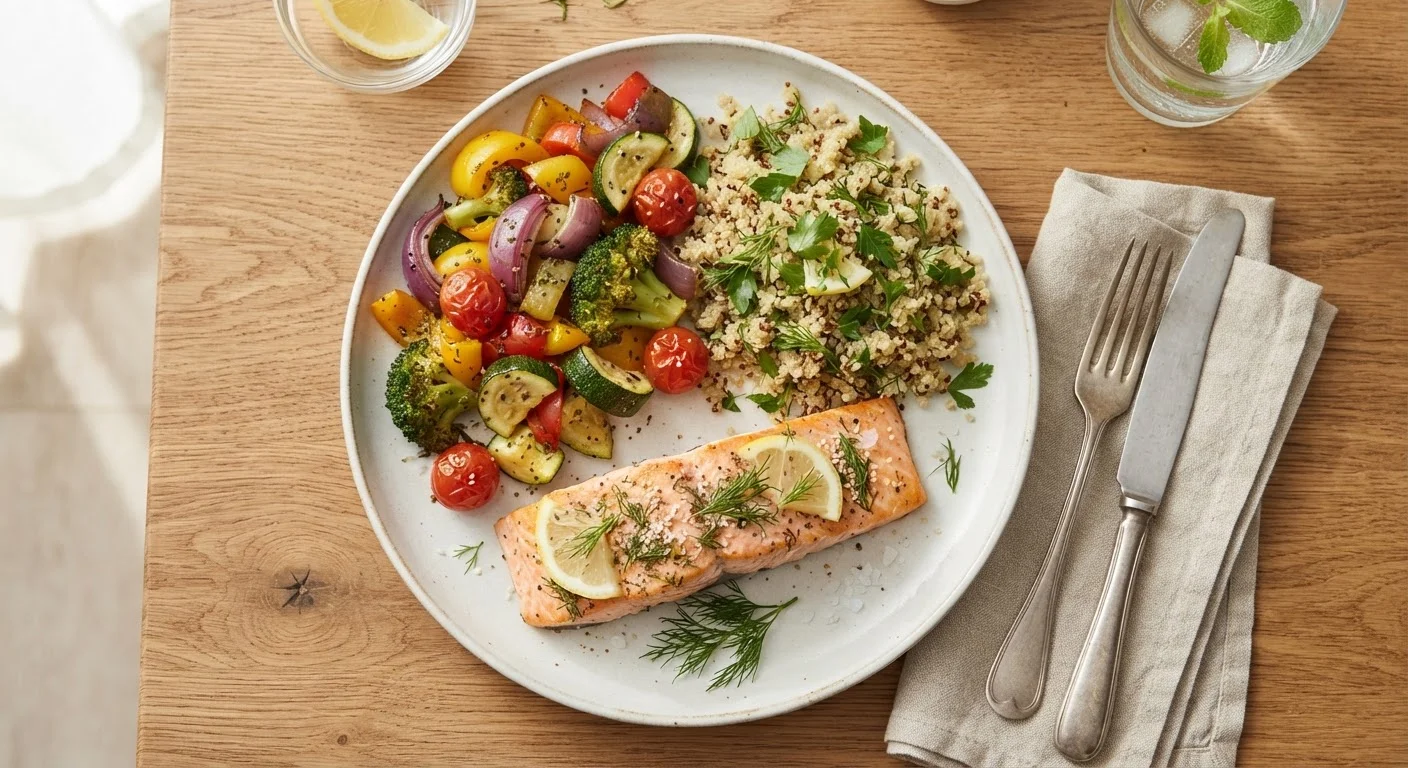
Key Takeaways
- The plate method uses visual cues to balance macronutrients without tracking a single calorie.
- Half your plate should be non-starchy vegetables; one quarter protein, one quarter whole grains.
- Hand-based portion guides provide a portable, personalized reference scaled to individual body size.
- Consistent meal structure over time matters more than perfection at any single meal.
- Calorie counting is one option — but not a requirement — for building a nutritionally sound diet.
What you will need
Why Visual Portioning Works
Calorie counting can be a useful tool for some people, but research consistently shows it is difficult to sustain, prone to significant measurement error, and for certain individuals may reinforce an unhealthy preoccupation with numbers. For most adults, a structured visual approach to portioning achieves comparable nutritional outcomes with far less cognitive burden. The calorie counting vs. intuitive eating debate highlights that neither extreme suits everyone — a middle path using practical plate structure often works best.
Visual methods work because they encode the key nutritional principle behind balanced eating: variety across food groups in proportions that reflect the body's macronutrient needs. When you train yourself to look at a plate and recognize imbalance — say, too much starch, too little produce — you develop a reliable, real-world skill that travels with you to restaurants, social meals, and unfamiliar kitchens.
Hand Portions Scale With Your Body
One underappreciated advantage of hand-based portion guides is that they are naturally self-calibrating: larger individuals tend to have larger hands, which proportionally reflects their somewhat higher caloric needs. This makes the palm-for-protein, cupped-hand-for-grains, and fist-for-vegetables system more personally relevant than a single universal gram weight. Use your own hand, not a guide photo of someone else's.
The Plate Method Explained
The plate method, endorsed by nutrition authorities including the USDA (represented through MyPlate guidance) and the American Diabetes Association, divides a standard 9-inch dinner plate into three sections:
- Half the plate: non-starchy vegetables. Think leafy greens, broccoli, peppers, tomatoes, cucumbers, and zucchini. These foods contribute fiber, micronutrients, and volume with minimal caloric density, which supports satiety.
- One quarter: lean or plant-based protein. This includes poultry, fish, eggs, legumes, tofu, or low-fat dairy. Adequate protein supports muscle maintenance, immune function, and prolonged fullness between meals.
- One quarter: whole-grain or starchy carbohydrates. Brown rice, quinoa, whole-wheat bread, sweet potato, or corn supply sustained energy via complex carbohydrates and contribute additional fiber.
A small serving of healthy fat — olive oil used in cooking, a slice of avocado, or a handful of unsalted nuts — completes the meal without requiring its own plate section. For a beverage, water or unsweetened drinks remain the most nutritionally neutral choice.
If you are exploring how to read labels to understand what counts as a portion in packaged foods, our guide to reading a nutrition label clarifies serving size conventions that can complement visual methods.
Tools and What You Need Before You Start
No special equipment is required, but the following items make the method easier to apply consistently.
What you will need
9-inch dinner plate
Provides the correctly sized canvas for accurate visual proportioning using the plate method.
Your own hand
Used as a portable, body-scaled portion reference — palm for protein, cupped hand for grains, fist for vegetables.
Kitchen food scale
Useful for calibrating hand-based estimates during the learning phase — not required for ongoing use.
Meal prep containers
Supports batch cooking and pre-portioning ingredients to make building balanced plates faster on busy days.
Step-by-Step: Building Your Balanced Plate
Follow these steps each time you prepare or serve a meal. With repetition — most people report the habit feeling automatic within two to three weeks — you will no longer need to think through the process consciously.
Choose an appropriately sized plate
Select a plate approximately 9 inches in diameter — the standard size used in the plate method. Oversized dinner plates (11–12 inches) visually encourage larger portions and make it harder to judge proportions accurately. If most of your plates are large, consider using a salad plate for everyday meals until the method feels intuitive.
Fill half with non-starchy vegetables first
Before adding anything else, fill the larger half of the plate with vegetables. Starting with vegetables anchors the meal nutritionally and prevents protein or starch from crowding the plate. Aim for variety in color when possible — different pigments reflect different phytonutrient profiles. Cooking methods such as roasting, steaming, or sautéing in a small amount of oil are all appropriate.
Add a protein source to one quarter
Place your chosen protein in one quarter of the remaining space. For reference, a palm-sized portion (roughly 3–4 oz for most adults) is a practical hand-based guide. Prioritize preparations that do not add substantial saturated fat — grilling, baking, poaching, or dry sautéing are preferable to deep frying.
Fill the remaining quarter with a whole-grain or starchy carbohydrate
Use the final section for a complex carbohydrate. When choosing grain products, look for 'whole grain' as the first ingredient. A cupped handful is a useful hand-based approximation for most cooked grains or starchy vegetables. Aim to limit refined grains — white bread, white rice, refined pasta — as your primary carbohydrate source, as they lack the fiber that slows glucose absorption and promotes satiety.
Add a small serving of healthy fat
Dietary fat supports fat-soluble vitamin absorption (vitamins A, D, E, and K) and contributes to satiety. A thumb-sized portion of olive oil used in cooking, a quarter of an avocado, or a small handful of unsalted nuts rounds out the meal. This is not a dedicated plate section — healthy fat is typically incorporated into cooking or added as a small accompaniment.
Pause and assess before eating
Take five seconds to visually scan the plate before starting. Does it roughly match the target proportions? If vegetables are underrepresented, add a side salad or steamed greens. This brief check reinforces the habit and builds your ability to recognize balance intuitively over time. It is not about perfection — it is about pattern recognition.
Once you are comfortable with individual meals, the natural next step is applying this structure across an entire week. Our weekly meal planning framework and meal planning fundamentals guide both build directly on the plate method principles covered here.
Adapting the Method to Real Life
No single meal needs to be perfect. Nutritional balance is a pattern established over days, not a pass-or-fail score at each sitting. On days when vegetables are limited — traveling, dining out, or managing a busy schedule — consciously compensate at the next meal rather than abandoning structure altogether.
For mixed dishes like soups, stews, stir-fries, or grain bowls, mentally map the same proportions: the bulk of volume should come from vegetables and legumes, protein should be present but not dominant, and starchy components should constitute roughly a quarter of total volume.
Avoid Applying This to Restrictive Eating
The plate method is a framework for nutritional balance, not a tool for restriction. Using it to minimize food intake, skip food groups, or justify eating less than your body requires defeats its purpose and may be harmful. If you notice the method triggering anxiety around food, consult a registered dietitian or mental health professional with experience in eating behaviors.
Individuals managing specific health conditions — including diabetes, kidney disease, cardiovascular disease, or eating disorder recovery — should work with a registered dietitian to adapt these general principles to their clinical context. The Diets & Meal Plans hub contains additional evidence-based frameworks for specialized dietary patterns. If you prefer data-driven tools alongside visual methods, health calculators can provide complementary numeric benchmarks.
This article is for general informational and educational purposes only and does not constitute medical or dietary advice. Consult a qualified healthcare professional or registered dietitian for guidance tailored to your individual health needs.