

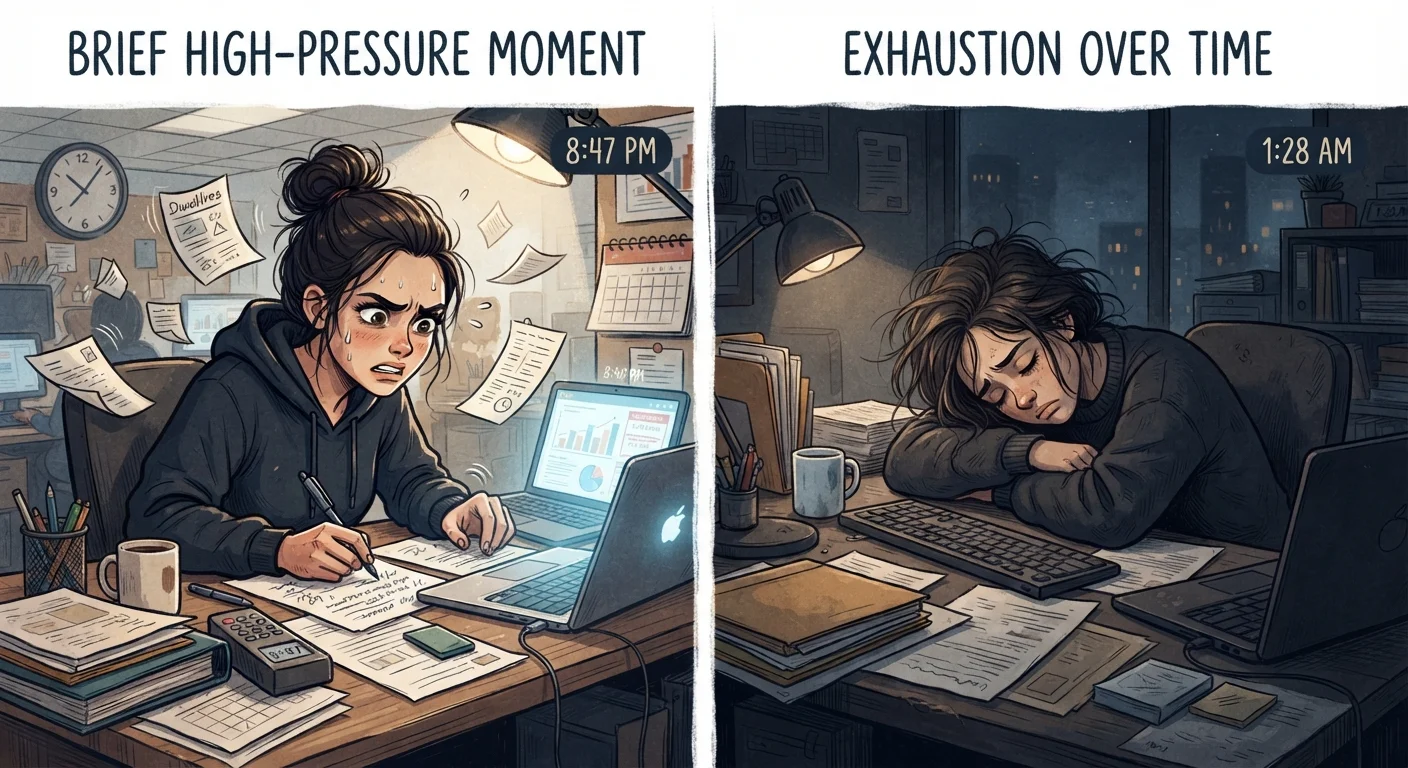
Key Takeaways
- Acute stress is short-term and often adaptive; chronic stress persists and can harm physical health.
- Both forms activate the same stress hormones, but duration and frequency determine the damage.
- Chronic stress is linked to cardiovascular disease, immune suppression, and mental health disorders.
- Recognizing which type of stress you're experiencing shapes how you respond and when to seek help.
- Lifestyle strategies can ease both types, but chronic stress often benefits from professional support.
Option A
Acute Stress
The body's short-lived, protective alarm system.
Best for: Understanding brief, situational pressure that resolves once the trigger passes.
Option B
Chronic Stress
The slow-burn strain that accumulates over weeks, months, or years.
Best for: Recognizing persistent, ongoing pressure that requires active management and professional support.
If your stress is tied to a specific, passing event
Acute Stress
Short-term stress responses are normal and often resolve on their own once the trigger is gone. Grounding techniques and brief relaxation strategies are typically sufficient.
If stress has been present for weeks or months without relief
Chronic Stress
Persistent stress warrants a different approach — including professional evaluation, since it carries meaningful risks to cardiovascular, immune, and mental health.
If you're unsure whether your stress is situational or systemic
Chronic Stress
When in doubt, err on the side of caution. Speaking with a healthcare provider or mental health professional can help clarify what you're experiencing and guide next steps.
The Biology Behind Both: Same System, Different Story
When you encounter something threatening — a near-miss on the highway, a high-stakes presentation — your brain triggers the hypothalamic-pituitary-adrenal (HPA) axis and releases hormones like adrenaline and cortisol. This is the stress response, and it's remarkably helpful in short bursts. Heart rate rises, alertness sharpens, and energy is redirected to muscles. That's acute stress doing its job.
The problem arises when the alarm never turns off. Chronic stress keeps cortisol elevated for extended periods, which begins to erode the very systems it was designed to protect. Prolonged HPA axis activation has been associated with disrupted sleep, impaired immune function, elevated blood pressure, and changes in brain structure — particularly in regions tied to memory and mood regulation, such as the hippocampus.
Understanding what qualifies a condition as chronic versus acute is explored further in our article on what "chronic" actually means in a medical context. The same logic applies to stress: it's not just duration but the body's inability to return to baseline that defines the chronic pattern.
| Criterion | Acute Stress | Chronic Stress |
|---|---|---|
| Duration | Minutes to hours | Weeks, months, or longer |
| Trigger | Specific, identifiable event | Ongoing or unresolved pressure |
| Cortisol pattern | Brief spike, then returns to baseline | Sustained elevation, impaired recovery |
| Health impact | Generally adaptive; low risk if infrequent | Linked to heart disease, immune suppression, mood disorders |
| Typical resolution | Resolves when trigger passes | Requires active intervention |
| Primary management | Breathing, grounding, rest | Therapy, lifestyle change, medical support |
How Each Type Affects Your Health Over Time
Acute stress, in manageable doses, can actually enhance performance and resilience — a phenomenon researchers sometimes call eustress, or positive stress. A deadline that sharpens focus, or a challenging conversation that pushes you to grow, are examples where a brief stress response serves you well.
Chronic stress is a different matter. Research published in peer-reviewed journals consistently links long-term psychological stress to increased risk of coronary heart disease, type 2 diabetes, anxiety disorders, and depression. The immune system is particularly sensitive: sustained cortisol suppresses immune cell activity, which can both increase vulnerability to infection and paradoxically promote systemic inflammation.
77%
Adults reporting physical symptoms of stress
According to American Psychological Association survey data, a large majority of adults report experiencing physical symptoms they attribute to stress.
2–3×
Increased cardiovascular risk with chronic stress
Studies reviewed in journals such as the European Heart Journal have found that chronic psychological stress is associated with a two- to threefold increased risk of cardiovascular events.
~50%
Reduction in immune response linked to chronic stress
Meta-analyses in Psychological Bulletin show that chronic stress is associated with meaningful suppression of multiple immune markers.
For men, the hormonal consequences of chronic stress extend further. Chronically elevated cortisol can interfere with testosterone production — a connection covered in depth in our piece on stress, testosterone, and the body. And because stress and anxiety share overlapping symptoms, it's worth distinguishing between them: our guide on stress vs. anxiety explains the key differences that shape how you respond.
Chronic stress also frequently manifests as persistent exhaustion. If fatigue feels like more than ordinary tiredness, it may be worth reading about fatigue vs. tiredness and what chronic exhaustion can indicate.
Recognizing the Signs — and Knowing When to Act
Acute stress tends to be identifiable: you feel it spike, and you feel it ease. Common signs include a racing heart, dry mouth, heightened focus, or muscle tension — all of which typically resolve once the stressor passes.
Chronic stress is subtler and more insidious. Warning signs include persistent low energy, frequent illness, difficulty concentrating, irritability without an obvious trigger, disrupted sleep, and a sense of being perpetually overwhelmed. Physical symptoms such as headaches, digestive complaints, or unexplained muscle aches are also common presentations.
If stress has been present for more than a few weeks and is affecting your daily functioning, that's a meaningful signal. Speaking with a primary care physician or a licensed mental health professional is an important step — they can help distinguish chronic stress from other conditions like depression or anxiety disorders, and recommend appropriate support.
This article is for general informational purposes only and is not a substitute for professional medical or mental health advice. If you are experiencing significant or persistent stress, please consult a qualified healthcare provider.