

Key Takeaways
- Early infection signs are often non-specific and easy to dismiss — pattern recognition matters.
- Fever, localized warmth, unusual fatigue, and swollen lymph nodes are classic early immune responses.
- Some symptom combinations warrant same-day or emergency medical attention.
- No checklist replaces a qualified clinician's assessment of your individual situation.
- Tracking the timing, progression, and location of symptoms helps your doctor form an accurate picture.
Summary
18 items · 10–20 minutes
Why Early Recognition Matters
Infections rarely announce themselves dramatically at the outset. More often, the body's earliest defensive signals — a low-grade fever, unusual tiredness, a vague sense that something is off — are subtle enough to be attributed to stress, poor sleep, or a busy week. Understanding what those signals actually mean can be the difference between a condition that resolves with straightforward care and one that escalates because it was addressed too late.
The immune system mounts a coordinated response the moment it detects a pathogen. That response produces recognisable physical signs: inflammation, heat, and systemic symptoms that, taken together, form a pattern worth knowing. This checklist is designed to help you identify those patterns early — not to diagnose, but to inform. Always consult a qualified healthcare professional if you have concerns about your health.
Use the checklist below as a reference tool. Work through each group, note which items apply, and pay attention to how symptoms change over 24–48 hours. Worsening or spreading symptoms are always a reason to seek assessment sooner rather than later. For a broader look at the full spectrum of physical warning signs, the Symptoms & Signs hub provides additional context.
This Checklist Is Not a Diagnostic Tool
The signs listed here reflect common patterns associated with early infection, but many can also occur with non-infectious conditions. Checking off items on this list does not confirm an infection, nor does the absence of items rule one out. If you are uncertain about your symptoms — or if they are distressing, worsening, or affecting your ability to function — consult a qualified healthcare professional promptly.
What to Watch For: The Full Checklist
The checklist is organized into four groups covering the most clinically recognized early infection signals. Each item reflects established medical understanding of how the immune system and affected tissues respond during the early stages of bacterial, viral, or fungal infection.
Systemic Signs
Localised Physical Signs
Respiratory and Throat Signs
Gastrointestinal and Urinary Signs
Keep a simple written or phone-based log of any items you check off, including when they appeared and whether they are getting better or worse. This information is directly useful to a clinician and helps avoid the common problem of symptoms being difficult to recall accurately during an appointment. If you plan to use a digital tool to assess your symptoms first, see guidance on what to prepare before using a symptom checker.
Symptoms Can Change Quickly
Infections can progress from mild to severe within hours, particularly in older adults, young children, pregnant individuals, or those with chronic conditions or a compromised immune system. If you fall into any of these groups, set a lower threshold for seeking professional evaluation. Do not rely solely on self-monitoring when symptoms are worsening.
Tools and Resources for Tracking Symptoms
Having the right resources to hand makes it easier to monitor symptoms systematically and communicate clearly with a healthcare provider.
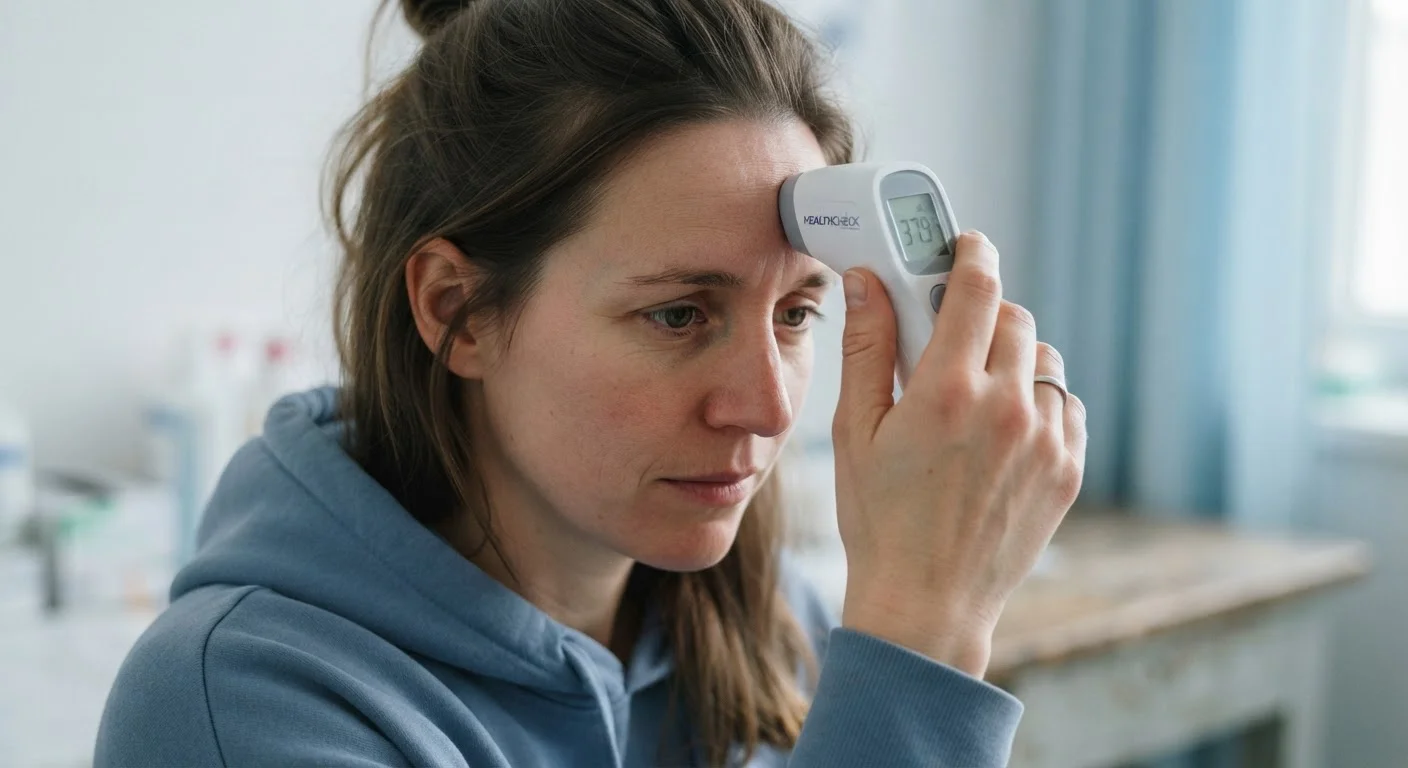
Thermometer
Accurately measuring body temperature to identify and track fever over time.
Symptom diary (notebook or notes app)
Recording when symptoms started, how they have changed, and any relevant context to share with a clinician.
Digital symptom checker
Providing an initial structured assessment of symptoms to help determine whether further care may be needed.
Blood pressure monitor (home device)
Tracking cardiovascular status if systemic infection is suspected and a clinician has advised monitoring at home.
When to Stop Monitoring and Seek Care
Self-monitoring has limits. Certain symptom combinations should prompt you to seek professional assessment rather than continuing to observe at home. If you notice rapidly spreading redness or skin changes, a fever above 103°F (39.4°C) that does not respond to standard measures, confusion or altered mental status, difficulty breathing, or signs of severe localized infection such as red streaking away from a wound site, do not delay care.
Some situations go beyond what any checklist or digital tool can safely address. Our guide on when symptoms need a real appointment outlines the clearest indicators that professional evaluation is necessary. Similarly, if multiple symptoms appear together and escalate over hours rather than days, review the same-day medical attention checklist for specific red-flag patterns.
Skin changes in particular — redness, warmth, swelling, or unusual rashes — can be early markers of infection that are sometimes underestimated. Skin changes worth paying attention to covers which presentations deserve closer evaluation. Shortness of breath accompanying other infection signs is also a significant warning and is addressed in detail at Shortness of breath: when is it a warning sign?.
This article is for general informational purposes only and does not constitute medical advice. Always seek the guidance of a qualified healthcare professional with any questions you may have regarding a medical condition or symptoms.