

Key Takeaways
- Swollen lymph nodes are most commonly caused by common infections such as colds, flu, or strep throat.
- The location of swollen nodes often points toward the region of the body where an infection or problem is occurring.
- Nodes that are hard, fixed, painless, or persist longer than a few weeks warrant prompt medical evaluation.
- Generalized swelling affecting multiple node regions may suggest a systemic condition requiring further testing.
- Most swollen lymph nodes resolve on their own once the underlying cause clears.
- This content is general health information — always consult a healthcare professional for personal medical concerns.
Swollen Lymph Nodes
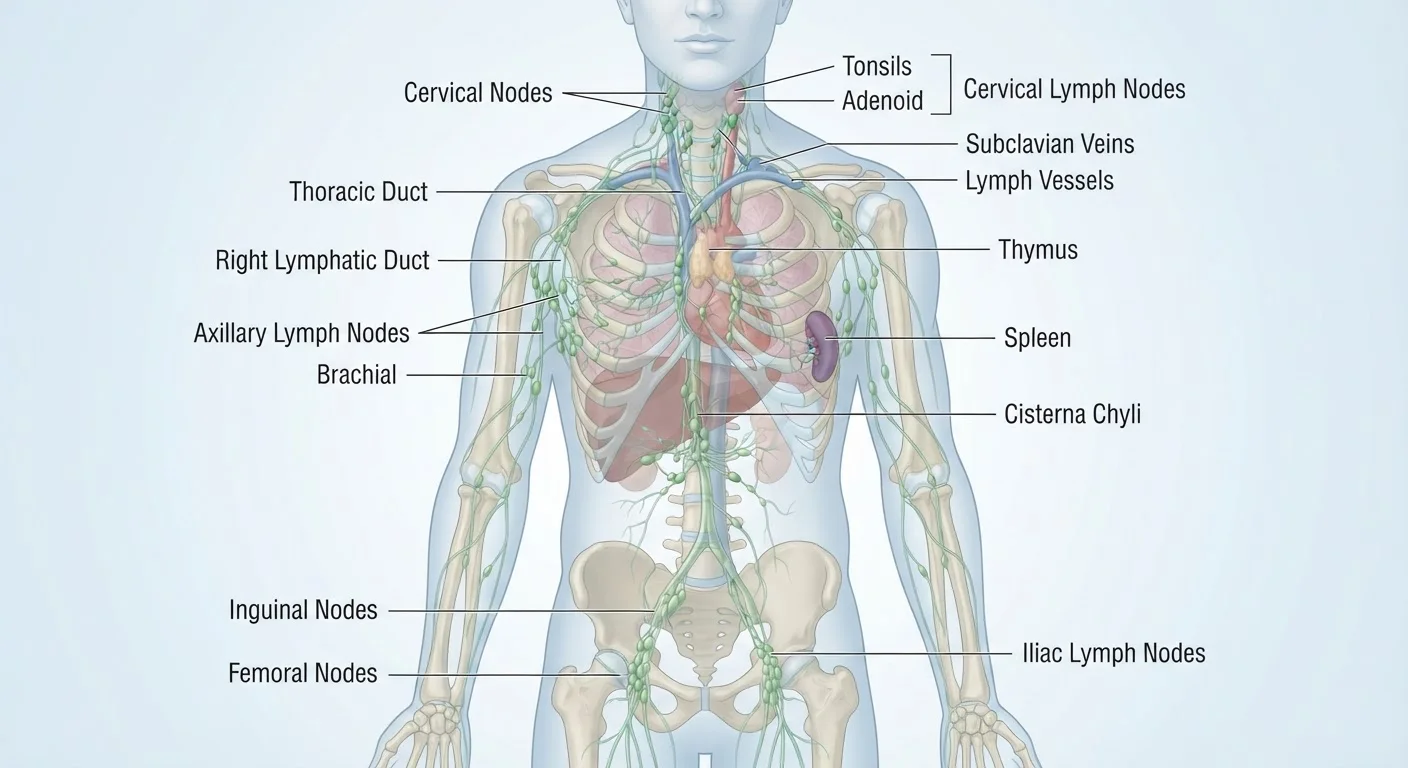
Swollen lymph nodes — medically called lymphadenopathy — occur when the small, bean-shaped glands of the immune system enlarge in response to infection, inflammation, or other triggers. They are part of the lymphatic system, a network that helps filter harmful substances and produce immune cells. Most people notice them as tender lumps under the jaw, in the neck, armpits, or groin.
Lymphadenopathy is classified as localized (limited to one region) or generalized (affecting multiple regions), a distinction that guides clinical evaluation and differential diagnosis.
What Are Lymph Nodes and Why Do They Swell?
Lymph nodes are small clusters of immune tissue distributed throughout the body, connected by a network of vessels that carry lymph fluid. Their job is to filter this fluid and mount an immune response when pathogens — bacteria, viruses, or other threats — are detected. When the immune system is actively fighting something, the lymph nodes in the affected region fill with immune cells and can become noticeably enlarged, tender, or firm to the touch.
This swelling is not a malfunction; it is evidence that the immune system is doing its job. In most healthy adults, the most common triggers are everyday infections: a sore throat, an ear infection, a dental abscess, or even a minor skin wound. The nodes closest to the site of infection typically respond most visibly.
Children and Lymph Node Swelling
Swollen lymph nodes are particularly common in children, whose immune systems frequently respond to minor infections with noticeable node enlargement. While this is usually benign in children as well, any persistent, hard, or rapidly growing node in a child should be assessed by a pediatrician rather than observed at home.
What the Location of Swelling Can Tell You
Understanding which lymph node region is affected can offer useful clues about what is happening in the body:
- Neck and jaw: Most often linked to upper respiratory infections, strep throat, ear infections, or dental problems.
- Armpits (axillary nodes): May reflect an infection or injury in the arm or hand, or, less commonly, breast-related conditions.
- Groin (inguinal nodes): Typically associated with infections in the leg, foot, or genitourinary tract, including sexually transmitted infections.
- Above the collarbone (supraclavicular nodes): These are clinically significant. Swelling here is less commonly benign and should always be evaluated by a healthcare provider promptly.
Generalized lymphadenopathy — swelling in multiple unconnected regions simultaneously — can suggest systemic illnesses such as mononucleosis, HIV infection, lupus, or certain medications causing a drug reaction.
~200
Lymph nodes in the human body
The human body contains roughly 200 to 700 lymph nodes, according to anatomical estimates — the exact number varies between individuals.
>90%
Cases caused by benign conditions
Studies in primary care settings indicate that the large majority of lymphadenopathy cases presenting to general practitioners have benign, often infectious, causes.
1 cm
Clinical threshold for further evaluation
Clinicians generally use one centimeter as a commonly cited size threshold — nodes consistently above this size without an obvious infectious cause typically prompt further investigation.
Distinguishing Benign Swelling From Warning Signs
Not all swollen lymph nodes are created equal. The characteristics of the swelling itself carry diagnostic weight:
- Tender and soft: Typically associated with acute infection and generally a reassuring sign that the immune system is actively responding.
- Hard, rubbery, or fixed: Nodes that feel firm and cannot be moved easily under the skin are more concerning and may require further investigation.
- Painless and persistent: Lymphoma and some other cancers can cause painless, gradually enlarging nodes — the absence of pain is not a sign of safety.
- Rapidly enlarging: Fast growth over days to weeks warrants prompt clinical attention regardless of other characteristics.
Associated symptoms also shape the clinical picture. Night sweats, unexplained weight loss, and persistent fever alongside swollen nodes — sometimes called "B symptoms" in oncology — are red flags that should prompt medical evaluation without delay.
Common Causes Beyond Infection
While infection accounts for the majority of lymphadenopathy cases, a range of other conditions can be responsible:
- Autoimmune diseases: Lupus, rheumatoid arthritis, and Sjögren's syndrome can all cause node swelling as part of chronic immune activation.
- Medications: Certain drugs — including some anticonvulsants and antibiotics — can trigger a reaction that enlarges lymph nodes.
- Lymphoma: Both Hodgkin's and non-Hodgkin's lymphoma originate in lymphocytes (white blood cells) and commonly present with enlarged nodes, often in the neck, armpit, or groin.
- Metastatic cancer: Cancer originating in other organs can spread to nearby lymph nodes, causing enlargement.
- Sarcoidosis: An inflammatory condition that can cause node swelling, particularly in the chest, without an infectious trigger.
Track Changes Over Time
If you notice a swollen lymph node, note its approximate size, whether it is tender, and any recent illness you may have had. Monitoring whether the node grows, shrinks, or stays the same over two to four weeks gives your doctor valuable information at your appointment. Do not attempt to diagnose the cause yourself based on feel alone.
It is worth emphasizing that most adults who notice swollen nodes are experiencing a normal immune response to a common infection. However, the characteristics described above are the signals that help clinicians decide when further investigation — such as blood tests, imaging, or biopsy — is warranted.
When to Seek Medical Advice
Most lymph node swelling tied to infection will resolve without treatment once the underlying illness clears. The following are recognized indicators that professional evaluation is needed:
- Nodes larger than approximately one centimeter that are not clearly explained by a recent illness
- Swelling that persists for more than four weeks
- Nodes that are hard, painless, or appear fixed in place
- Swelling above the collarbone
- Accompanying symptoms including fever, significant unintentional weight loss, or night sweats
- Signs of skin infection overlying a node, such as redness, warmth, or pus — which may indicate a condition needing treatment
A clinician will typically begin with a thorough history and physical examination, followed by targeted tests — blood work, ultrasound, or occasionally a biopsy — based on the clinical findings. Self-diagnosing based on node characteristics alone is not reliable; professional assessment provides the context needed for accurate interpretation.
This article is for general informational purposes only and does not constitute medical advice. If you have concerns about swollen lymph nodes or any other symptoms, please consult a qualified healthcare professional.