

Key Takeaways
- The same condition — such as a heart attack or depression — can produce markedly different symptoms in women versus men.
- Hormonal, immune, and genetic differences are primary biological drivers of sex-based symptom variation.
- Many diagnostic criteria were historically developed from studies conducted predominantly on male subjects.
- Awareness of these differences helps patients recognize symptoms that might otherwise be dismissed or misattributed.
- Always consult a qualified healthcare provider for personal symptom evaluation and diagnosis.
Sex-Based Symptom Variation
Sex-based symptom variation refers to the phenomenon where the same medical condition produces noticeably different signs and experiences depending on a person's biological sex. These differences arise from variations in hormones, immune function, genetics, and body composition. Recognizing these differences helps clinicians diagnose conditions more accurately and helps patients advocate for their own care.
Researchers distinguish between 'sex' (biological characteristics including chromosomes and hormones) and 'gender' (a social identity) when studying symptom variation, though both can influence health outcomes.
The Science Behind Different Symptom Patterns
When a condition like a heart attack or depression develops, the underlying biology doesn't operate identically in every body. Biological sex — defined by chromosomal makeup, hormonal environment, and reproductive physiology — shapes how disease processes unfold from the very first cellular level.
Several key mechanisms drive these differences:
- Hormones: Estrogen and testosterone influence cardiovascular function, inflammation, pain sensitivity, and mood regulation. For example, estrogen has a protective effect on blood vessels, which partly explains why women's risk of heart disease rises significantly after menopause.
- Immune system activity: Women generally mount stronger immune responses than men, which reduces infection risk but also elevates the likelihood of autoimmune conditions such as lupus and rheumatoid arthritis.
- Pain processing: Research indicates differences in how pain signals are interpreted in the nervous systems of males and females, affecting the type and intensity of symptoms reported.
- Body composition: Differences in fat distribution, muscle mass, and organ size influence how drugs are metabolized and how diseases progress.
These aren't minor nuances — they can determine whether a person receives a timely and accurate diagnosis.
~80%
Autoimmune disease patients who are women
According to the American Autoimmune Related Diseases Association, approximately 80% of people diagnosed with autoimmune conditions in the US are women.
3–4×
Higher male suicide rate vs. female
The CDC reports that men die by suicide at roughly three to four times the rate of women in the United States, highlighting gaps in recognizing male depression.
~50%
Women who lack classic chest pain in heart attacks
Research published in cardiology literature suggests that nearly half of women experiencing a heart attack may not present with the classic chest-pressure symptom.
Heart Disease: A Well-Documented Example
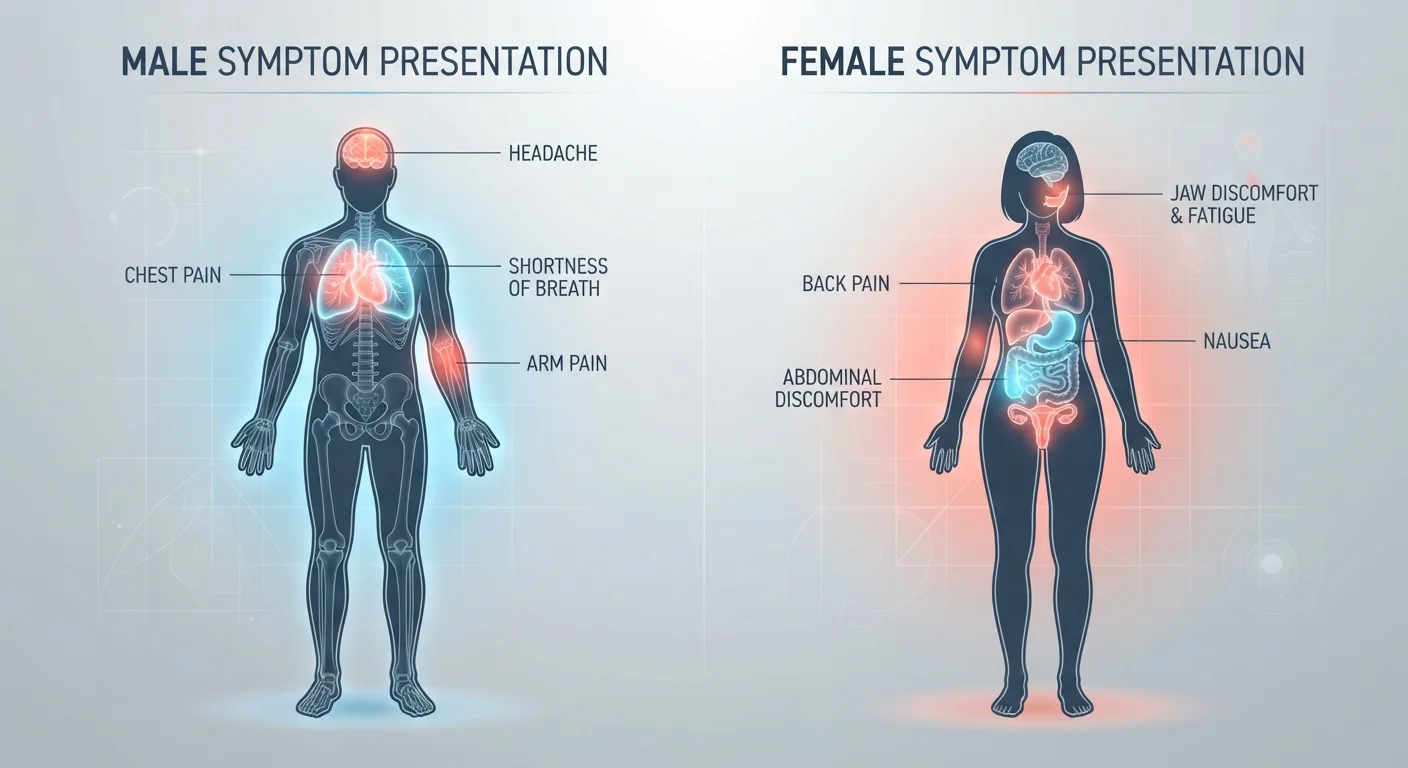
Cardiovascular disease is among the most extensively studied areas of sex-based symptom variation. The classic presentation of a heart attack — crushing chest pressure radiating to the left arm — reflects patterns observed primarily in men. Women experiencing a heart attack are more likely to report symptoms such as:
- Nausea or vomiting
- Jaw, neck, or upper back pain
- Unexplained fatigue lasting days before the event
- Shortness of breath without prominent chest pain
Because these presentations differ from the textbook description, they are sometimes attributed to anxiety, indigestion, or stress — delaying diagnosis and treatment. The American Heart Association has emphasized that these atypical presentations are, in fact, common in women and should be taken seriously by both patients and clinicians.
Mental Health: Internalized Versus Externalized Distress
Depression and anxiety also demonstrate meaningful sex-based variation. Women with depression more commonly present with persistent sadness, tearfulness, sleep disturbance, and feelings of worthlessness — symptoms that align closely with standard diagnostic criteria. Men, however, tend to externalize distress. Irritability, aggression, increased alcohol use, and withdrawal from relationships are common expressions of depression in men that may not be immediately recognized as such.
This divergence has real consequences. Men are significantly less likely to be diagnosed with depression, yet they account for a disproportionate share of suicide deaths in the United States. Understanding how depression can present in men is critical for families, clinicians, and individuals themselves. Our article on how male depression presents differently explores these patterns in more depth.
For women, hormonal fluctuations across the menstrual cycle, pregnancy, postpartum periods, and menopause add additional layers of complexity. Conditions like premenstrual dysphoric disorder — distinct from ordinary PMS — illustrate how hormonal biology can produce clinically significant mood symptoms. You can learn more about how PMDD differs from PMS in our dedicated explainer.
Broader social factors also play a role: women may be more likely to seek help and articulate emotional symptoms, while men may face cultural pressures that discourage doing so. Both biology and environment shape what gets reported, and what gets diagnosed. The gender bias in mental health diagnosis can also affect how symptoms are interpreted once a person does seek care.
“The historical exclusion of women from clinical trials has left significant gaps in our understanding of how diseases present and progress differently across sexes. Closing those gaps is not just a matter of equity — it is fundamental to good medicine.”
— Dr. Janine Austin Clayton, Former Associate Director for Research on Women's Health, National Institutes of Health
What This Means for Your Health
Awareness of sex-based symptom differences is a practical tool, not just academic knowledge. If you know that your risk profile or symptom pattern may not match the most commonly described version of a condition, you are better positioned to describe your experience accurately to a clinician and to ask the right questions.
A few evidence-based principles are worth keeping in mind:
- Don't minimize unusual symptoms. Fatigue, nausea, jaw pain, or persistent anxiety deserve evaluation even when they don't fit a classic pattern.
- Share your full picture. Mention your hormonal health history, menstrual patterns if relevant, and any symptoms that seem unrelated — they may not be.
- Advocate clearly. If your concerns feel dismissed, it is appropriate to ask for further testing or a second clinical opinion.
Research into sex-based medicine is ongoing and expanding. Conditions as varied as stroke, autoimmune disease, chronic pain syndromes, and infectious illness are all being re-examined through the lens of biological sex — and the findings are reshaping clinical guidelines. Why women are diagnosed with anxiety more often than men offers one example of how these patterns play out in mental health specifically.
This article provides general health information and is not a substitute for personalized medical advice. Always consult a qualified healthcare professional regarding any symptoms or health concerns you may have.