

Key Takeaways
- Men are roughly 10 times more likely than women to develop an inguinal hernia due to anatomical differences.
- Hernias can be caused by a combination of muscle weakness and physical strain such as heavy lifting or chronic coughing.
- Not all hernias cause pain, but a painless hernia is not necessarily safe to ignore.
- An untreated hernia can progress to a life-threatening strangulation requiring emergency surgery.
- Surgical repair is the only definitive treatment — watchful waiting may be appropriate in select cases under a doctor's guidance.
- Maintaining a healthy weight and avoiding unnecessary abdominal strain can lower hernia risk.
Hernia
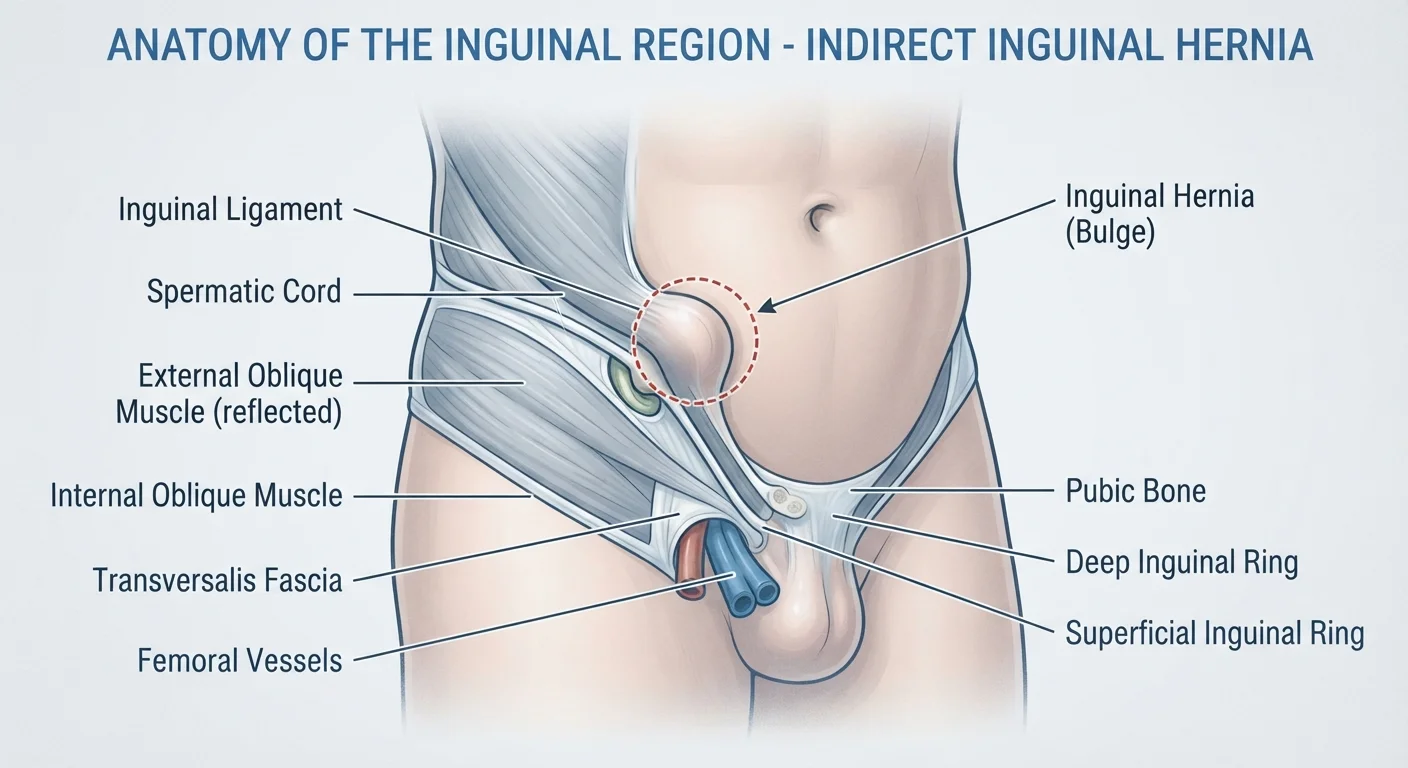
A hernia occurs when an internal organ or tissue pushes through a weak spot in the surrounding muscle or connective tissue wall. In men, this most commonly happens in the groin area, producing a visible or palpable bulge. While hernias are not always immediately dangerous, they rarely resolve on their own and typically require medical attention.
The most prevalent type in men is the inguinal hernia, where part of the intestine or fatty tissue protrudes through the inguinal canal — a passage in the lower abdominal wall that in males houses the spermatic cord.
Why Men Are Disproportionately Affected
Hernias are among the most common surgical conditions in the world, and men bear a strikingly unequal share of the burden. The anatomy of the male inguinal canal — the passage through which the testes descend during fetal development — leaves a structural vulnerability that persists into adulthood. Once the testes descend, the canal closes but never fully seals, creating a natural weak point.
This anatomical reality, combined with lifestyle factors such as physically demanding work and a cultural tendency to delay medical care, makes hernias a men's health issue that deserves straightforward attention. As explored in our article on why men delay seeking medical care, putting off evaluation often allows manageable conditions to become more complex.
~27%
Lifetime risk of inguinal hernia in men
Research published in surgical literature estimates approximately 27% of men will develop an inguinal hernia during their lifetime, compared to about 3% of women.
800,000+
Hernia repairs performed annually in the US
Hernia repair is one of the most frequently performed surgical procedures in the United States, according to data from the American College of Surgeons.
10x
Higher inguinal hernia rate in men vs. women
Men are roughly ten times more likely than women to develop an inguinal hernia, primarily due to differences in abdominal wall anatomy.
The Main Types of Hernia Men Experience
Understanding which type of hernia is involved helps clarify the symptoms and risks involved.
- Inguinal hernia: The most common type by far in men. Tissue — usually part of the intestine or abdominal fat — pushes through the inguinal canal in the groin. It may appear as a bulge on one or both sides of the pubic bone.
- Femoral hernia: Less common in men than women, this occurs just below the groin where the femoral artery passes into the thigh. It carries a higher risk of complications due to the narrow space involved.
- Umbilical hernia: Tissue protrudes near the belly button, often linked to increased abdominal pressure. More common in infants but can develop in adult men, particularly those with obesity or chronic coughing.
- Hiatal hernia: Part of the stomach pushes upward through the diaphragm into the chest cavity. Unlike groin hernias, this type typically produces symptoms such as acid reflux rather than a visible bulge.
- Incisional hernia: Can develop at the site of a previous abdominal surgery where scar tissue has weakened the abdominal wall.
Because groin anatomy relates closely to reproductive structures, men who notice unusual lumps in that region should also be familiar with testicular health basics, as some conditions can mimic hernia symptoms.
What Causes a Hernia to Develop
Hernias arise from a combination of pre-existing structural weakness and a triggering factor that raises pressure within the abdomen. Neither factor alone is typically sufficient.
Contributing structural factors include:
- Congenital weakness in the abdominal wall, present from birth
- Age-related changes in muscle tone and connective tissue integrity
- Previous abdominal surgery or injury creating scar tissue
Common pressure-related triggers include:
- Heavy or repetitive lifting without proper technique
- Chronic constipation and straining during bowel movements
- Persistent cough, including that associated with smoking
- Excess abdominal weight — a factor explored in our overview of abdominal obesity in men
- Pregnancy (not applicable to men, but relevant for femoral hernia context)
Reduce Preventable Hernia Risk
While some hernia risk is structural and unavoidable, modifiable factors matter. Maintaining a healthy body weight reduces chronic abdominal wall pressure. Quitting smoking eliminates a major driver of chronic cough. When lifting heavy objects, engaging the core and avoiding breath-holding can reduce strain. These steps won't guarantee prevention, but they reduce unnecessary stress on vulnerable tissue.
Risks of Leaving a Hernia Untreated
A common misconception is that a hernia is only a problem if it hurts. Pain level is a poor indicator of risk. Hernias that feel harmless can progress to serious complications over time.
Incarceration occurs when protruding tissue becomes trapped in the hernia opening and cannot be pushed back. The affected area may become tender and firm. Without treatment, blood supply to the trapped tissue can be compromised.
Strangulation is the most dangerous complication. When circulation to the herniated tissue is cut off, the tissue begins to die within hours. Symptoms include sudden severe pain, nausea, vomiting, and a hard, discolored bulge. This is a surgical emergency. Strangulated hernias carry significant mortality risk if not treated promptly.
Even without reaching this critical stage, an enlarging hernia can cause chronic discomfort, interfere with physical activity, and affect quality of life. Men who are already avoiding routine checkups — a pattern that many men are prone to — may not discover the hernia's progression until an emergency forces the issue.
When and How Hernias Are Treated
Surgery is the only definitive treatment for a hernia. There are two main approaches: open repair, in which a single incision is made at the hernia site, and laparoscopic (minimally invasive) repair, using small incisions and a camera. A surgeon will recommend the approach based on the hernia's type, size, and the patient's overall health.
In select cases — typically small, asymptomatic inguinal hernias in older men — a doctor may recommend watchful waiting rather than immediate surgery, monitoring the hernia for signs of growth or complications. This is a clinical decision made on an individual basis, not a general endorsement of avoiding care.
Hernia belts and trusses (supportive garments) can temporarily ease discomfort but do not repair the hernia or prevent complications, and should only be used as directed by a physician.
Men experiencing groin discomfort, an unexplained bulge, or pressure during physical activity should seek evaluation from a qualified healthcare provider. Some urinary symptoms can overlap with hernia presentations — reviewing which urinary symptoms warrant reporting can also be helpful context.
This article is for general informational and educational purposes only and is not a substitute for professional medical advice, diagnosis, or treatment. Always consult a qualified healthcare provider regarding any medical condition or symptoms you experience.