

Key Takeaways
- The prostate naturally enlarges with age, often causing urinary symptoms by a man's 50s.
- Prostatitis, BPH, and prostate cancer are distinct conditions requiring different management approaches.
- PSA screening decisions should be individualized through shared conversation with a physician.
- Diet, physical activity, and weight management are consistently linked to better prostate outcomes.
- Family history and race significantly influence prostate cancer risk and screening timing.
- Many urinary symptoms men normalize are worth reporting — early evaluation matters.
What the Prostate Actually Does
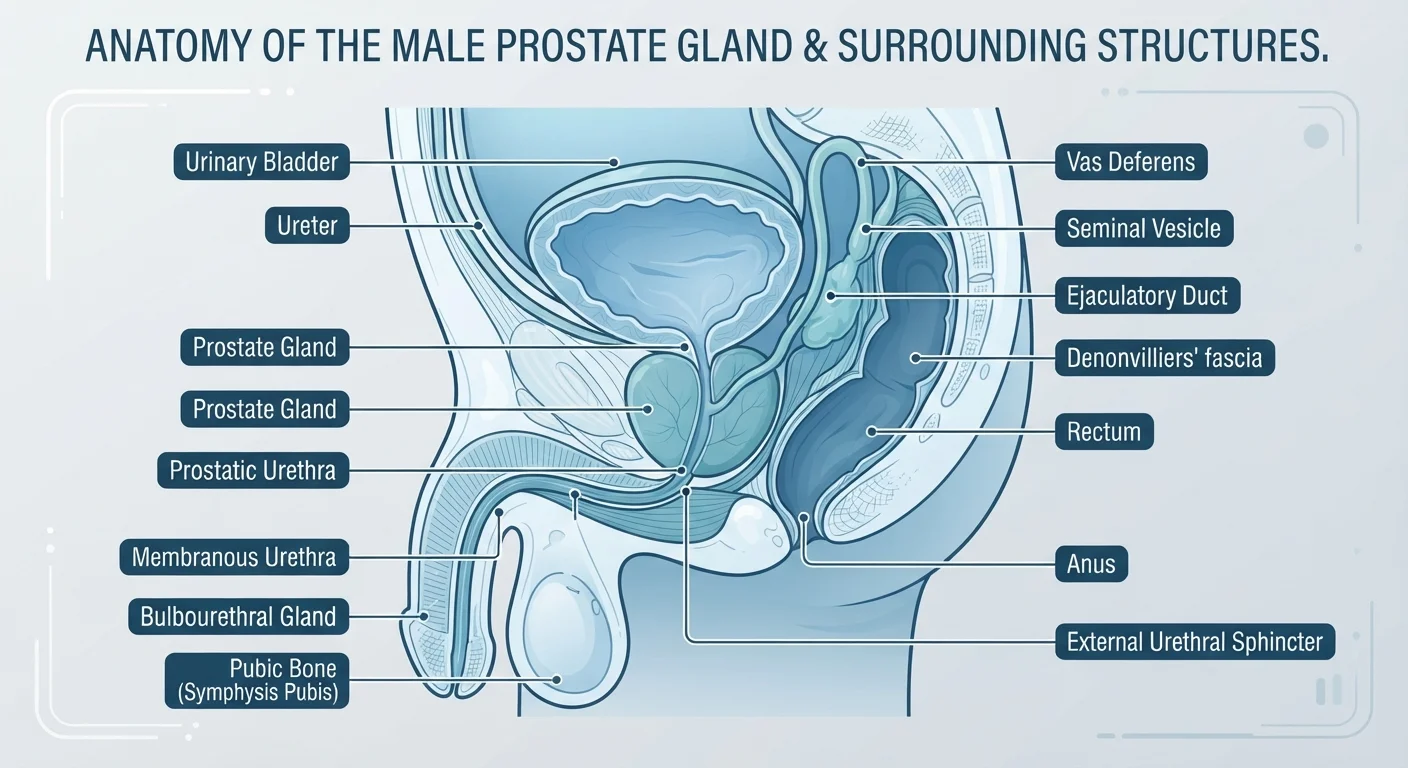
The prostate is a walnut-sized gland located just below the bladder, surrounding the urethra — the tube that carries urine and semen out of the body. Its primary job is reproductive: it produces fluid that nourishes and protects sperm, contributing to semen volume. Because it encircles the urethra, any changes in its size or structure can directly affect urinary flow.
Most men give little thought to their prostate until something goes wrong. Understanding its anatomy and function early creates a foundation for recognizing when changes deserve attention — and for making informed decisions about screening and care throughout life.
How the Prostate Changes Decade by Decade
Prostate biology is not static. The gland undergoes two distinct growth phases: one during puberty, and a second that begins around age 25 and continues gradually for the rest of a man's life.
In Your 30s
The prostate is typically small and functioning without issue. Prostatitis — inflammation of the gland — is the most common prostate problem in this decade, often presenting as pelvic discomfort, painful urination, or flu-like symptoms.
In Your 40s
Slow enlargement continues, though most men still experience no symptoms. This is also the decade when prostate cancer risk begins rising meaningfully, particularly for Black men and those with a first-degree relative diagnosed before age 65 — groups for whom earlier screening conversations are recommended.
In Your 50s and Beyond
Benign prostatic hyperplasia (BPH) — non-cancerous prostate enlargement — becomes increasingly common. By age 60, roughly half of men have some BPH, and that figure climbs with each decade. Symptoms like frequent nighttime urination, weak stream, or incomplete bladder emptying often emerge during this period.
~50%
Men with BPH by age 60
According to the National Institute of Diabetes and Digestive and Kidney Diseases, roughly half of men in their 60s have benign prostatic hyperplasia.
1 in 8
American men diagnosed with prostate cancer
The American Cancer Society estimates approximately 1 in 8 men will be diagnosed with prostate cancer during their lifetime.
~90%
5-year survival rate when caught locally
When prostate cancer is detected before it has spread beyond the gland, the 5-year relative survival rate approaches 100% according to the American Cancer Society.
Common Prostate Conditions to Know
Three conditions account for the vast majority of prostate health concerns in men. They are separate diagnoses with different causes, treatments, and implications.
Prostatitis
Inflammation of the prostate that can be bacterial (acute or chronic) or non-bacterial. Symptoms vary from sudden fever and pelvic pain to chronic discomfort without an identifiable infection. Treatment depends on the cause and typically involves a physician's evaluation.
Benign Prostatic Hyperplasia (BPH)
A non-cancerous enlargement of the prostate that is nearly universal in aging men. BPH does not increase cancer risk, but it can significantly affect quality of life through urinary symptoms. Lifestyle measures, medications, and procedures are all used to manage it, depending on severity. See our guide to male urinary symptoms for detail on which patterns warrant evaluation.
Prostate Cancer
The most common cancer among American men after skin cancer, prostate cancer often grows slowly and may produce no symptoms in early stages. When caught early, it is highly treatable. Not all prostate cancers require immediate intervention — some are managed through active surveillance — which is why screening conversations with a physician matter so much.
If you have a first-degree relative — father or brother — who was diagnosed with prostate cancer before age 65, bring that up with your doctor before age 45, not at your next routine physical.
Family history is one of the strongest independent risk factors for prostate cancer, and earlier screening discussions can meaningfully affect detection timing.
Don't assume a normal PSA result means no follow-up is needed — PSA trends over time, not a single number, are often more informative for your physician.
Rate of PSA change (PSA velocity) and PSA density can reveal meaningful patterns that a one-time reading alone may not capture.
Screening: Who Needs It and When
The prostate-specific antigen (PSA) blood test is the primary screening tool for prostate cancer. A digital rectal exam (DRE) may also be performed. Current guidance from major clinical organizations, including the American Cancer Society, recommends that men discuss screening with their doctor starting at:
- Age 40–45 for men at high risk: Black men and those with a father or brother diagnosed with prostate cancer before age 65.
- Age 50 for men at average risk who are in good health with a life expectancy of at least 10 years.
The decision to screen is not automatic. PSA levels can be elevated by BPH, prostatitis, and other non-cancerous causes, which can lead to additional testing. A shared decision-making conversation with a physician — weighing personal risk factors, values, and preferences — is the recommended approach.
Lifestyle Habits That Support Prostate Health
While no lifestyle change can guarantee prevention, a consistent body of evidence links certain habits with lower prostate disease risk and better outcomes across conditions.
- Maintain a healthy weight. Obesity is associated with more aggressive prostate cancer and worsened BPH symptoms. Weight management through diet and physical activity is one of the most impactful modifiable factors.
- Stay physically active. Regular aerobic and resistance exercise is linked to reduced BPH symptom severity and improved overall pelvic health. For men in midlife, adapting strength training in your 40s supports both prostate and metabolic health.
- Eat a plant-forward diet. Diets rich in vegetables, fruits, and whole grains — and lower in red and processed meats — are consistently associated with reduced cancer risk. Tomatoes (cooked, for lycopene bioavailability), cruciferous vegetables, and legumes appear particularly relevant.
- Limit alcohol. Heavy alcohol consumption is linked to increased BPH risk and may affect prostate cancer progression.
- Don't smoke. Smoking is associated with more aggressive prostate cancer and poorer treatment outcomes.
These same habits are foundational to broader male health. The Men's Lifestyle and Fitness hub offers a comprehensive framework for building them consistently over time.
Staying Active Protects More Than Muscle
Pelvic floor exercises, sometimes called Kegel exercises, may help reduce urinary leakage and support bladder control in men dealing with BPH or post-prostate procedure recovery. Ask your doctor or a pelvic floor physical therapist whether they're appropriate for your situation. Regular walking has also been associated with reduced BPH symptom severity in several observational studies.
When to Talk to a Doctor
Men frequently normalize urinary symptoms as just part of getting older — but many are clinically significant and treatable. Talk to a healthcare provider if you experience:
- A weak or interrupted urine stream
- Frequent urges to urinate, especially at night
- Difficulty starting or stopping urination
- Pain or burning during urination
- Blood in urine or semen
- Pelvic, lower back, or hip pain that is persistent
None of these symptoms alone confirms any specific diagnosis — but all of them are worth reporting rather than waiting on. Early evaluation often means more options and better outcomes across all three major prostate conditions.
For a broader view of related male reproductive health, our testicular health guide covers monitoring and warning signs that complement prostate awareness.
This article is for general informational purposes only and does not constitute medical advice. Always consult a qualified healthcare professional for personal health concerns, symptoms, or decisions about screening and treatment.