

Key Takeaways
- The male reproductive system serves two primary functions: hormone production and sperm production and delivery.
- The testes are the central organs, responsible for both testosterone and sperm production.
- Several accessory glands — including the prostate and seminal vesicles — contribute to semen composition.
- Reproductive and urinary systems share anatomical structures, which is why issues in one can affect the other.
- Lifestyle factors such as nutrition, sleep, and activity levels can meaningfully influence reproductive health.
- Regular self-exams and preventive screenings are foundational to catching problems early.
Male Reproductive System
The male reproductive system is a group of internal and external organs that work together to produce, store, and deliver sperm, and to manufacture key hormones — most notably testosterone. It includes structures in the pelvis, scrotum, and along the urinary tract. These organs are deeply interconnected with broader systems including the endocrine, urinary, and cardiovascular systems.
The hypothalamic-pituitary-gonadal (HPG) axis regulates the hormonal signaling that drives sperm production and testosterone synthesis, making reproductive function closely tied to overall hormonal health.
The Core Structures and What They Do
The male reproductive system is made up of several organs working in precise coordination. Breaking each one down makes the whole system easier to understand — and easier to monitor for health.
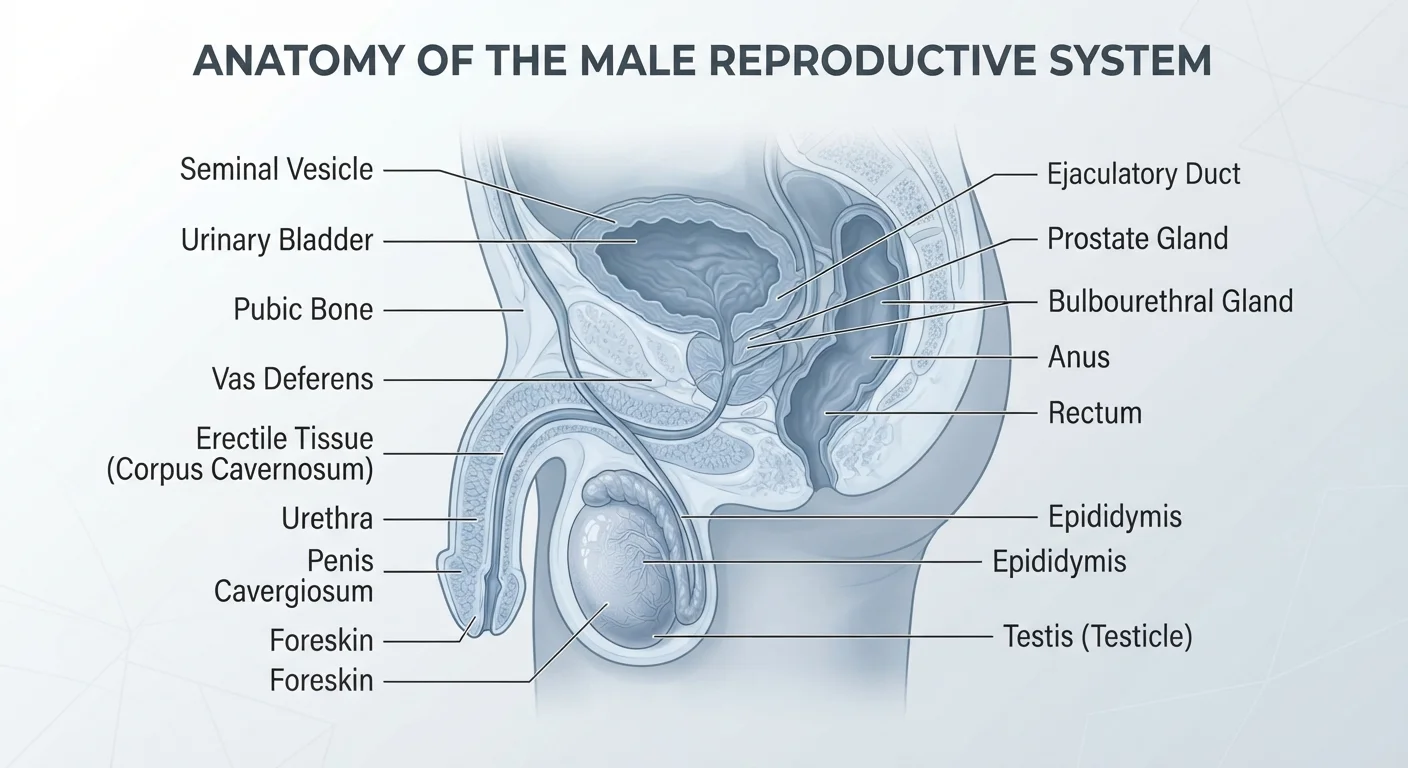
Testes
The testes (singular: testis) are the two oval-shaped glands housed in the scrotum. They have two critical jobs: producing sperm (spermatogenesis) and synthesizing testosterone. The scrotum keeps the testes a few degrees cooler than core body temperature, which is necessary for healthy sperm development. For a deeper look at monitoring this area, see testicular health.
Epididymis
Coiled behind each testis is the epididymis — a long, tightly coiled tube where newly produced sperm mature and are stored. Sperm spend roughly 2–3 weeks here gaining the ability to swim and fertilize an egg.
Vas Deferens
During ejaculation, muscular contractions propel sperm through the vas deferens — a thick-walled duct that travels from the epididymis up through the inguinal canal and into the pelvic cavity, where it connects to the ejaculatory duct.
Seminal Vesicles, Prostate, and Bulbourethral Glands
These three accessory glands contribute fluids that together form semen. The seminal vesicles produce a fructose-rich fluid that provides energy for sperm. The prostate gland adds a slightly alkaline secretion that protects sperm from the acidic environment of the vagina. The bulbourethral glands (Cowper's glands) secrete a small amount of fluid before ejaculation that neutralizes residual acid in the urethra. Sperm make up only about 5% of total semen volume.
~5%
Proportion of semen volume that is sperm
The remainder consists of secretions from the seminal vesicles, prostate, and bulbourethral glands that nourish and protect sperm during transit.
1–2%
Annual testosterone decline after age 30
This gradual reduction is a normal part of male aging and does not automatically indicate a clinical condition, according to general endocrinology guidance.
2–3 weeks
Sperm maturation time in the epididymis
Newly produced sperm require this period in the epididymis to develop full motility before they are capable of fertilization.
The Role of Hormones in Reproductive Function
The male reproductive system is tightly regulated by the hypothalamic-pituitary-gonadal (HPG) axis — a feedback loop between the brain and the testes. The hypothalamus releases gonadotropin-releasing hormone (GnRH), which signals the pituitary gland to secrete two hormones: luteinizing hormone (LH) and follicle-stimulating hormone (FSH). LH prompts the testes to produce testosterone; FSH drives sperm production.
Testosterone is far more than a reproductive hormone. It plays a central role in bone density, muscle mass, red blood cell production, mood regulation, and libido. For a thorough, evidence-based look at what testosterone does — and doesn't do — in the male body, the article on testosterone and male health is a useful next step.
Levels of testosterone rise sharply during puberty and peak in early adulthood, then gradually decline — roughly 1–2% per year after age 30, according to general clinical estimates. This is a normal part of aging, not automatically a sign of disease.
Support Hormonal Health Through Daily Habits
Consistent sleep (7–9 hours per night), regular moderate exercise, a balanced diet, and stress management all support healthy testosterone levels and sperm quality. No supplement or shortcut replaces these foundational habits. Discuss any concerns about hormonal health with your doctor before pursuing testing or treatment.
Why Anatomy Knowledge Supports Preventive Health
Understanding how these structures relate to one another helps men recognize when something may be wrong. Because the urethra carries both urine and semen and the prostate surrounds it, problems like benign prostatic hyperplasia (BPH) — non-cancerous prostate enlargement — can interfere with urination and should be evaluated by a clinician.
Reproductive health is also meaningfully influenced by overall lifestyle. Research consistently shows that diet quality, sleep, physical activity, body weight, and stress management all affect hormone levels and sperm parameters. For men looking to build healthy daily habits, the broader resources at Men's Lifestyle & Fitness offer practical starting points, including guidance on nutrition fundamentals that support long-term male health.
Preventive care matters. Regular testicular self-exams, prompt evaluation of any lumps, pain, or urinary changes, and age-appropriate screenings (such as prostate-specific antigen testing, discussed with a doctor based on individual risk) are among the most practical things men can do. Reproductive health doesn't exist in isolation — it's a lens into overall male wellbeing.
This article is for general informational and educational purposes only and does not constitute medical advice. Always consult a qualified healthcare professional for any health concerns or before making decisions related to your health.