

Key Takeaways
- Mobility work builds active control through a joint's range of motion — not just passive flexibility.
- Most men experience mobility deficits from prolonged sitting, repetitive training patterns, and skipping warm-ups.
- Poor mobility can limit strength output, alter movement mechanics, and increase injury risk over time.
- Even 10–15 minutes of targeted mobility drills several times per week can produce measurable improvement.
- Mobility training complements strength and cardio work — it doesn't replace them.
Mobility Work
Mobility work refers to targeted exercises and drills that improve your ability to move joints actively through their full range of motion. Unlike passive stretching, it trains the muscles and nervous system to control movement at the end ranges where you're most vulnerable. The goal is functional, usable movement — not just the ability to reach a position, but to own it.
Mobility training typically involves active exercises that improve neuromuscular control at joint end ranges, which is distinct from static flexibility work that simply lengthens soft tissue without building active strength in those positions.
Why Most Men Skip It
Ask most men what they do in the gym, and you'll hear about lifting, running, or conditioning. Rarely mobility work. It's viewed as something physical therapists prescribe after injury, or what yoga enthusiasts do — not a core training priority for men focused on performance and strength.
That perception has a cost. Prolonged desk work, repetitive training patterns, and the cultural tendency to push through discomfort rather than address its root cause all contribute to mobility deficits that accumulate quietly. By the time a limitation becomes obvious — a squat you can't hit depth on, a shoulder that won't press overhead cleanly — the restriction has usually been developing for months or years.
Habits that quietly undermine fitness often include skipping warm-ups and neglecting movement quality. Mobility work addresses both directly.
What Mobility Work Actually Develops
Mobility is your ability to actively move a joint through its full range of motion with muscular control. This is meaningfully different from flexibility, which describes how far a tissue can be passively lengthened. You can be flexible without being mobile — and that distinction matters during loaded movement.
Effective mobility training typically targets:
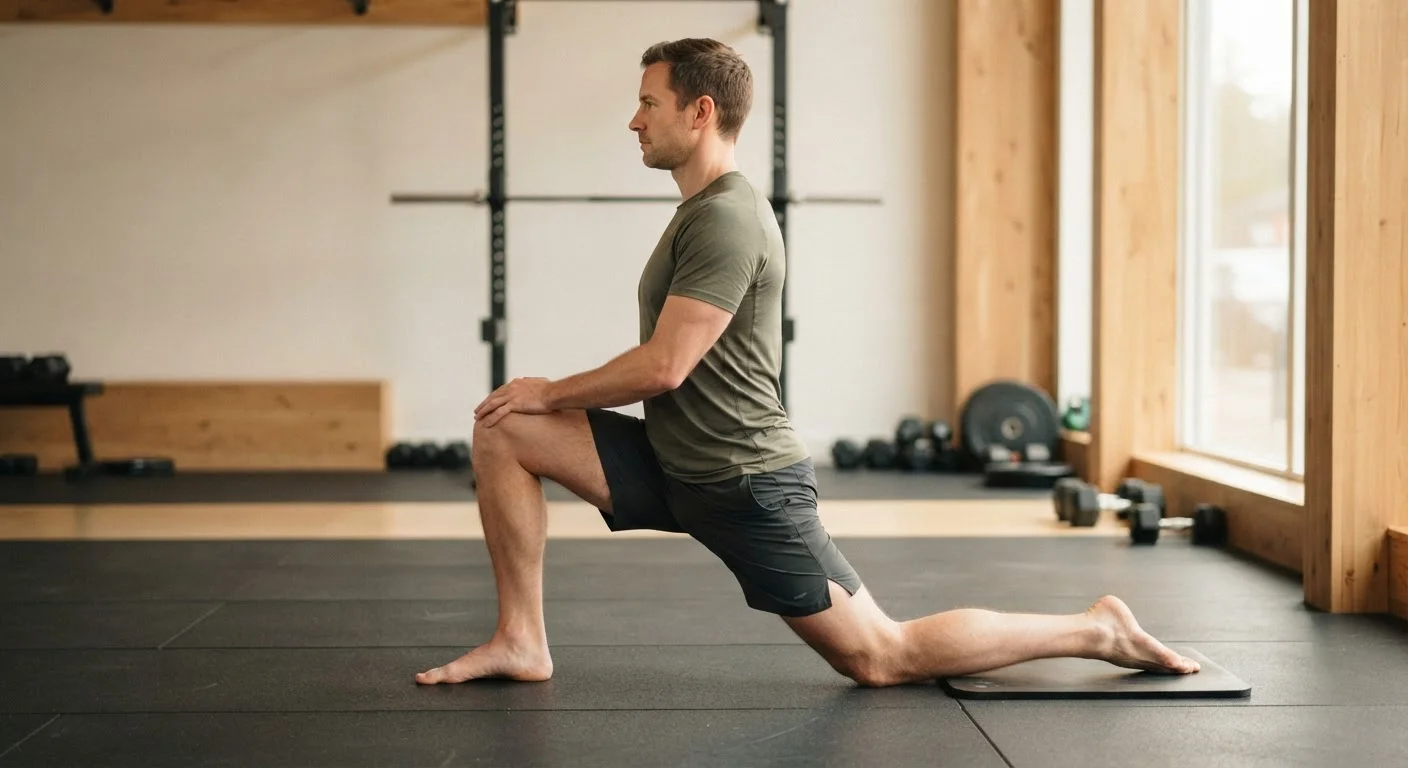
- Hip flexors and hip capsule — compressed by long hours of sitting and often a limiting factor in squats and lunges
- Thoracic spine — stiffness here affects overhead pressing, rowing mechanics, and posture
- Ankle dorsiflexion — restricted ankle mobility frequently forces compensations at the knee and hip during lower-body movement
- Shoulder complex — internal and external rotation range is critical for safe pressing and pulling
For a more detailed comparison of how flexibility and mobility differ in practice, see Flexibility vs. Mobility.
65%
Adults with significant sitting time daily
U.S. Bureau of Labor Statistics data indicates most working-age adults spend the majority of their waking hours sedentary, a primary driver of hip and thoracic mobility restrictions.
~50%
Strength athletes with notable mobility deficits
Research published in sports science journals suggests a substantial proportion of strength-trained individuals show measurable hip or ankle mobility limitations despite regular training.
10–15 min
Effective daily mobility session duration
Physical therapists and strength coaches commonly recommend short, consistent sessions rather than infrequent lengthy ones to build lasting mobility improvements.
The Performance and Injury Connection
Restricted mobility doesn't just limit how deep you squat. It changes how load is distributed across joints during movement. When the intended joint can't move freely, adjacent structures compensate — and compensation under load over time is a common precursor to overuse injury.
Research in sports medicine has consistently linked mobility deficits, particularly in the hip and ankle, to elevated injury risk in active populations. Beyond injury prevention, adequate mobility allows muscles to work through a fuller range during training, which supports both strength development and muscular endurance.
“Mobility is the foundation upon which strength and performance are built. If you can't access a range of motion without load, you certainly shouldn't be loading it.”
— Gray Cook, Physical therapist and co-founder of the Functional Movement Screen (FMS) system
Mobility training also connects directly to recovery. Joints that move well respond better to training stress, and movement quality tends to be better preserved when recovery is taken seriously. Rest and recovery and mobility work are complementary habits, not competing priorities.
How to Incorporate It Practically
The barrier to starting mobility work is usually perceived complexity. In practice, a focused 10–15 minute routine hitting the major problem areas is enough to see meaningful improvement over weeks of consistent effort.
Practical entry points include:
- Pre-training dynamic drills — leg swings, hip circles, thoracic rotations, and controlled shoulder circles before lifting sessions prepare joints for load
- Standalone mobility sessions — even on rest days, short targeted sessions address restrictions without adding significant training stress
- End-range loading — exercises like deep goblet squats, controlled articular rotations (CARs), and Jefferson curls build strength specifically at end ranges
The Recovery and Mobility hub covers how these approaches integrate with a broader training plan. For men building sustainable fitness habits, mobility work is most effective when treated as a training element rather than an afterthought.
This article is for general informational purposes only and does not constitute medical advice. Consult a qualified healthcare professional before beginning any new exercise program, particularly if you have existing joint conditions or injuries.