

Key Takeaways
- Reduced winter light disrupts the brain's internal clock, affecting serotonin and melatonin levels.
- Seasonal Affective Disorder is a clinically recognised pattern of depression, not just 'winter blues.'
- SAD is estimated to affect roughly 5% of adults in the U.S., with women diagnosed more frequently than men.
- Symptoms typically include low energy, oversleeping, carbohydrate cravings, and withdrawal from social activity.
- Light therapy is among the most studied interventions for seasonal mood changes.
- A qualified healthcare provider should be consulted if seasonal mood shifts are significantly affecting daily functioning.
Seasonal Affective Disorder (SAD)
Seasonal Affective Disorder is a pattern of depression that emerges predictably at certain times of year — most commonly in late autumn and winter — and lifts in spring. It is not simply feeling a bit gloomy when the days get shorter. For people with SAD, the mood changes are significant enough to interfere with daily life, work, relationships, and energy levels. Researchers consider it a subtype of major depressive disorder with a seasonal pattern.
SAD is classified in the DSM-5 as a 'seasonal pattern specifier' applied to major depressive disorder or bipolar disorder, rather than a standalone diagnosis.
Why Winter Can Feel So Heavy
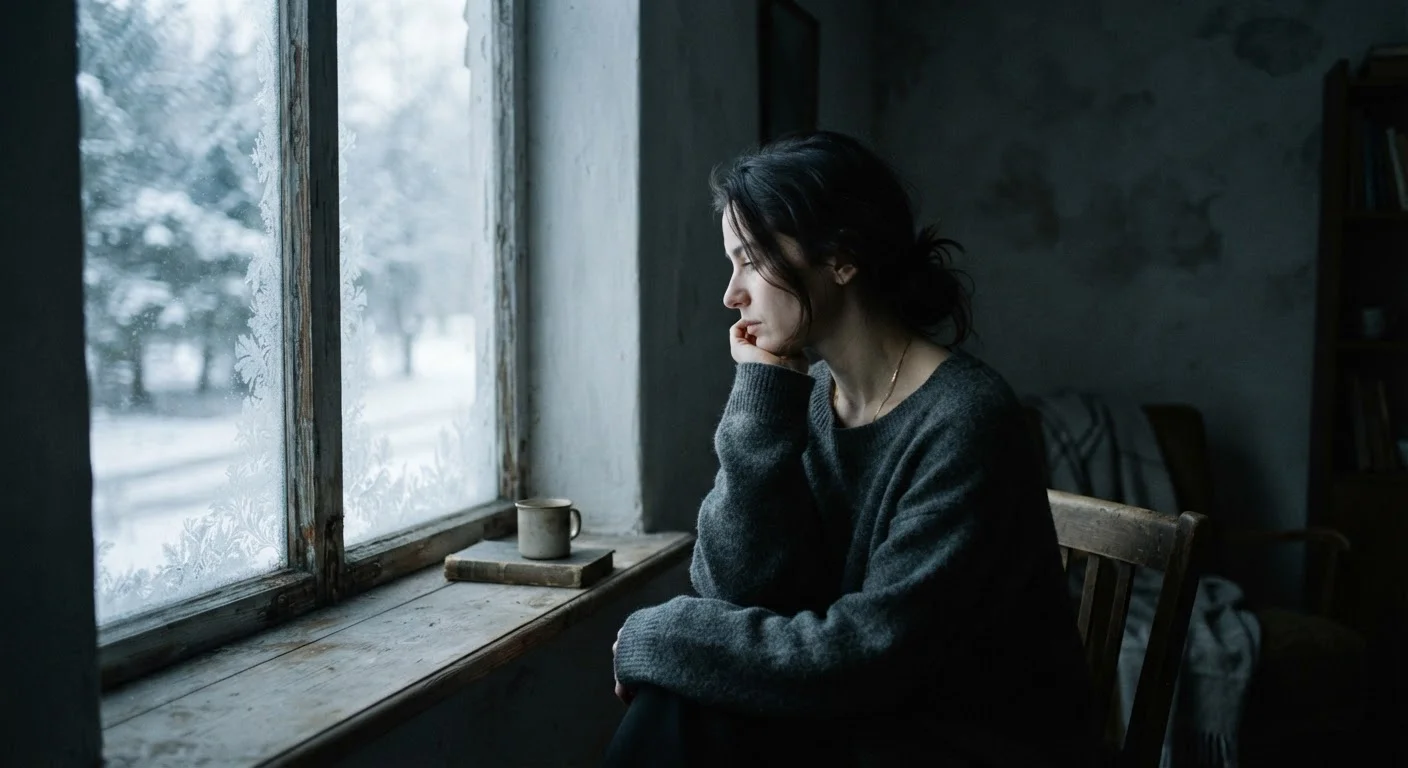
Many people notice something shifts when the clocks change and darkness arrives earlier each evening. Energy dips. Getting out of bed feels harder. Social plans start to seem like obligations rather than pleasures. For some, this passes within a week or two. For others, it deepens into something more persistent — and more disruptive.
This is not a character flaw or a failure of willpower. It is, in large part, biology responding to a changing environment. Understanding what actually happens in the brain during winter can help explain why some people are affected more severely than others — and why the experience is real, even when it is invisible to those around you.
If you're also curious about how seasonal mood patterns compare to other forms of depression, our overview of mood disorders across the spectrum offers helpful context.
The Brain's Response to Reduced Light
At the centre of seasonal mood changes is a small region of the brain called the suprachiasmatic nucleus (SCN) — the brain's master clock. The SCN sits in the hypothalamus and receives direct input from specialised light-sensitive cells in the retina. When daylight diminishes in autumn and winter, this signalling changes, and a cascade of neurochemical effects follows.
~5%
U.S. adults estimated to experience SAD
According to the American Psychiatric Association, roughly 5% of U.S. adults are affected by Seasonal Affective Disorder, with symptoms lasting about 40% of the year.
4:1
Ratio of women to men diagnosed with SAD
Clinical data consistently shows women are diagnosed with SAD approximately four times more often than men, though the reasons are not yet fully understood.
10,000 lux
Light intensity used in standard light therapy
Research trials for SAD typically use 10,000-lux light boxes, a brightness far exceeding ordinary indoor lighting, administered in the morning.
Serotonin, a neurotransmitter strongly linked to mood regulation, is partly governed by light exposure. Research published in peer-reviewed journals has shown that serotonin transporter activity — which clears serotonin from synapses — increases in winter months, potentially reducing available serotonin in the brain. Lower serotonin activity is associated with low mood, reduced motivation, and increased carbohydrate cravings.
At the same time, the pineal gland produces more melatonin in darkness. In people with SAD, some researchers believe melatonin signalling may be dysregulated, contributing to excessive sleepiness, difficulty waking, and a general sense of heaviness. The interaction between serotonin and melatonin systems — and how they respond to light — appears central to why winter affects some brains more than others.
What Seasonal Affective Disorder Actually Looks Like
SAD's winter pattern tends to present differently from classic depression. Alongside low mood and loss of interest, people often experience what researchers call atypical features: sleeping significantly more than usual, craving starchy or sweet foods, gaining weight, and withdrawing from social activity — sometimes described as a kind of emotional hibernation.
SAD Is Not the Same for Everyone
Not everyone with seasonal mood changes will meet diagnostic criteria for SAD, and that doesn't make their experience less valid. Subsyndromal SAD — sometimes called the 'winter blues' — affects a larger portion of the population and can still meaningfully affect quality of life. Additionally, mood changes driven by hormonal factors can overlap with seasonal patterns; our articles on hormonal roots of depression in women explore this intersection further. A healthcare provider can help distinguish between contributing factors.
These symptoms typically emerge in late autumn, worsen through the darkest months, and remit spontaneously in spring. That predictable, recurring pattern is what distinguishes SAD from a single depressive episode. Some people experience a milder version — sometimes called subsyndromal SAD or the 'winter blues' — that is real and worth acknowledging even if it doesn't meet full clinical criteria.
To better understand which mood signals are worth paying close attention to, our guide on recognising low mood in yourself walks through key signs to notice.
What Research Tells Us About Treatment
Light therapy — sitting near a specially designed lamp that emits 10,000 lux of bright, white light, typically for 20–30 minutes in the morning — is among the most studied interventions for winter-pattern SAD. Multiple controlled trials have found it effective for many people, and clinical guidelines in the U.S. and internationally support its use as a first-line option.
Beyond light therapy, the same approaches used for other forms of depression — including psychotherapy (particularly cognitive behavioural therapy) and, in some cases, medication — are used for SAD when clinically appropriate. A healthcare provider is the right person to guide those decisions based on individual history and symptom severity.
Daily habits also play a meaningful role. Research suggests that regular physical activity, consistent sleep timing, and social connection can all support mood during winter months. Our companion article on daily habits that support low mood explores what the evidence shows — and what it doesn't.
“Seasonal Affective Disorder is a real and well-documented condition. The changes in light exposure that come with shorter days have measurable effects on brain chemistry — and for some people, those effects cross into clinically significant depression.”
— Norman Rosenthal, MD, Clinical Professor of Psychiatry at Georgetown University Medical School and pioneer of SAD research
This article is for informational purposes only and is not a substitute for professional medical or mental health advice. If seasonal mood changes are significantly affecting your daily life, please consult a qualified healthcare provider.