

Key Takeaways
- Legumes are high in both protein and fiber, making them uniquely satiating among plant foods.
- Antinutrients in legumes are largely neutralized by soaking, cooking, or fermenting.
- Legumes provide plant-based iron, folate, and potassium — nutrients many adults under-consume.
- Combining legumes with other plant proteins across the day meets essential amino acid needs.
- Regular legume consumption is consistently associated with favorable cardiovascular and metabolic markers.
What Legumes Are and Why They Stand Out Nutritionally
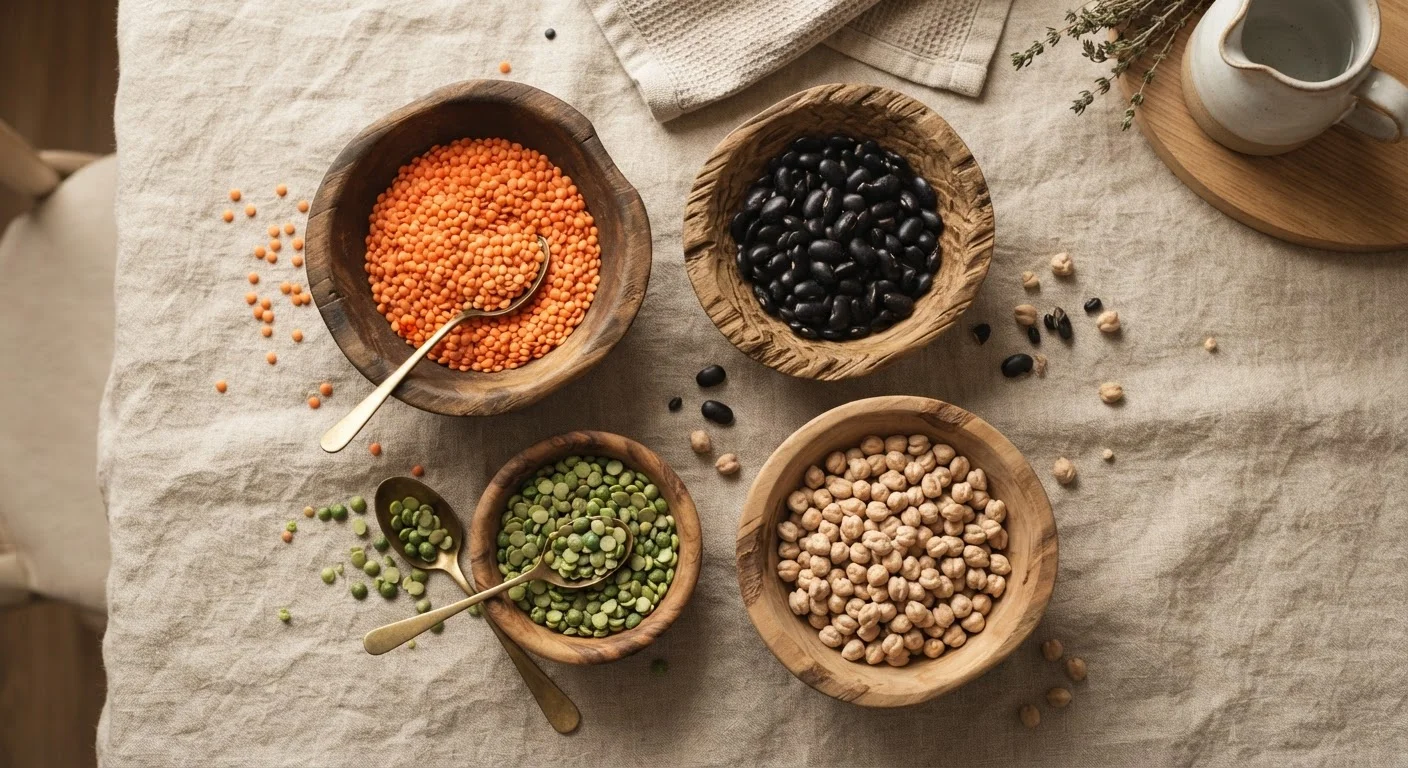
Legumes are the edible seeds of plants in the Fabaceae family and include beans (black, kidney, navy, pinto), lentils, chickpeas, split peas, soybeans, and peanuts. They occupy a unique position in dietary science because they simultaneously function as a protein source, a fiber source, and a vehicle for a wide array of micronutrients — qualities rarely found together in a single food.
Per calorie, legumes are among the most nutrient-dense foods available. They are also shelf-stable, economical, and versatile across cuisines worldwide, which makes them practical for a broad range of dietary approaches. Whether consumed whole, pureed, or sprouted, legumes retain most of their nutritional value across common preparation methods.
Dietary gap analyses consistently identify fiber and potassium as shortfalls in typical adult diets — two areas where legumes genuinely deliver. A single cup of cooked black beans provides roughly 15 grams of fiber, which approaches half of the daily adequate intake for most adults.
~18g
Protein per cup of cooked lentils
According to USDA FoodData Central nutritional data for cooked lentils.
~90%
Daily folate value in one cup of lentils
Based on USDA nutritional composition data; folate is critical for DNA synthesis and cell division.
Low GI
Glycemic index classification for most legumes
Most legumes score below 55 on the glycemic index scale, reflecting their high fiber and protein content.
Common Misconceptions About Legumes, Addressed
Despite strong nutritional credentials, legumes face persistent skepticism rooted in misunderstandings about antinutrients, digestibility, protein quality, and carbohydrate content. The myth-fact pairs below address the most common concerns using current evidence.
Myth
Legumes aren't a real protein source because plant protein is inferior to animal protein.
Fact
Legumes are substantive protein sources, and their amino acid gaps are easily addressed through varied eating over the course of a day.
Cooked lentils deliver roughly 18 grams of protein per cup; cooked black beans provide around 15 grams. While most legumes are lower in the essential amino acid methionine, this is easily compensated when the overall diet includes grains, nuts, or seeds — foods naturally richer in methionine. Current nutrition science confirms that consuming a variety of plant proteins throughout the day — not necessarily at every meal — meets all essential amino acid requirements for most healthy adults. For a broader look at plant protein evidence, see protein myths debunked.
Myth
Antinutrients in legumes block nutrient absorption and make them harmful to eat regularly.
Fact
Antinutrients in legumes are significantly reduced by standard preparation methods and pose negligible risk in a varied diet.
Legumes contain compounds such as phytates and lectins that can, in raw or improperly prepared form, interfere with mineral absorption or cause digestive discomfort. However, soaking dried legumes overnight, draining the water, and then boiling them thoroughly reduces lectin content by over 90% in most varieties. Canned legumes, which are pre-cooked under high heat, are similarly safe. Phytates, while they can bind to minerals like iron and zinc, are present in many healthful foods including whole grains and nuts — and a balanced diet with adequate vitamin C (which enhances iron absorption) readily compensates. Framing antinutrients as a reason to avoid legumes misrepresents the science.
Myth
Legumes cause excessive gas and bloating, so they should be limited or avoided.
Fact
Digestive adjustment to legumes is normal and typically diminishes within a few weeks of regular consumption.
Legumes contain fermentable carbohydrates called oligosaccharides — specifically raffinose and stachyose — that human digestive enzymes cannot break down. Instead, gut bacteria ferment them, producing gas. This process is not inherently harmful; in fact, it feeds beneficial gut microbiota associated with intestinal health. For those new to legumes, starting with smaller portions (a quarter cup), choosing well-cooked or canned varieties rinsed thoroughly, and gradually increasing intake over several weeks allows the gut microbiome to adapt. Digestive tolerance typically improves meaningfully with consistent exposure.
Myth
Legumes are too high in carbohydrates and should be avoided on lower-carb diets.
Fact
The carbohydrates in legumes behave differently from refined carbohydrates, owing to their high fiber and protein content.
A half-cup of cooked chickpeas contains roughly 22 grams of total carbohydrate, but about 6 of those grams are dietary fiber — which is not digested or metabolized like starch. The high fiber and protein content of legumes slows gastric emptying and blunts the glycemic response, resulting in a lower glycemic index compared to refined grains or starchy foods. Legumes are among the top food sources of fiber most adults fall short on. Individuals managing blood sugar should consult a healthcare provider or registered dietitian about their specific carbohydrate targets and food choices.
Myth
Legumes have little nutritional value beyond fiber and are not worth incorporating regularly.
Fact
Legumes provide an exceptional range of micronutrients including folate, iron, magnesium, potassium, and zinc.
One cup of cooked lentils supplies approximately 90% of the daily value for folate, a B-vitamin critical for DNA synthesis and particularly important during pregnancy. The same serving contributes meaningful amounts of iron, magnesium, and potassium. Legumes also contain polyphenols — plant compounds with antioxidant properties studied for their role in supporting cardiovascular health. Dietary patterns that emphasize legumes, whole grains, fruits, and vegetables are among those most consistently associated with positive health outcomes in population research, as explored in our overview of evidence-linked eating patterns.
This article is for general informational and educational purposes only and is not a substitute for professional medical or dietary advice. Individuals with specific health conditions, food sensitivities, or dietary needs should consult a qualified healthcare provider or registered dietitian before making significant changes to their diet.