

Key Takeaways
- Adult acne is common and is frequently linked to hormonal fluctuations rather than poor hygiene or diet alone.
- Androgens — the primary driver — stimulate oil glands, increasing pore blockage and inflammation.
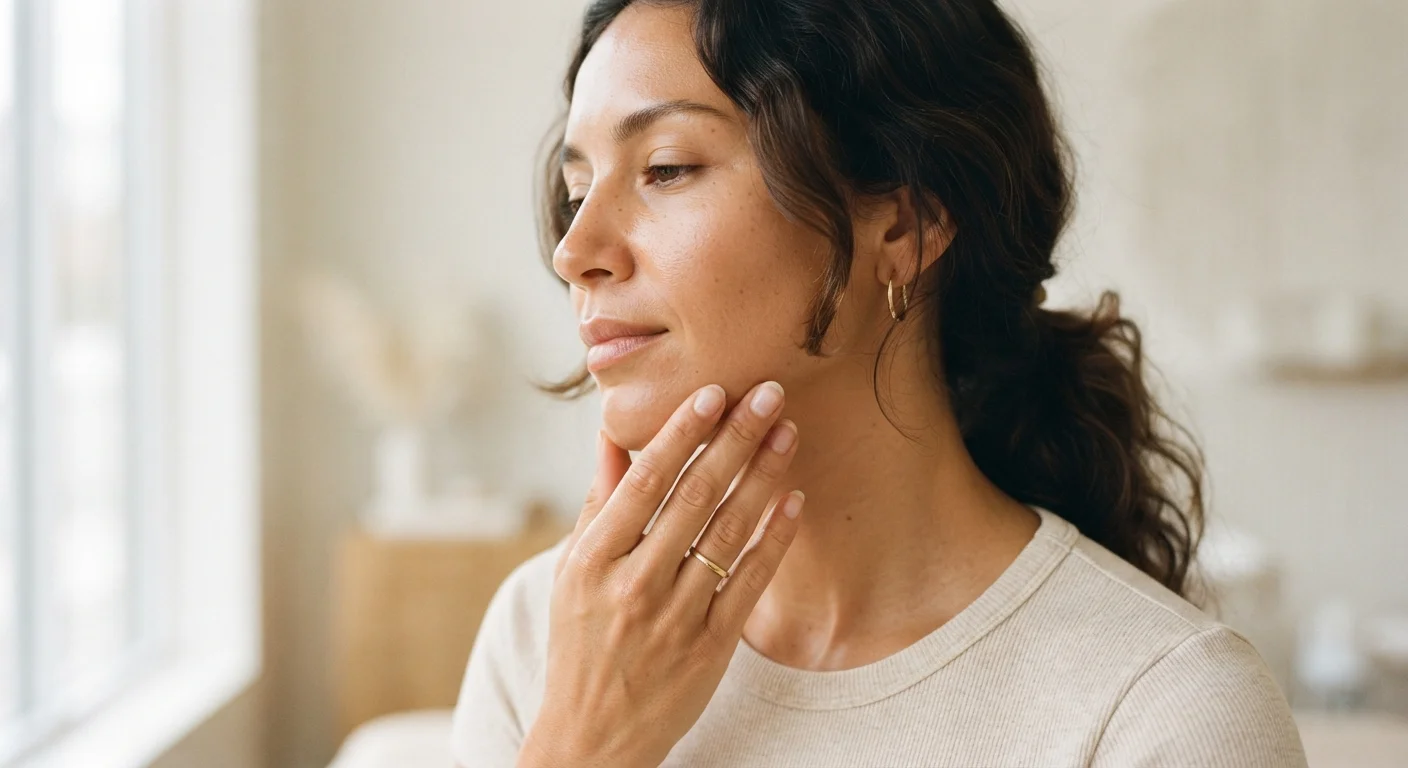
- Hormonal acne typically appears along the jawline, chin, and lower cheeks.
- Life events such as menstrual cycles, pregnancy, perimenopause, and chronic stress can all trigger or worsen flares.
- A healthcare provider can help identify underlying hormonal factors and discuss appropriate management options.
Hormonal Acne
Hormonal acne is a type of acne in adults that is driven — at least in part — by fluctuations in sex hormones like androgens, estrogen, and progesterone. It tends to appear in predictable locations and at predictable times, often cycling with the menstrual cycle, life stages such as pregnancy or perimenopause, or periods of significant stress. Unlike the more diffuse breakouts common in adolescence, adult hormonal acne has recognizable triggers rooted in the body's endocrine system.
Androgens stimulate sebaceous glands to produce excess sebum; when combined with follicular hyperkeratinization and the presence of Cutibacterium acnes bacteria, this creates the conditions for inflammatory acne lesions.
The Hormonal Mechanisms Behind Adult Acne
Acne does not disappear at 20. For many women, it persists or even begins in adulthood — and the primary reason is hormonal rather than anything happening at the skin's surface. Understanding how hormones interact with your skin can reframe the frustration of an adult breakout into something more manageable.
The central actors are androgens — a class of hormones that includes testosterone and its derivatives. Although androgens are often labeled as "male hormones," women produce them too, primarily in the ovaries and adrenal glands. When androgen levels rise, or when skin's androgen receptors are particularly sensitive, sebaceous (oil) glands in hair follicles become overactive. The resulting excess sebum mixes with dead skin cells to block pores, creating an environment where Cutibacterium acnes bacteria — which normally live on skin harmlessly — can trigger inflammation and the characteristic red, tender lesions associated with acne.
Estrogen and progesterone also play roles. Estrogen generally has a moderating effect on sebum production, which is why many women notice clearer skin during the mid-follicular phase of their cycle. Progesterone, which rises after ovulation, can promote sebum output and skin swelling that narrows pores — contributing to the pre-menstrual breakout many women recognize instinctively. For a broader view of how these hormones shift across life, see our complete reference on hormonal health across a woman's lifespan.
~50%
Women in their 20s affected by acne
Research published in the Journal of the American Academy of Dermatology found that acne affects approximately 50% of women in their 20s and around 25% of women in their 40s.
3–7 days
Pre-menstrual acne flare window
Studies document that many women with acne experience a consistent worsening in the week before menstruation, corresponding to the peak luteal phase.
~70%
Women reporting cycle-linked breakouts
Survey data consistently find that the majority of women with adult acne report a predictable worsening tied to their menstrual cycle.
Common Triggers and Life-Stage Patterns
Hormonal acne rarely appears randomly. It tends to emerge or worsen during specific physiological windows and in response to identifiable stressors.
The Menstrual Cycle
Research consistently links acne flares to the luteal phase — roughly the week or two before menstruation. During this window, progesterone peaks and estrogen is relatively lower, creating conditions for increased oil production and inflammation. This cyclical pattern is one of the clearest diagnostic clues that hormones are involved.
Pregnancy and Postpartum
The dramatic hormonal shifts of pregnancy — including large surges in progesterone — can trigger significant acne in women who rarely experienced it before. The postpartum period, with its rapid estrogen drop, can bring another wave. Management during these times requires extra care because many conventional acne treatments are not appropriate during pregnancy or while breastfeeding; always consult a healthcare provider before starting any treatment. This applies as a general principle to all special populations.
Perimenopause
As estrogen levels become more erratic and eventually decline during the transition to menopause, the relative balance tips toward androgen dominance — even if absolute androgen levels have not risen. This shift can reactivate acne in women who thought they had long since outgrown it. The signs of hormonal imbalance worth discussing with a provider often include skin changes alongside other symptoms like irregular cycles or mood shifts.
Stress and the Cortisol Connection
Chronic psychological stress elevates cortisol, which in turn stimulates adrenal androgen production. This hormonal cascade can worsen acne independent of the menstrual cycle. The relationship between stress, sleep disruption, and reproductive hormones is closely intertwined — a dynamic explored in depth in our article on sleep, stress, and hormones.
Track Your Breakouts Relative to Your Cycle
Keeping a simple log of when breakouts appear in relation to your menstrual cycle — even just noting the cycle day — can provide a clinician with genuinely useful diagnostic information. If a pattern emerges, it strengthens the case for a hormonal evaluation and helps guide treatment decisions. Apps designed for cycle tracking can make this straightforward.
Underlying Conditions That Can Amplify Hormonal Acne
For some women, persistent or severe hormonal acne is a signal worth investigating further. Certain medical conditions are associated with elevated androgen levels and tend to produce more pronounced or treatment-resistant breakouts.
Polycystic ovary syndrome (PCOS) is one of the most common endocrine conditions in women of reproductive age and frequently presents with acne alongside irregular periods, excess facial or body hair, and other signs of androgen excess. Congenital adrenal hyperplasia (CAH) and, more rarely, androgen-secreting tumors can also drive elevated androgen levels — though these are far less common.
If your acne is persistent, appears alongside other hormonal symptoms, or has not responded to conventional approaches, it may be worth discussing hormonal evaluation with a dermatologist or gynecologist. Knowing what to track before that appointment — including the timing of breakouts relative to your cycle, any associated symptoms, and previous treatments tried — can make the conversation more productive. Our guide on getting the most out of a hormonal health appointment offers practical preparation strategies.
This article is for informational purposes only and is not a substitute for professional medical advice, diagnosis, or treatment. Always consult a qualified healthcare professional with questions about your skin health or hormonal wellbeing.