

Key Takeaways
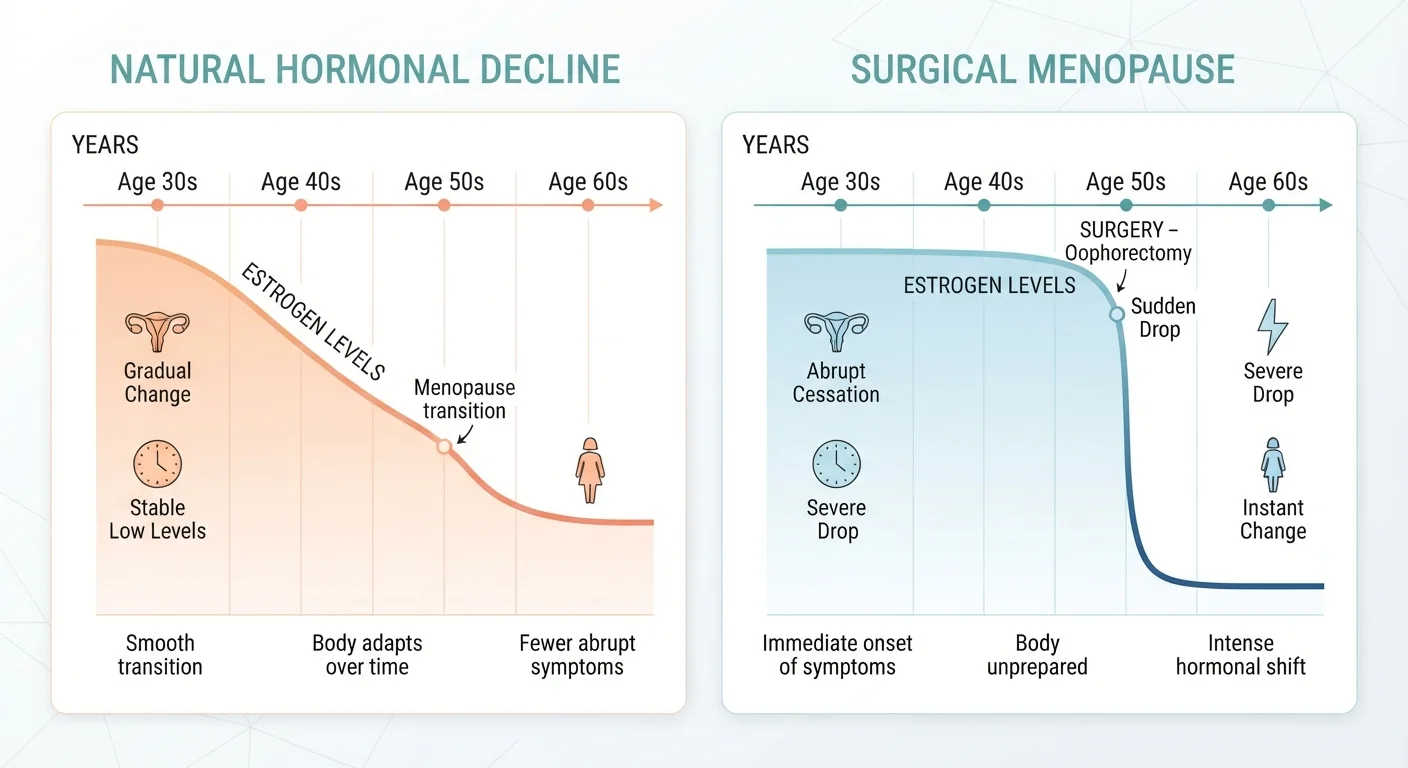
- Natural menopause unfolds gradually over years; surgical menopause is immediate and begins the day of oophorectomy.
- Estrogen and progesterone drop far more steeply in surgical menopause, often producing more intense early symptoms.
- Surgical menopause before age 45 carries additional long-term health considerations, including cardiovascular and bone health risks.
- Hormone therapy is more frequently recommended after surgical menopause, especially in younger women, to offset abrupt hormonal loss.
- Both types of menopause share many of the same symptoms, but their onset, severity, and management often differ.
Option A
Natural Menopause
The gradual, age-driven hormonal transition.
Best for: Understanding the typical menopausal experience most women encounter between their late 40s and mid-50s.
Option B
Surgical Menopause
The abrupt, procedure-induced hormonal shift.
Best for: Women who have had both ovaries removed (bilateral oophorectomy) and need to understand their distinct hormonal situation.
If you are approaching your late 40s or early 50s with no ovarian surgery
Natural Menopause
Your hormonal change will unfold over a gradual perimenopause transition, typically allowing more time to adapt symptoms with lifestyle and medical support.
If you have had or are planning a bilateral oophorectomy
Surgical Menopause
Understanding the distinct and immediate nature of surgical menopause is essential — speak with your provider about tailored hormonal management before or right after surgery.
If you are under 45 and facing ovary removal for a medical reason
Surgical Menopause
Premature surgical menopause carries specific cardiovascular, bone-density, and cognitive health considerations that warrant proactive, specialist-guided care.
What Sets These Two Paths Apart
Menopause — defined as 12 consecutive months without a menstrual period — can arrive by two very different routes. Natural menopause is a biological process driven by the gradual depletion of ovarian follicles, typically unfolding between ages 45 and 55 in the United States. Surgical menopause occurs when both ovaries are removed (a procedure called bilateral oophorectomy), instantly eliminating the body's primary source of estrogen and progesterone.
The distinction matters because the speed of hormonal change largely determines how the body responds. In natural menopause, estrogen levels decline over a transition period — perimenopause — that can last several years, giving tissues time to adapt. In surgical menopause, that buffer disappears entirely. For a deeper look at how hormones shift across a woman's life, see our complete hormonal health reference.
| Criterion | Natural Menopause | Surgical Menopause |
|---|---|---|
| Cause | Age-related ovarian follicle depletion | Bilateral oophorectomy (surgical ovary removal) |
| Onset speed | Gradual — over months to years | Immediate — begins day of surgery |
| Typical age range | Late 40s to mid-50s | Any age; often earlier than natural timing |
| Estrogen decline | Progressive, fluctuating decrease | Abrupt, steep drop |
| Symptom severity | Variable; often moderate | Often more intense, especially initially |
| Bone density risk | Gradual post-menopausal decline | Accelerated if surgery occurs before natural age |
| Hormone therapy use | Case-by-case consideration | More frequently recommended, especially under 45 |
| Perimenopause transition | Yes — typically several years | None — transition is bypassed entirely |
Symptoms: Shared Roots, Different Intensity
Both types of menopause can produce hot flashes, night sweats, vaginal dryness, sleep disruption, and mood changes. What differs is the onset and, frequently, the severity. Women entering surgical menopause often report more abrupt and intense vasomotor symptoms — hot flashes and sweats — because the body receives no gradual signal to adjust. Research published in clinical menopause literature consistently shows that women who undergo oophorectomy before natural menopause experience more severe early symptoms than age-matched peers going through a natural transition.
Mood and cognitive effects also tend to be more pronounced after surgical menopause, particularly when surgery occurs before age 45. The abrupt estrogen withdrawal can affect serotonin and other neurotransmitter pathways. Menopause and mental health is an area that warrants proactive attention in both pathways, but especially following surgical intervention.
~5 years
Average perimenopause duration before natural menopause
According to the North American Menopause Society, perimenopause typically lasts 4–8 years before the final menstrual period.
~600,000
Hysterectomies performed annually in the US
The CDC estimates around 600,000 hysterectomies are performed each year in the US; a significant proportion include oophorectomy, inducing surgical menopause.
Under 45
Age threshold linked to elevated surgical menopause health risks
Clinical research indicates that bilateral oophorectomy before age 45 — without hormone therapy — is associated with higher cardiovascular and bone-density risks.
Long-Term Health Considerations
Beyond symptoms, the two pathways diverge in their long-term health implications. Natural menopause is associated with gradual changes in cardiovascular risk, bone mineral density, and metabolic function — changes that typically become clinically relevant in the post-menopausal years. Surgical menopause, particularly before the natural age of menopause, compresses this risk timeline.
Studies show that bilateral oophorectomy before age 45 — in the absence of hormone therapy — is associated with earlier decline in bone density and elevated cardiovascular risk compared with women who undergo natural menopause at the expected age. This is why many clinical guidelines recommend hormone therapy for women who undergo surgical menopause before their natural expected age, unless a specific contraindication (such as certain hormone-sensitive cancers) exists. The decision involves individual medical history and should always be made with a qualified healthcare provider.
To understand how this transition compares to the earlier hormonal shift, perimenopause and reproductive health offers useful context on the hormonal changes that precede natural menopause.
Hysterectomy Alone Does Not Cause Surgical Menopause
Removing the uterus (hysterectomy) without removing the ovaries does not trigger surgical menopause. Periods will stop, but the ovaries continue producing hormones. True surgical menopause specifically requires removal of both ovaries (bilateral oophorectomy). If you are uncertain which procedure you had or are planning, ask your surgical team for clarification.
Management and What to Discuss With Your Provider
Because surgical menopause is immediate and often managed proactively, conversations with a healthcare provider ideally happen before the procedure. Hormone therapy — whether estrogen alone or combined — is one of the primary tools available and is more commonly indicated after surgical menopause in premenopausal women than in those going through the natural transition. Non-hormonal approaches, including certain antidepressants, gabapentin, and lifestyle strategies, are also used when hormone therapy is not appropriate.
For those navigating natural menopause, the perimenopause years offer an opportunity to plan. Understanding where perimenopause ends and menopause begins can help women identify the right time to seek evaluation and explore their options.
Regardless of which path brought you to menopause, neither experience is identical for any two women. Symptom burden, health history, personal values, and treatment goals all shape the best approach. A gynecologist or menopause specialist can offer guidance tailored to your specific situation.
This article is for general informational purposes only and is not a substitute for professional medical advice, diagnosis, or treatment. Always consult a qualified healthcare provider regarding any medical condition or treatment decision.