

Key Takeaways
- Short-acting methods like pills, patches, and rings require consistent user action to remain effective.
- Long-acting reversible contraceptives (LARCs) such as IUDs and implants work for years with minimal daily maintenance.
- Both short-acting and long-acting methods are reversible, though return-to-fertility timelines can vary.
- Effectiveness in real-world use differs significantly from perfect-use rates, particularly for short-acting methods.
- Personal factors — lifestyle, health history, and future pregnancy plans — should guide the choice with a healthcare provider.
Our Verdict
Neither short-acting nor long-acting reversible contraception is universally superior — the right choice depends on your health profile, lifestyle, and reproductive goals. Short-acting methods offer flexibility and user control, while LARCs provide highly reliable, low-maintenance protection over a longer horizon. A conversation with a qualified clinician is the most reliable way to identify the best fit for your individual circumstances.
| Best for | Recommended |
|---|---|
| Those who prefer flexibility and user-controlled timing | Short-Acting Methods (pills, patch, ring) |
| Those seeking highly reliable, low-maintenance contraception over years | Long-Acting Reversible Contraception (IUD or implant) |
| Those who prefer to avoid hormones entirely | Copper IUD (non-hormonal LARC) |
| Those who may want to conceive in the near term but need interim protection | Short-Acting Methods (pills, patch, ring) |
How Each Category Works
Reversible contraception broadly divides into two groups based on how long a single method remains active and how much the user must do to maintain its effectiveness.
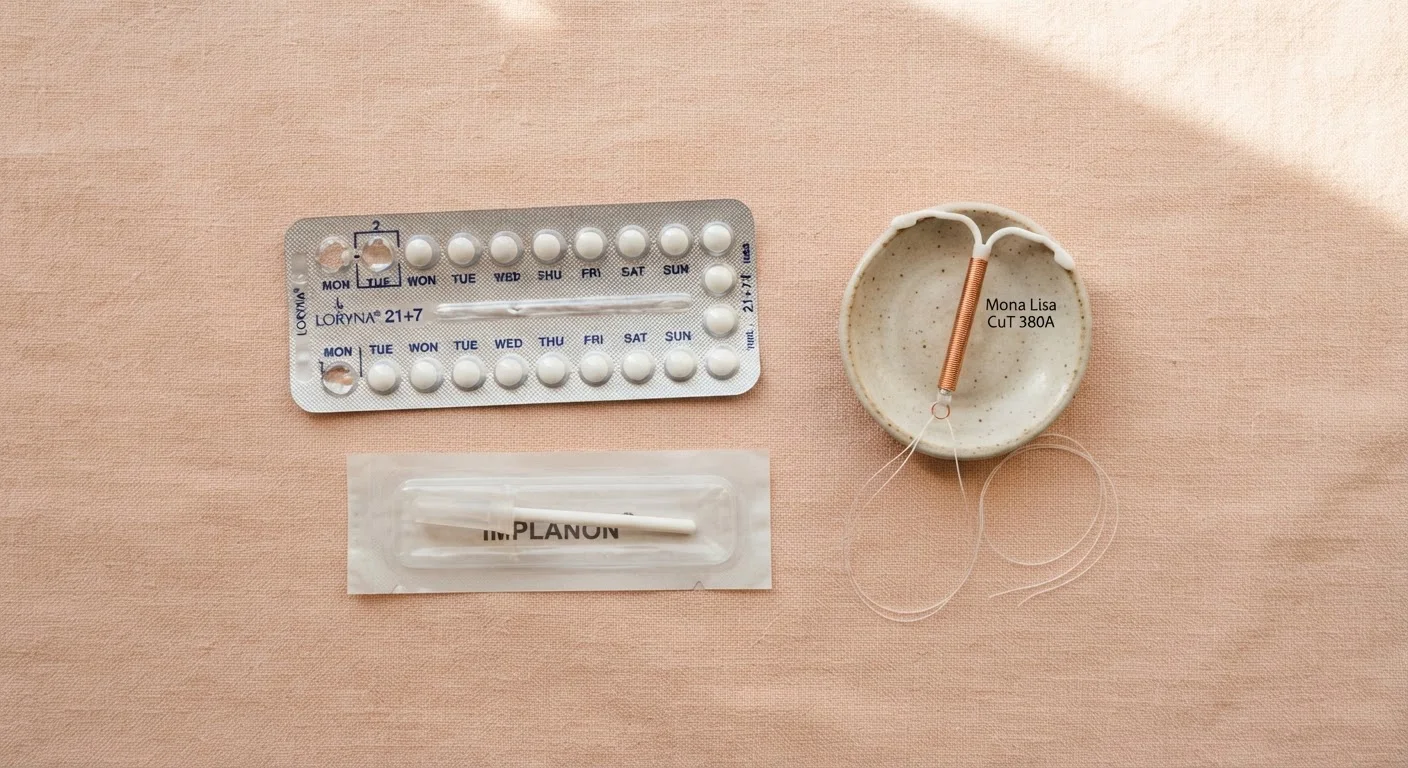
Short-acting methods include combined oral contraceptive pills, the hormonal patch, and the vaginal ring. Pills typically contain synthetic estrogen and progestin (or progestin only) and work by suppressing ovulation, thickening cervical mucus, and altering the uterine lining. The patch and ring deliver similar hormones through the skin or vaginal wall, respectively, on a weekly or monthly schedule. All three require regular user action — swallowing a pill daily, replacing a patch weekly, or inserting a new ring monthly — to maintain effectiveness.
Long-acting reversible contraceptives (LARCs) include hormonal intrauterine devices (IUDs), the copper IUD, and the subdermal hormonal implant. Hormonal IUDs release low-dose progestin locally to thicken cervical mucus and, at higher doses, suppress ovulation. The copper IUD is non-hormonal; copper ions create an environment that impairs sperm function. The implant — a small rod inserted under the skin of the upper arm — releases progestin continuously for up to three years. Once placed by a clinician, LARCs require no daily action from the user. For a broader look at how hormonal and non-hormonal mechanisms differ, see our guide to hormonal vs. non-hormonal contraception.
Effectiveness: Perfect Use vs. Real-World Use
Effectiveness figures are commonly reported in two ways: perfect use (method used exactly as directed every time) and typical use (reflecting real-world patterns including missed doses or incorrect application).
~91%
Typical-use effectiveness of combined pill
According to the CDC, about 9 in 100 people using the pill with typical use will experience an unintended pregnancy per year.
>99%
Typical-use effectiveness of IUDs and implant
LARCs consistently show greater than 99% effectiveness in both perfect and typical use, per published contraceptive efficacy data.
45%
Share of US unintended pregnancies linked to inconsistent use
Research published in the American Journal of Obstetrics and Gynecology identifies inconsistent or incorrect use of contraception as a leading contributor to unintended pregnancy.
LARCs consistently show less difference between perfect and typical use because the method works independently of daily user behavior. Short-acting methods, by contrast, can see their typical-use effectiveness drop notably below their theoretical maximum — largely due to missed pills, late patch changes, or inconsistent ring placement. This gap is especially meaningful for people with demanding schedules or difficulty maintaining routines.
It is worth noting that no reversible method offers 100% protection, and none prevents sexually transmitted infections. Condoms remain the only barrier that reduces STI transmission risk.
No Contraceptive Method Prevents STIs
Even highly effective reversible methods — including LARCs — offer no protection against sexually transmitted infections. If STI prevention is a concern, using condoms consistently alongside your chosen contraceptive method is strongly recommended. Discuss your full sexual health needs with a clinician to identify a comprehensive approach.
Reversibility and Return to Fertility
All methods discussed here are classified as reversible, but the practical meaning of that term differs between categories.
With short-acting methods, contraceptive effect ends quickly once the method is stopped — often within days. Most people find their natural cycle returns within one to three months after stopping pills, the patch, or the ring, though individual variation exists.
With LARCs, reversibility requires a clinical procedure: a provider must remove the IUD or implant. After removal, fertility typically returns promptly — often within the first menstrual cycle — for both IUD and implant users. The copper IUD can also be removed at any time, with fertility returning similarly quickly.
Understanding these nuances matters if pregnancy is a near-term goal. For a fuller picture of how contraceptive choices intersect with life stage, our complete overview of contraception across your reproductive years offers helpful context.
Practical Considerations: Lifestyle, Side Effects, and Access
Beyond effectiveness and reversibility, several practical factors shape which option fits a given person's life.
- Daily routine: Short-acting methods demand consistent habits. Anyone who frequently travels across time zones, works irregular shifts, or finds daily reminders difficult may find LARCs a more reliable fit.
- Side effect profiles: Hormonal methods — whether short- or long-acting — can influence mood, libido, and bleeding patterns, though these effects vary widely between individuals and formulations. The copper IUD may increase menstrual flow and cramping for some users, particularly in the first few months.
- Health history: Certain cardiovascular risk factors or a history of migraines with aura may make estrogen-containing methods unsuitable. A clinician can help assess individual contraindications.
- Access and cost structure: Pills, patches, and rings require ongoing prescriptions and supplies. LARCs have a higher upfront cost but often work out to lower cost per year over their lifespan — coverage varies significantly by insurance plan.
It is also worth questioning common assumptions about these methods. Widely held misconceptions about contraception reliability can affect both method choice and consistent use.
Bring Your Questions to the Appointment
Before meeting with your provider, consider writing down your priorities — such as whether you want to conceive in the next one to two years, any hormonal sensitivity concerns, or preference for a low-maintenance method. A prepared conversation makes it easier to reach a decision that genuinely reflects your needs. Your provider can also review your full health history to flag any contraindications you may not be aware of.
Comparing the Methods at a Glance
The table below summarizes key attributes across the main method types. Use it as a starting point for your conversation with a healthcare provider, not as a substitute for personalized clinical advice.
| Combined Pill | Patch / Ring | Hormonal IUD | Copper IUD | Implant | |
|---|---|---|---|---|---|
| Duration per use | Daily | Weekly / Monthly | 3–8 years | Up to 10–12 years | Up to 3 years |
| Typical-use effectiveness | ~91% | ~91–93% | >99% | >99% | >99% |
| Hormonal | Yes (estrogen + progestin or progestin-only) | Yes (estrogen + progestin) | Yes (progestin, local) | No | Yes (progestin) |
| User action required | Daily pill | Weekly or monthly replacement | None after insertion | None after insertion | None after insertion |
| Return to fertility after stopping | Days to months | Days to months | Prompt after removal | Prompt after removal | Prompt after removal |
| Clinical procedure needed | No | No | Yes (insertion/removal) | Yes (insertion/removal) | Yes (insertion/removal) |
If you are exploring methods beyond hormonal and LARC options, fertility awareness methods represent a separate, non-pharmacological approach with its own evidence base and limitations worth understanding.
This article is for general informational purposes only and does not constitute medical advice. Please consult a qualified healthcare provider before making any decisions about contraception or reproductive health.