

Key Takeaways
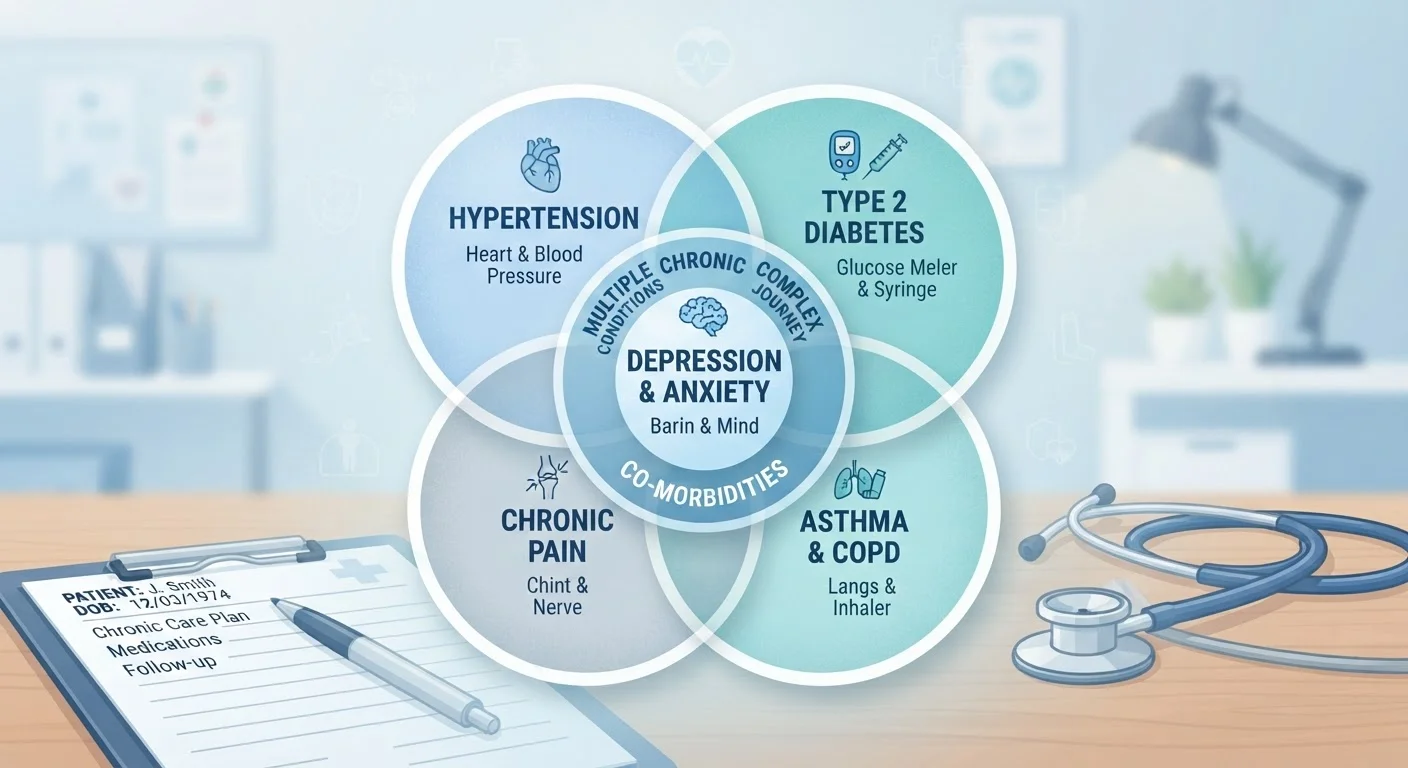
- Comorbidity means having two or more chronic conditions simultaneously — a common reality for many adults.
- Some condition pairs, such as type 2 diabetes and hypertension, frequently co-occur due to shared biological pathways.
- Overlapping diagnoses can complicate treatment because medications for one condition may affect another.
- Integrated, coordinated care from multiple clinicians is often needed when comorbidities are present.
- Patients with comorbidities benefit from maintaining a comprehensive, up-to-date medication and diagnosis list.
- Mental health conditions frequently co-occur with physical chronic illnesses and deserve equal clinical attention.
Comorbidity
Comorbidity refers to the presence of two or more distinct chronic health conditions in the same person at the same time. These conditions may be related to each other, share underlying risk factors, or exist independently. The term is widely used in clinical medicine to describe how a patient's overall health picture is shaped by multiple simultaneous diagnoses.
Clinicians sometimes distinguish between 'comorbidity' (a secondary condition alongside a primary index disease) and 'multimorbidity' (two or more chronic conditions with no single condition designated as primary). Both terms appear in the literature, often interchangeably.
Why Comorbidities Are More Common Than You Might Think
Many people assume that a single diagnosis defines their medical story, but for a large share of adults, the reality is more complex. Understanding what qualifies as a chronic condition is the starting point — these are conditions that persist for a year or more and typically require ongoing management. When two or more such conditions exist simultaneously, clinicians use the term comorbidity or multimorbidity.
The scale of this phenomenon is significant. Studies drawing on large primary care databases consistently find that multimorbidity is the norm rather than the exception among adults over 60, and it is increasingly common in younger age groups. Chronic disease does not tend to arrive alone.
~40%
U.S. adults with two or more chronic conditions
According to the CDC, approximately 4 in 10 U.S. adults are living with two or more chronic conditions simultaneously.
Over 65%
Adults 65+ with multimorbidity
Research published in peer-reviewed public health journals consistently finds multimorbidity affects the majority of adults in older age groups.
5+
Medications on average for multimorbid patients
Studies on polypharmacy show that people managing multiple chronic conditions are often prescribed five or more medications, raising the risk of drug interactions.
Several forces drive this clustering. Shared biological mechanisms — such as chronic low-grade inflammation, metabolic dysfunction, or hormonal dysregulation — can predispose a person to multiple diagnoses. Socioeconomic factors, including limited access to nutritious food, safe environments for physical activity, and preventive care, also increase the likelihood that several conditions develop over time.
Common Condition Pairs and Why They Cluster
Certain condition combinations appear together so frequently that clinicians anticipate one when they diagnose the other. Type 2 diabetes and hypertension are a well-established example: both are rooted in insulin resistance and vascular inflammation, and each worsens the cardiovascular risk posed by the other. Similarly, obesity is a recognized driver of conditions including sleep apnea, osteoarthritis, and non-alcoholic fatty liver disease.
Chronic pain conditions illustrate another clustering pattern. People living with fibromyalgia, for instance, have significantly elevated rates of anxiety disorders and irritable bowel syndrome — a clustering researchers attribute partly to central sensitization, an altered processing of pain signals in the nervous system.
The relationship between chronic physical illness and mental health deserves particular attention. As explored in depth in our article on how chronic illness and depression intersect, the two influence each other bidirectionally: living with pain or functional limitation raises depression risk, while depression can impair self-management, worsen inflammation, and reduce adherence to treatment plans. Treating one without addressing the other often yields incomplete results.
How Comorbidities Complicate Treatment
Managing a single chronic condition requires careful, ongoing calibration. Add a second or third diagnosis and the complexity multiplies considerably. The core challenges fall into three overlapping areas.
Medication Interactions and Contraindications
A drug that effectively controls one condition may be inappropriate — or require dose adjustment — in the presence of another. Beta-blockers, for example, are a cornerstone of heart failure management but must be used cautiously in people with certain respiratory conditions. Nonsteroidal anti-inflammatory drugs (NSAIDs) commonly used for pain may elevate blood pressure or impair kidney function in people with hypertension or chronic kidney disease. Polypharmacy — the use of multiple medications simultaneously — increases the risk of adverse interactions and is a central concern in comorbidity management.
Competing Clinical Priorities
Clinical guidelines are typically written for single conditions in otherwise healthy patients. When guidelines from two conditions give conflicting recommendations — for instance, one calling for high fluid intake and another recommending fluid restriction — clinicians must use informed judgment to prioritize, personalize, and balance care. This is one reason that patients with multiple diagnoses benefit from coordinated care teams rather than siloed specialist management.
Self-Management Burden
Each chronic condition typically comes with its own monitoring demands, lifestyle modifications, and follow-up schedules. Stacking these requirements can be overwhelming. Understanding where self-management has limits is important, as is recognizing that the burden of managing multiple conditions can itself contribute to fatigue, anxiety, and reduced quality of life.
Navigating Care With Multiple Diagnoses
Living with comorbidities is manageable, but it requires a more deliberate approach to healthcare engagement. A few evidence-informed strategies can make a meaningful difference.
Centralize your records. Maintain a single, current document listing all diagnoses, medications (including over-the-counter drugs and supplements), allergies, and recent test results. Share this at every clinical encounter, not just with new providers. Familiarizing yourself with the key clinical terms used in chronic care can help you participate more actively in these conversations.
Ask about care coordination. When multiple specialists are involved, gaps and conflicts in your care plan can emerge without anyone noticing. A primary care provider can often serve as the coordinating clinician, but you may need to take an active role in ensuring your specialists communicate with each other.
Prepare thoroughly for appointments. Time with clinicians is limited, and the complexity of comorbid care means there is usually more to cover than a single appointment allows. Our guide on preparing for a specialist appointment when you have a chronic condition offers a practical framework for making those sessions count.
“Multimorbidity is now the most common presentation in primary care. Our systems were designed for single diseases, and that mismatch is one of the biggest challenges facing modern medicine.”
— Martin Fortin, Family medicine researcher and leading multimorbidity scholar, Université de Sherbrooke
This article is for informational purposes only and does not constitute medical advice. If you have concerns about a health condition or your treatment plan, please consult a qualified healthcare professional.