

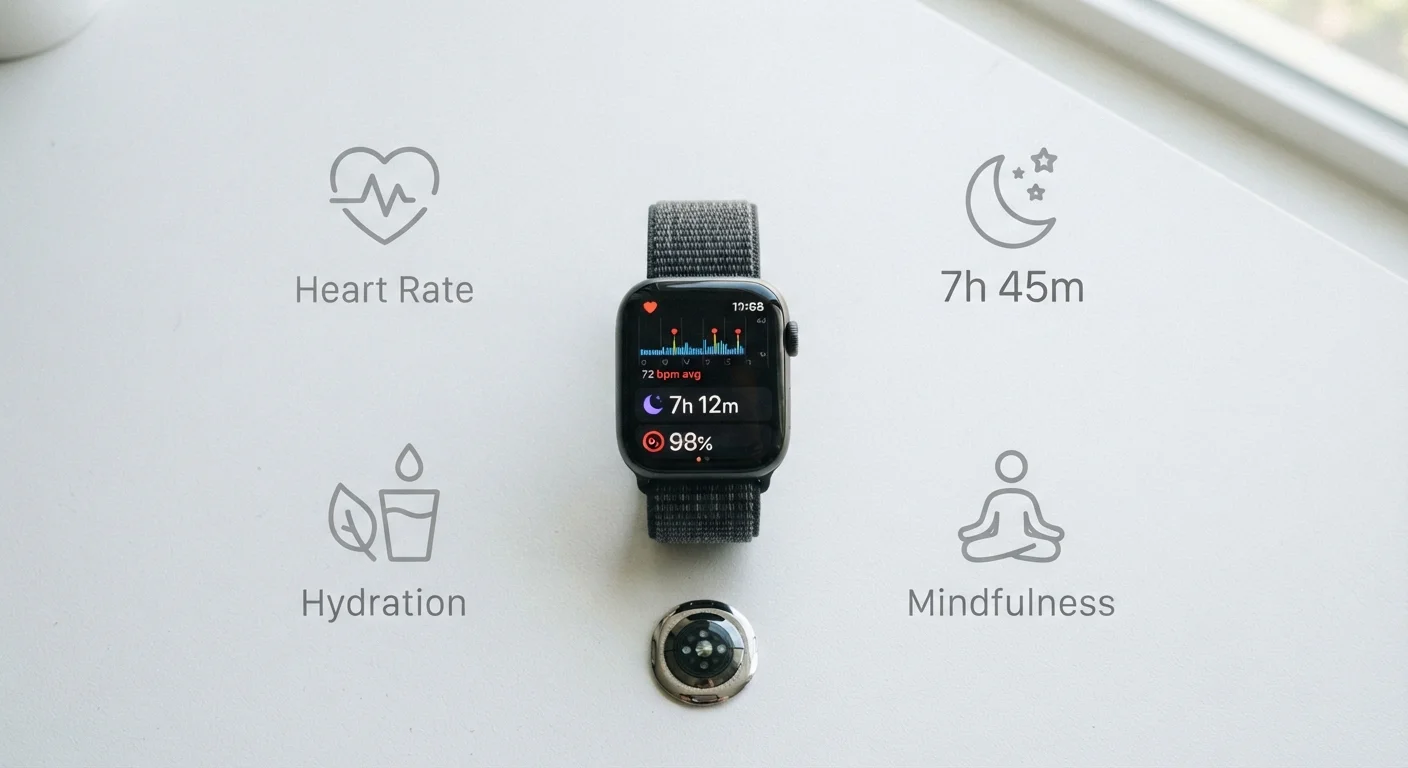
Key Takeaways
- Wellness trackers can measure far more than steps, including heart rate variability, blood oxygen, and stress indicators.
- Each metric category reflects a different aspect of health and requires its own interpretation framework.
- Tracker data is best used as a trend-spotting tool, not a diagnostic instrument.
- Always consult a qualified healthcare professional before acting on tracker data for medical decisions.
Why Metric Categories Matter
Not all wellness trackers are built alike — and neither are the numbers they produce. A device might excel at cardiac monitoring while offering only rough estimates for sleep stages. Understanding the category of metric a tracker measures helps you set realistic expectations, choose the right tool for your goals, and avoid misreading data that was never designed to answer your question.
The eight categories below cover most of what consumer wearables and health apps track today. For a broader look at how to interpret dashboard numbers once you have them, see our Fitness Tracking 101 guide.
Activity and Movement
Steps, distance, active minutes, and floors climbed fall under this foundational category. Accelerometers detect motion and translate movement patterns into activity estimates. While step counts are the most recognized output, they represent only one dimension of physical activity — intensity, type of movement, and sedentary time matter just as much. Steps alone give an incomplete picture of fitness, which is why trackers increasingly pair movement data with intensity zones.
Steps are a starting point, not the whole picture of physical activity.
Heart Rate
Resting heart rate, exercise heart rate, and heart rate zones are monitored using photoplethysmography (PPG) — a light-based sensor on the wrist or finger that detects blood volume changes. Resting heart rate trends can reflect cardiovascular fitness over time, while exercise zones help gauge workout intensity. Wrist-based optical sensors are convenient but less precise during high-movement activities than chest-strap monitors. See the difference between activity trackers and dedicated heart rate monitors for a fuller comparison.
Resting heart rate trends over weeks can reflect meaningful cardiovascular fitness changes.
Heart Rate Variability (HRV)
HRV measures the millisecond-level variation between successive heartbeats. Higher variability generally indicates a well-recovered nervous system, while lower values can reflect stress, illness, or inadequate sleep. Most consumer devices calculate a simplified HRV score rather than raw interbeat intervals, so treat your score as a personal trend indicator rather than a clinical measure. HRV is highly individual — compare your readings to your own baseline, not population averages.
HRV is most meaningful when compared to your own personal baseline, not general norms.
Sleep
Sleep trackers estimate total sleep duration, sleep stages (light, deep, REM), and disruptions using movement and heart rate data. While consumer trackers cannot replicate the precision of clinical polysomnography, they are reasonably reliable for tracking sleep duration trends and broad stage patterns. Sleep tracking apps reveal useful patterns, but their stage classifications carry meaningful uncertainty — use the data directionally rather than definitively.
Sleep stage classifications from consumer trackers carry uncertainty — use them for trends, not diagnosis.
Blood Oxygen Saturation (SpO2)
Blood oxygen saturation — expressed as SpO2 — measures the percentage of hemoglobin carrying oxygen. Consumer wearables use optical sensors to estimate this value, typically during sleep or on demand. Healthy adults generally maintain SpO2 above 95%, though individual variation exists. Importantly, consumer SpO2 readings are screening estimates, not medical diagnostics. Persistent low readings warrant a conversation with a healthcare provider and, if indicated, a clinically validated pulse oximeter.
Persistent low SpO2 readings on a consumer tracker always merit a conversation with a healthcare provider.
Stress and Recovery Scores
Many devices synthesize heart rate, HRV, sleep quality, and activity data into composite stress or recovery scores. These proprietary algorithms vary widely by manufacturer and are not standardized across platforms. A high stress score on one device is not directly comparable to a score from another. These scores are useful as internal feedback tools — prompting reflection on lifestyle factors like sleep debt or overtraining — but should never be interpreted as clinical measurements of psychological stress or physiological recovery.
Stress scores are proprietary composites — useful for self-reflection, not cross-device or clinical comparison.
Nutrition and Hydration
Diet-tracking apps log food intake, macronutrients (carbohydrates, protein, fat), micronutrients, and calorie estimates, typically requiring manual entry or barcode scanning. Some wearables prompt hydration reminders based on activity level and environmental temperature. Accuracy in this category depends heavily on the quality of food databases and the consistency of user logging — portion estimation error is a well-documented limitation. Trackers in this category inform dietary patterns rather than prescribing nutritional targets, which should come from a registered dietitian for personalized needs.
Nutrition tracking accuracy depends on database quality and consistent logging — both have real limitations.
Menstrual and Reproductive Health
Cycle-tracking tools log menstrual periods, symptoms, basal body temperature, and predicted fertile windows. Some advanced wearables estimate cycle phase using skin temperature data collected overnight. These tools can help users identify patterns and communicate more effectively with their healthcare provider. They are not validated contraceptive methods, and their predictive accuracy varies based on cycle regularity. Individuals with irregular cycles or reproductive health concerns should discuss tracking data with a gynecologist or qualified provider rather than relying on app predictions alone.
Cycle tracking apps aid pattern awareness but are not validated contraceptive tools.
Using Your Tracker Data Responsibly
Each metric category above adds a layer of self-knowledge — but layers can compound into confusion if you treat every fluctuation as a health signal. Consumer trackers are validated wellness tools, not medical devices. Their readings carry measurement error, and algorithms that convert raw sensor data into scores vary widely by manufacturer.
Build a Baseline Before Drawing Conclusions
Wear your tracker consistently for at least two to four weeks before interpreting trends in HRV, resting heart rate, or sleep scores. Single-day readings are heavily influenced by variables like caffeine, alcohol, illness, and stress. A stable personal baseline makes deviations far more meaningful and reduces the risk of over-reacting to normal day-to-day fluctuation.
Before relying on any single reading, establish your personal baseline over several weeks. Trends across time are far more meaningful than any single data point. For a critical look at accuracy limits across device types, see key questions to ask about your tracker's accuracy. And if you want to explore additional measurement tools beyond wearables, health calculators can complement tracker data with structured, input-based assessments.
This article is for informational purposes only and does not constitute medical advice. Consult a qualified healthcare professional for any personal health concerns or before making decisions based on tracker data.