

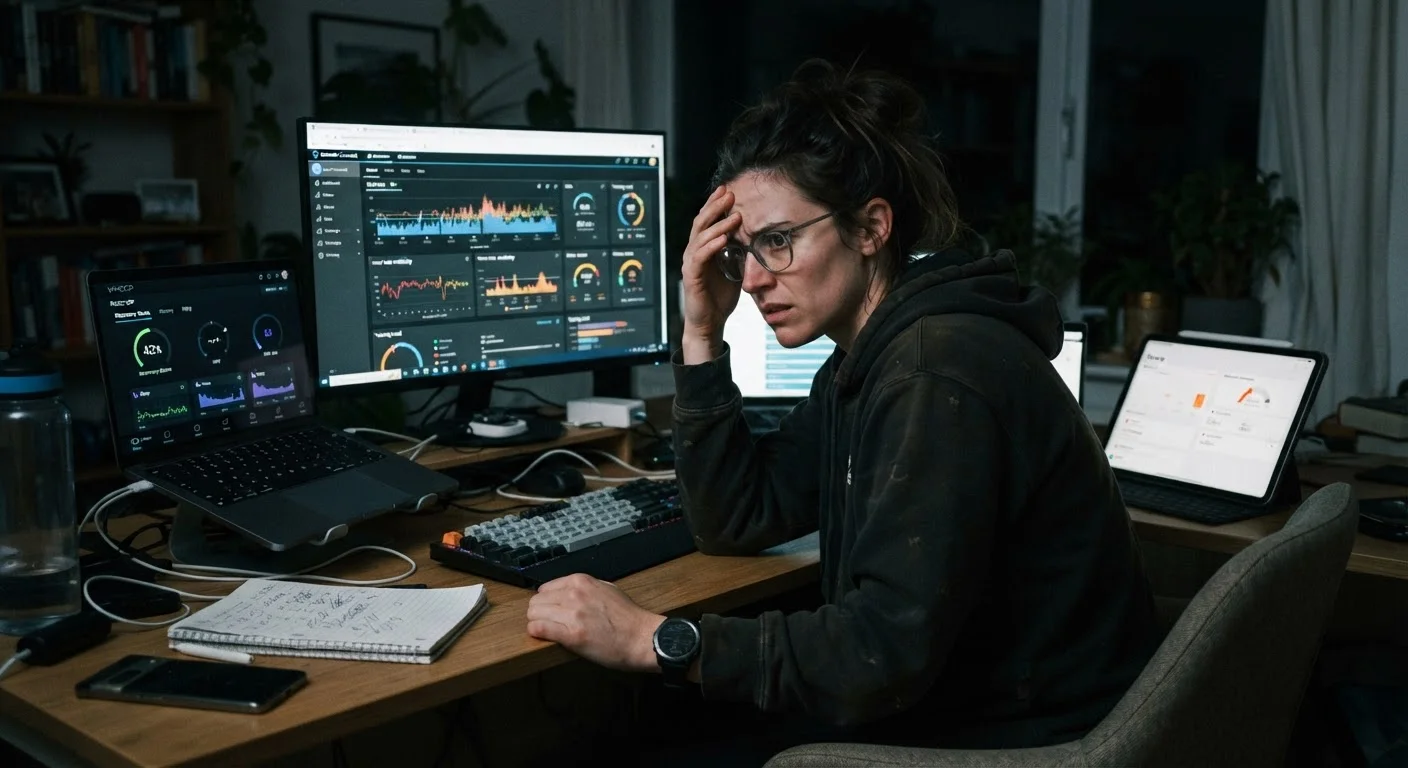
Key Takeaways
- Obsessive checking of fitness metrics can increase anxiety rather than motivate healthier behavior.
- Treating tracker data as absolute truth ignores known accuracy limitations of consumer devices.
- Skipping rest because a tracker says to move more is a common and potentially harmful pattern.
- A structured weekly review is more useful than constant real-time monitoring.
- If tracking triggers guilt or disordered habits, stepping back is a legitimate health decision.
How a Helpful Habit Turns Harmful
Fitness tracking, done well, surfaces patterns that are genuinely hard to see otherwise — how sleep quality shifts with exercise timing, or how step counts dip during stressful weeks. For many users, this visibility drives positive change. For others, it quietly tips into territory that works against their wellbeing.
The shift is rarely dramatic. It usually begins with reasonable engagement: checking your ring's readiness score each morning, logging meals to stay accountable, celebrating a step streak. What changes is the relationship to the data. When numbers become the primary way you evaluate a day — rather than one of several useful signals — tracking stops serving you and starts directing you.
If you're new to wearables, building sustainable habits from day one can prevent many of these patterns from forming in the first place. Understanding where tracking goes wrong is equally essential.
Trackers Do Not Replace Clinical Assessment
Consumer fitness trackers and diet logging apps are wellness tools, not medical devices. Metrics like heart rate variability, sleep stages, and calorie burn carry meaningful error margins. Do not use tracker output to self-diagnose conditions, adjust medications, or avoid seeking professional care when symptoms arise.
The Mistakes That Undermine Tracking's Value
Most counterproductive tracking patterns fall into recognizable categories. They are not signs of weakness — they reflect how these tools are designed and marketed, often in ways that encourage over-reliance.
Checking metrics so frequently throughout the day that the data drives anxiety instead of insight.
Why it happens: Wearables are designed to surface data constantly, and intermittent notifications create a feedback loop that encourages repeated checking — much like social media.
Accepting all tracker readings as precise medical-grade measurements.
Why it happens: Devices are marketed with technical-sounding metrics, which lends them an air of scientific authority that their actual accuracy often does not support.
Overriding physical signals — fatigue, soreness, hunger — because the tracker says otherwise.
Why it happens: When a device shows an unmet step goal or a calorie surplus, users feel pressure to comply with the number rather than their own body's feedback.
Logging food and activity with such precision that meals and workouts become stressful obligations.
Why it happens: Detailed logging is promoted as the key to accuracy, so users escalate their effort to weigh every ingredient and record every step, creating an unsustainable burden.
Using tracking data to justify extreme restriction or excessive exercise beyond what is safe.
Why it happens: Visible metrics can make it easy to rationalize escalating behavior — the data feels objective, lending a false sense of control over outcomes.
Sleep tracking deserves a specific mention here. Worrying about poor sleep data can itself worsen sleep — a documented phenomenon sometimes called orthosomnia. Understanding the real limits of sleep tracking technology helps calibrate how seriously to take any single night's readout.
When Tracking Affects Mental Health
If monitoring your fitness data consistently triggers anxiety, guilt, or obsessive behavior around food or exercise, this is a signal worth taking seriously. These patterns can contribute to or worsen disordered eating and compulsive exercise. Speak with a qualified healthcare or mental health professional rather than trying to self-manage these responses.
Recalibrating Your Relationship With Your Tracker
The goal is not to abandon tracking — for many people, the data is genuinely useful. The goal is to use it at the right level of intensity for your situation.
Practically, this means treating your tracker as a trend tool rather than a verdict machine. A single day's numbers mean very little; a month of data reveals patterns worth acting on. It also means deciding in advance what you will and will not change based on tracker output, so the device informs decisions rather than making them.
~36%
Wearable users who report tracker-related anxiety
Research published in peer-reviewed journals has found a meaningful proportion of wearable users experience increased worry tied directly to device notifications and metric displays.
±20%
Typical calorie burn error margin in consumer trackers
Multiple independent validation studies have found consumer wearables can misestimate energy expenditure by 15–20% or more depending on activity type and device placement.
If you find that stepping back from constant monitoring feels uncomfortable or that anxiety spikes when you can't check your data, that response itself is information. Understanding when well-meaning habits backfire applies here: sometimes the tool we adopt to feel more in control is amplifying the very stress it was meant to reduce. A qualified healthcare provider or mental health professional is the right resource when that line is crossed.
This article is for general informational purposes only and does not constitute medical advice. Always consult a qualified healthcare professional regarding personal health decisions, symptoms, or concerns.