

| Primary output type | Ranked list of possible conditions (differential diagnosis) |
| Urgency tiers typically shown | Emergency, Urgent, See a doctor soon, Self-care |
| Key input variables | Symptom type, onset, duration, severity, location, and medical history |
| What results represent | Statistical probability, not clinical diagnosis |
| When to override the tool | Any time symptoms feel severe, rapidly worsening, or instinctively alarming |
Why Symptom Checker Vocabulary Matters
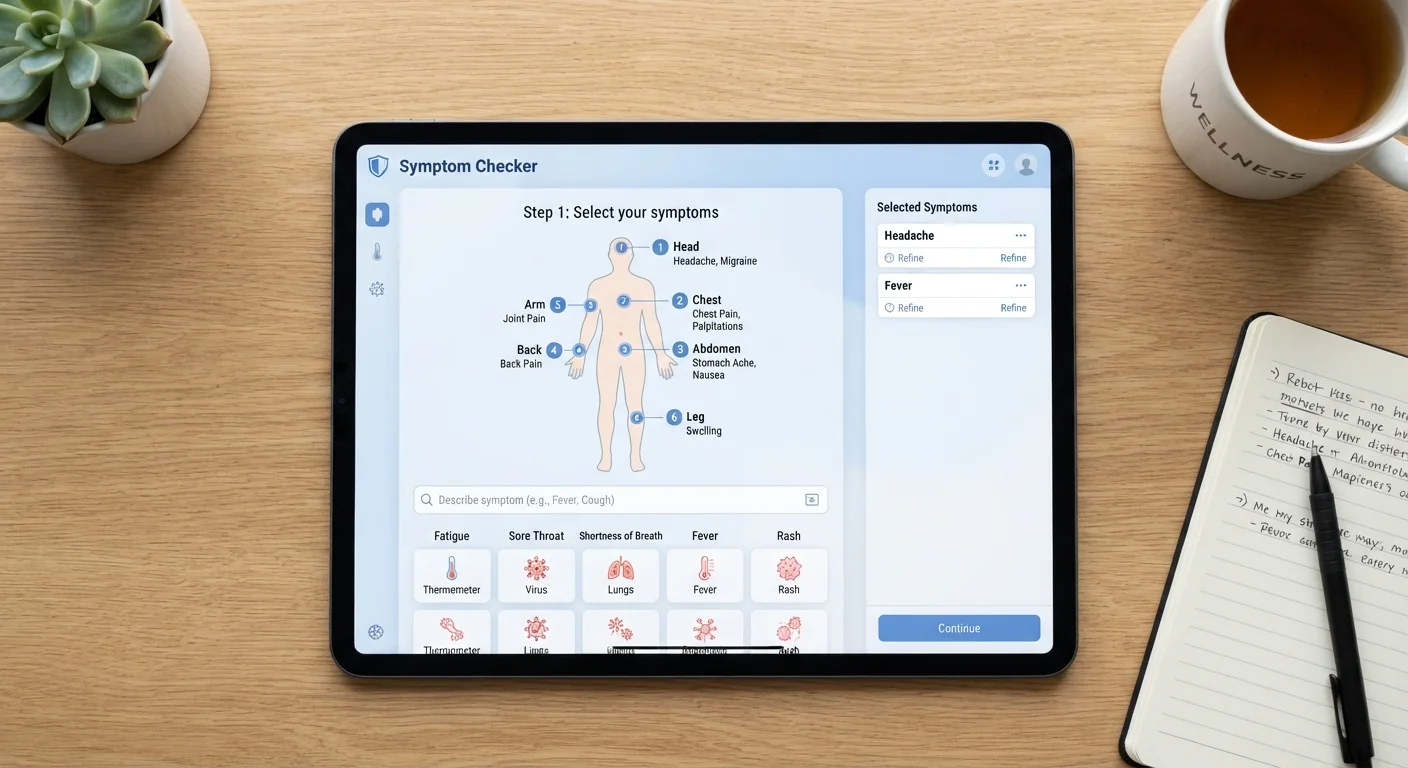
Symptom checkers present results using a blend of clinical terminology, statistical language, and triage categories. Without a working knowledge of these terms, it's easy to misread output — either dismissing something important or overreacting to routine phrasing. This glossary covers the words and phrases you're most likely to encounter, organized so you can use it as a quick reference.
For a broader understanding of what these tools are actually doing behind the scenes, see what a symptom checker actually does. If you're just getting started, a practical first-time walkthrough can orient you step by step.
| Primary output type | Ranked list of possible conditions (differential diagnosis) |
| Urgency tiers typically shown | Emergency, Urgent, See a doctor soon, Self-care |
| Key input variables | Symptom type, onset, duration, severity, location, and medical history |
| What results represent | Statistical probability, not clinical diagnosis |
| When to override the tool | Any time symptoms feel severe, rapidly worsening, or instinctively alarming |
Core Medical and Clinical Terms
These are terms borrowed directly from clinical medicine that appear frequently in symptom checker interfaces and output summaries.
Differential Diagnosis
A ranked list of possible conditions that could explain a patient's symptoms. In a symptom checker, this is generated algorithmically based on your inputs and statistical patterns, not a clinical examination.
Triage
The process of sorting patients or cases by urgency. Symptom checkers use triage categories to recommend how quickly and where you should seek care based on your reported symptoms.
Symptom
A subjective experience reported by the patient, such as pain, fatigue, or nausea. Symptoms differ from signs, which are objective findings measured by a clinician (e.g., blood pressure, fever).
Sign
An objective, measurable indicator of a health condition observed or measured by a healthcare provider. Examples include elevated temperature, swollen lymph nodes, or abnormal heart rhythm.
Etiology
The cause or origin of a disease or condition. When a symptom checker refers to etiology, it is describing possible sources of your symptoms, not a confirmed cause.
Comorbidity
The presence of one or more additional conditions alongside a primary condition. Symptom checkers may ask about comorbidities because they affect which conditions are more or less likely.
Onset
When symptoms first appeared. Onset information — whether symptoms began suddenly (acute) or gradually (insidious) — is a key input that shapes a symptom checker's output.
Acute vs. Chronic
Acute describes conditions or symptoms that are sudden and short-lived; chronic describes those that persist over a long period (typically three months or more). This distinction affects both urgency ratings and likely diagnoses.
Contraindication
A factor that makes a particular treatment or intervention inadvisable. Symptom checkers may note contraindications when flagging whether certain self-care approaches are appropriate for people with specific conditions.
Red Flag Symptom
A symptom or combination of symptoms that signals a potentially serious underlying condition requiring prompt evaluation. Examples include chest pain with shortness of breath, sudden severe headache, or unexplained significant weight loss.
Prevalence
How common a condition is within a population. High-prevalence conditions often rank higher in a differential list because they are statistically more likely, not necessarily more serious.
Self-limiting Condition
A condition that resolves on its own without medical treatment, such as most common colds. Symptom checkers may classify mild symptom patterns as self-limiting and recommend monitoring rather than immediate care.
When a symptom checker references differential diagnosis, it is listing the conditions its algorithm considers statistically plausible given your inputs — not diagnosing you. The ordering of that list reflects probability, not certainty. Only a licensed clinician can establish an actual diagnosis after examination, history-taking, and testing.
Similarly, the word etiology simply means the cause or origin of a condition. Seeing it in output text doesn't indicate a cause has been confirmed — it's descriptive shorthand for "possible source of these symptoms."
For a plain-language breakdown of how the logic behind these rankings works, see how symptom checkers triage inputs.
Triage and Urgency Language
One of the most consequential parts of any symptom checker output is its triage recommendation — the guidance about how quickly and where to seek care. Misunderstanding urgency tiers can lead to delays or unnecessary emergency visits.
Common urgency categories you'll see include:
- Emergency / Call 911: Symptoms suggest a potentially life-threatening condition requiring immediate intervention. Do not drive yourself.
- Urgent Care / ER today: Symptoms warrant same-day evaluation, but you may have time to call your provider first.
- See a doctor soon: Schedule a visit within a few days; symptoms are not immediately dangerous but need professional assessment.
- Self-care / Monitor: Symptoms are consistent with a minor, self-limiting condition. Watch for changes and seek care if symptoms worsen or persist.
These categories are generated algorithmically and reflect population-level patterns. Your individual situation — including age, medical history, and medications — may shift the appropriate response. Always use clinical judgment alongside the tool's recommendation, and consult a qualified healthcare provider if you're uncertain. For context on common symptoms and what they may indicate, additional reference resources can help you build baseline familiarity.
Urgency Ratings Are Algorithmically Generated
The triage category a symptom checker assigns is based on population-level data, not your individual medical history. Factors like age, pregnancy status, immunosuppression, or existing chronic conditions can substantially change the appropriate level of urgency. If a tool rates your symptoms as low-urgency but you feel something is seriously wrong, trust your instincts and contact a healthcare provider. Never delay emergency care based solely on a tool's output.
Statistical and Technical Terms
Symptom checkers use probabilistic reasoning — meaning results are expressed in terms of likelihood, not certainty. Understanding the following concepts helps you interpret outputs responsibly.
Prevalence refers to how common a condition is in the general population or a specific demographic. A high-prevalence condition like the common cold may appear at the top of a differential list simply because it's statistically frequent, not because it's the most serious possibility.
Sensitivity and specificity describe how accurately a screening method detects true positives and excludes true negatives, respectively. Symptom checkers vary widely in these measures depending on the condition being assessed. A tool may be highly sensitive for common presentations but miss atypical ones.
Algorithmic confidence (sometimes shown as a percentage or ranking) reflects how strongly the tool's model associates your symptom pattern with a given condition. It is not a medical probability — it is a computed score based on training data. Before entering your information, it's worth reviewing what to prepare before using a symptom checker to ensure your inputs are as accurate as possible. Be aware that the data you enter is processed by the platform; for details on what that means, see symptom checker privacy considerations.
This article provides general health information and is not a substitute for professional medical advice, diagnosis, or treatment. Always consult a qualified healthcare provider with questions about your health or any symptoms you are experiencing.