

Key Takeaways
- Men account for roughly one in four osteoporosis-related fractures, yet the condition is widely under-diagnosed in males.
- Peak bone mass is reached in the late 20s; after 50, density decline accelerates noticeably.
- Low testosterone, smoking, heavy alcohol use, and low calcium intake are all significant risk factors for men.
- Hip fractures in men carry higher mortality rates than the same injury in women.
- Weight-bearing exercise and adequate vitamin D and calcium intake are foundational to bone preservation.
- Men with risk factors should discuss bone density screening with a healthcare provider — it is not exclusively a women's issue.
Bone Density in Men
Bone density refers to the amount of mineral — primarily calcium and phosphate — packed into your bone tissue. Higher density means stronger, more fracture-resistant bones. Men reach peak bone mass in their late 20s to early 30s, after which density gradually declines. When this loss becomes significant, it can progress to osteoporosis — a condition that increases fracture risk, particularly in the spine, hip, and wrist.
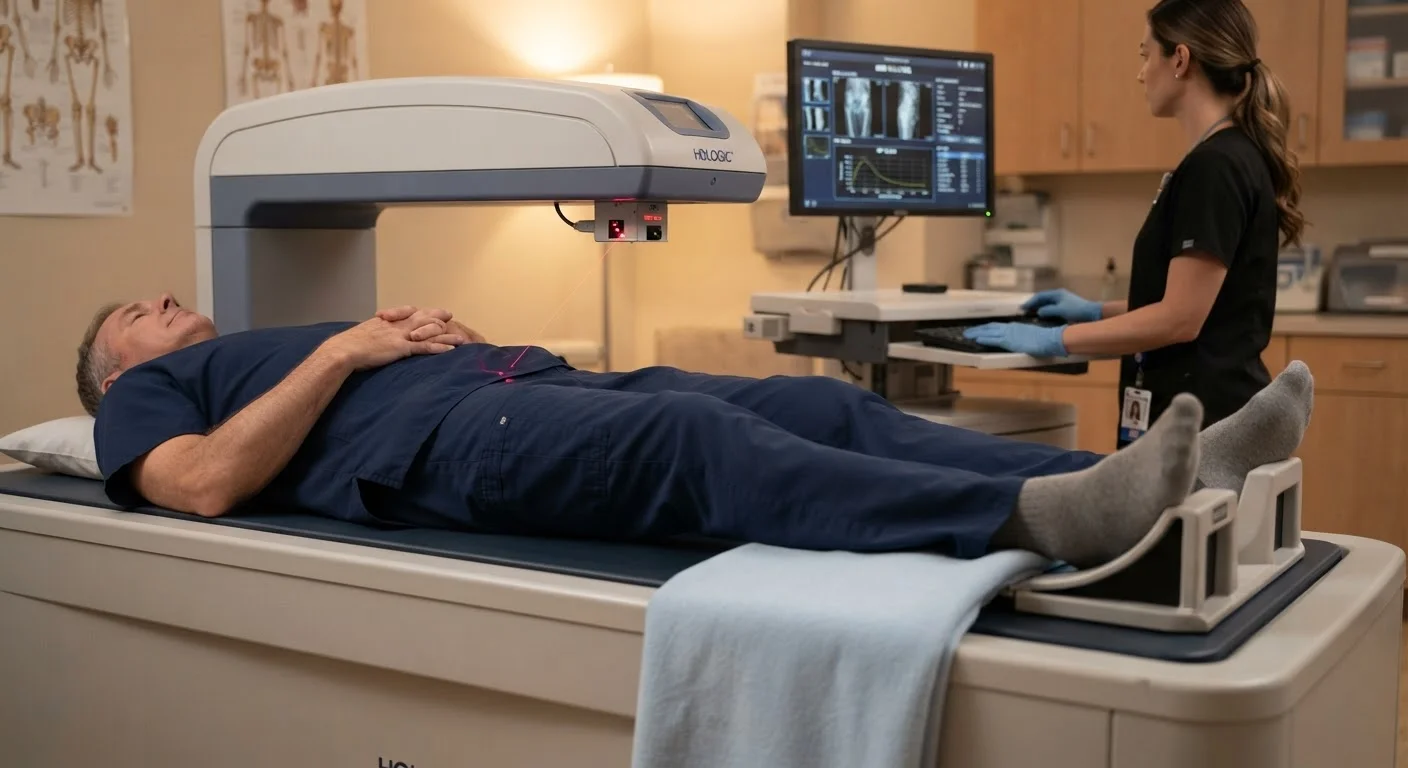
Bone mineral density (BMD) is typically measured using dual-energy X-ray absorptiometry (DEXA) and expressed as a T-score, which compares your density to that of a healthy young adult of the same sex.
Why Men Get Overlooked in the Bone Health Conversation
Osteoporosis is routinely framed as a women's health issue — a consequence of menopause and oestrogen loss. That framing has a cost. Men represent roughly one in four osteoporosis-related fractures, yet they are far less likely to receive screening, preventive counselling, or timely diagnosis. By the time a man sustains a fragility fracture, significant bone loss has often already occurred.
Part of the gap comes from biology: men generally build greater peak bone mass than women and don't experience the rapid hormonal decline that accompanies menopause. But men do lose bone density — more slowly, and starting from a higher baseline, but the trajectory is the same. After age 50, the rate of loss increases meaningfully. By 70, a man's risk of a hip fracture is not trivial — and the consequences are serious. Hip fractures in men are associated with higher short-term mortality rates than equivalent fractures in women, according to data published in peer-reviewed osteoporosis literature.
Addressing this gap starts with recognising that bone health is a lifespan issue for men, not a post-menopausal one. See our guide to screenings men commonly skip for broader context on under-recognised preventive checks.
What Accelerates Bone Loss in Men
Several factors push bone density decline beyond the normal pace of aging. Understanding them helps identify who is most at risk and why.
~25%
Osteoporosis fractures that occur in men
Despite being perceived as a women's condition, men account for approximately one in four osteoporosis-related fractures globally, according to the International Osteoporosis Foundation.
2 million+
US men estimated to have osteoporosis
The National Osteoporosis Foundation estimates over two million American men have osteoporosis, with many more at risk due to low bone mass.
28%
Higher mortality risk after hip fracture in men vs. women
Research published in osteoporosis clinical literature indicates men face a higher short-term mortality rate following hip fracture than women of comparable age.
- Low testosterone: Testosterone directly stimulates bone formation and inhibits resorption. Men with clinically low testosterone — whether from hypogonadism, certain cancer treatments, or pituitary disorders — face meaningfully elevated fracture risk. Oestrogen also plays a protective role in male bone health, as men convert a portion of testosterone into oestrogen, which directly acts on bone tissue.
- Glucocorticoid medications: Long-term use of corticosteroids (such as prednisone) is one of the most potent known causes of secondary osteoporosis in both sexes.
- Smoking and heavy alcohol use: Both are independently associated with reduced bone mineral density. Smoking impairs calcium absorption and reduces oestrogen levels; alcohol interferes with the bone-forming cells called osteoblasts. These habits that quietly undermine men's fitness compound over years.
- Sedentary behaviour: Bone responds to mechanical load. Men who are largely inactive miss a key stimulus for bone maintenance.
- Low calcium and vitamin D intake: Both nutrients are essential for mineralisation and parathyroid hormone regulation. Many men fail to meet recommended intakes consistently.
Talk to Your Doctor Before Age 70
Clinical guidelines generally recommend formal bone density screening for all men at age 70, and earlier for those with risk factors such as low testosterone, steroid use, or a prior fracture. Don't wait for a fracture to prompt the conversation. Raising the topic at a routine physical is a simple, proactive step.
Building and Preserving Bone Density: What the Evidence Supports
The window for building peak bone mass closes in the late 20s, but strategies to preserve existing density remain effective across decades. None of these are exotic — the fundamentals are well-established.
Weight-bearing and resistance exercise are the most consistently supported lifestyle interventions for bone health. Activities that place mechanical stress on the skeleton — walking, jogging, hiking, and especially resistance training — signal bone-forming cells to maintain and rebuild tissue. Strength training across the lifespan provides additional context on how resistance work evolves with age.
Calcium and vitamin D are foundational. Dietary calcium from sources like dairy, fortified foods, and leafy greens supports bone mineralisation. Vitamin D, produced by skin exposure to sunlight and found in fatty fish and fortified foods, is essential for calcium absorption. Men who suspect their intake is inadequate should discuss it with a healthcare provider before reaching for supplements.
Protein intake is a less-discussed but meaningful contributor. Adequate dietary protein supports the collagen matrix that gives bone its tensile strength. Many men don't meet their targets consistently — our article on why men undereat protein explains what realistic intake looks like.
This article is for general informational purposes only and does not constitute medical advice. If you have concerns about bone density or fracture risk, consult a qualified healthcare provider for personalised assessment and guidance.