

Key Takeaways
- Testosterone production peaks during deep sleep, making chronic sleep loss a direct hormonal disruptor.
- Cortisol, the primary stress hormone, rises with poor sleep and suppresses testosterone when chronically elevated.
- Growth hormone, essential for muscle repair and fat metabolism, is released almost entirely during deep sleep.
- Sleep deprivation impairs insulin sensitivity, increasing metabolic disease risk in men.
- Consistently sleeping fewer than 7 hours per night is associated with measurable declines in hormonal and cardiovascular health.
- Improving sleep quality is a foundational, evidence-supported strategy for protecting men's long-term physical health.
Sleep-Hormone Axis in Men
The sleep-hormone axis refers to the bidirectional relationship between sleep quality and the hormones that govern men's physical health — including testosterone, cortisol, growth hormone, and insulin. When sleep is consistently disrupted, these hormonal systems fall out of balance, affecting energy, muscle mass, body composition, cardiovascular function, and metabolic health. Restoring adequate sleep is not just about feeling rested — it directly supports the hormonal environment men rely on to stay healthy.
Many critical hormonal events — including the pulsatile release of luteinizing hormone (LH), which stimulates testosterone production — are tightly coupled to sleep architecture, particularly slow-wave (deep) sleep stages.
Why Sleep Is a Hormonal Event, Not Just Rest
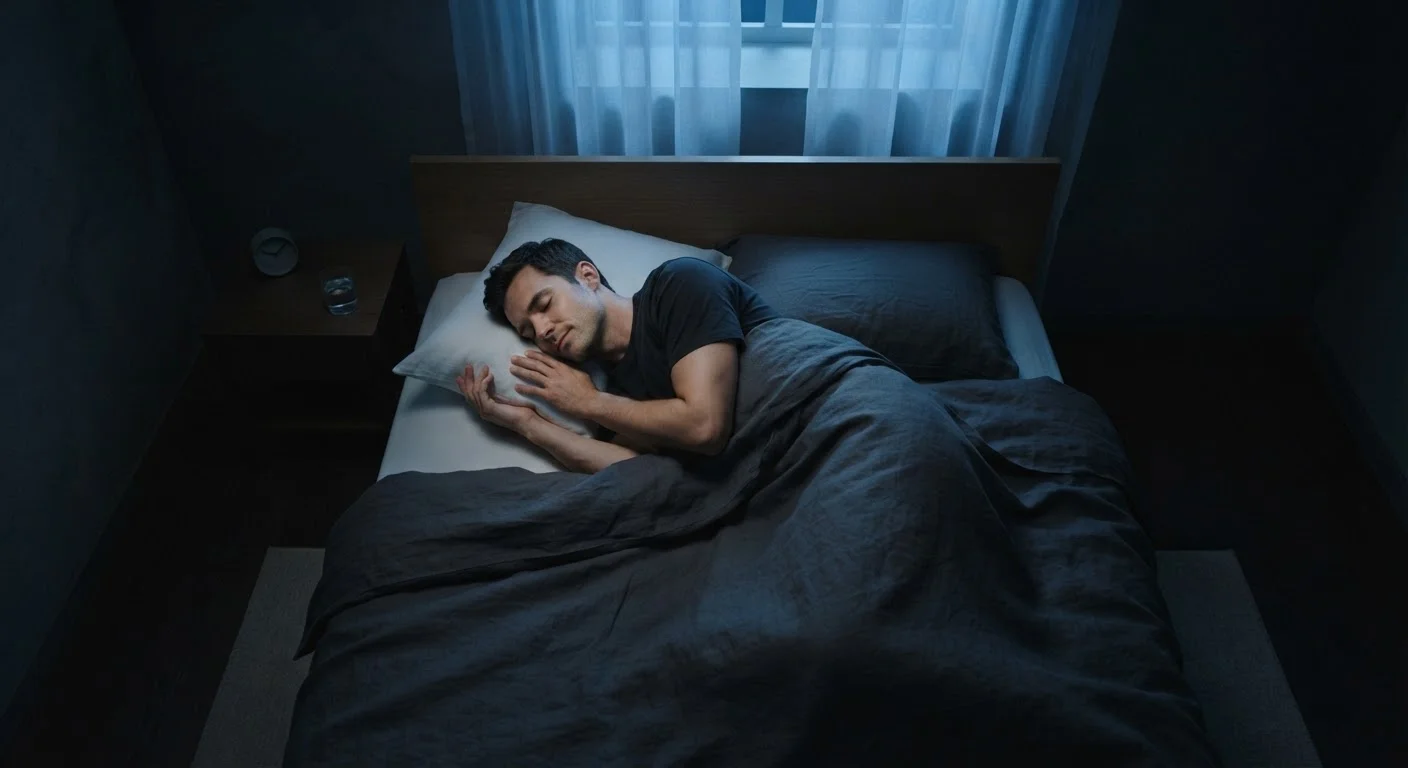
Most men think of sleep as passive recovery — something the body does while the mind switches off. In reality, sleep is one of the most hormonally active states the body enters. The brain and endocrine system use this window to regulate, replenish, and reset hormonal signals that determine how the body builds muscle, manages weight, handles stress, and maintains cardiovascular function.
The architecture of sleep matters as much as its duration. Sleep cycles through distinct stages, including light sleep, deep slow-wave sleep (SWS), and rapid eye movement (REM) sleep. Each stage has distinct hormonal functions. Deep sleep, in particular, is when the pituitary gland releases the majority of daily growth hormone — a hormone critical for muscle repair, fat metabolism, and tissue regeneration. Disrupting this stage, whether through short sleep, alcohol, or sleep disorders, directly limits growth hormone output.
For men specifically, sleep is also when the hypothalamic-pituitary-gonadal (HPG) axis is most active. The surge of luteinizing hormone (LH) that drives testosterone production occurs predominantly during sleep. This makes consistent, quality sleep a physiological prerequisite for maintaining healthy testosterone levels — not an optional lifestyle bonus. See our deep dive into sleep and testosterone for a closer look at what the research shows.
Testosterone, Cortisol, and the Sleep Debt Equation
Testosterone and cortisol operate in a hormonal counterbalance. Testosterone supports anabolic processes — muscle growth, libido, bone density, and energy. Cortisol, the body's primary stress hormone, is catabolic — it breaks tissue down and mobilizes energy for immediate demands. Under normal conditions, these hormones fluctuate across a 24-hour cycle in productive opposition. Sleep disruption upsets this balance in predictable ways.
10–15%
Testosterone reduction from one week of short sleep
A study in the Journal of the American Medical Association found healthy young men sleeping 5 hours per night for one week showed this level of testosterone decline.
<6 hours
Sleep duration linked to low testosterone
Multiple population-based studies associate consistently sleeping fewer than six hours per night with measurably lower testosterone levels in adult men.
~70%
Of daily growth hormone released during deep sleep
Endocrine research indicates the majority of growth hormone secretion occurs during slow-wave sleep stages, underscoring how sleep architecture drives hormonal output.
When sleep is cut short or fragmented, cortisol levels remain elevated into the morning hours rather than declining as they normally should. Chronically elevated cortisol suppresses the HPG axis, blunting testosterone production. Research published in peer-reviewed journals has consistently found that men who sleep fewer than six hours per night tend to have lower testosterone levels than those who achieve seven to nine hours. The effect is dose-dependent: the less sleep, the greater the hormonal suppression.
The practical consequences extend beyond libido. Lower testosterone combined with elevated cortisol accelerates muscle loss, promotes abdominal fat deposition, reduces motivation and physical energy, and impairs recovery from exercise. For men managing body composition or training performance, sleep is not ancillary to the process — it is central to it. You can explore how chronic stress compounds this dynamic in our article on stress, testosterone, and the body.
Protect Your Deep Sleep to Support Hormones
Alcohol, late-night screen exposure, and irregular bedtimes all disproportionately suppress deep slow-wave sleep — the stage most critical for testosterone and growth hormone release. Establishing a consistent wind-down routine and keeping your sleep schedule stable, even on weekends, helps preserve the sleep architecture your hormonal health depends on.
Metabolic and Cardiovascular Consequences of Sleep Deprivation
The hormonal disruption from poor sleep extends well beyond testosterone and cortisol. Insulin sensitivity — the body's ability to efficiently use glucose — declines measurably after even a few nights of insufficient sleep. This happens because sleep deprivation impairs the cellular response to insulin, mimicking early patterns seen in type 2 diabetes risk. Simultaneously, the appetite-regulating hormones leptin (which suppresses hunger) and ghrelin (which stimulates it) shift in the direction that promotes overeating and fat storage.
Cardiovascular health is also directly affected. Sleep loss activates inflammatory pathways and raises blood pressure by keeping the sympathetic nervous system — the body's fight-or-flight system — in a heightened state. Epidemiological research consistently links short sleep duration (typically defined as fewer than six hours) with elevated risks of hypertension, coronary artery disease, and metabolic syndrome in men. These are not marginal associations; they appear across large population studies and are biologically plausible given the hormonal mechanisms involved.
For men already managing chronic conditions, the relationship between sleep and physical health becomes even more clinically relevant. Our article on how chronic conditions affect sleep explains this bidirectional cycle in detail. Sleep apnea deserves specific mention: it is highly prevalent in men, frequently undiagnosed, and directly associated with testosterone suppression, insulin resistance, and elevated cardiovascular risk. Effective treatment of sleep apnea has been shown to improve multiple cardiometabolic markers.
This article is for general informational purposes only and does not constitute medical advice. Always consult a qualified healthcare professional for any health concerns, symptoms, or before making changes to your health routine.
What Men Can Do: Sleep as Preventive Care
Understanding the hormonal consequences of poor sleep reframes it as a men's health priority — not a wellness trend. Prioritizing sleep is a form of preventive care with measurable effects on the endocrine, cardiovascular, and metabolic systems.
The evidence-supported foundations of good sleep hygiene are well established: consistent sleep and wake times that align with the body's circadian rhythm, a cool and dark sleep environment, limiting alcohol and stimulants in the hours before bed, and managing evening stress exposure. These are not complicated interventions, but they require deliberate consistency to produce measurable hormonal benefit.
Men experiencing persistent fatigue, low libido, poor sleep quality, or symptoms suggestive of sleep apnea — such as loud snoring, gasping during sleep, or excessive daytime sleepiness — should discuss these concerns with a healthcare provider. Hormonal and sleep disorders are both diagnosable and treatable. The physiological connections between sleep and male health are well-supported by research, and men's lifestyle and fitness decisions that support recovery will compound over time. Sleep is not the only lever, but it is one of the most underused ones.