

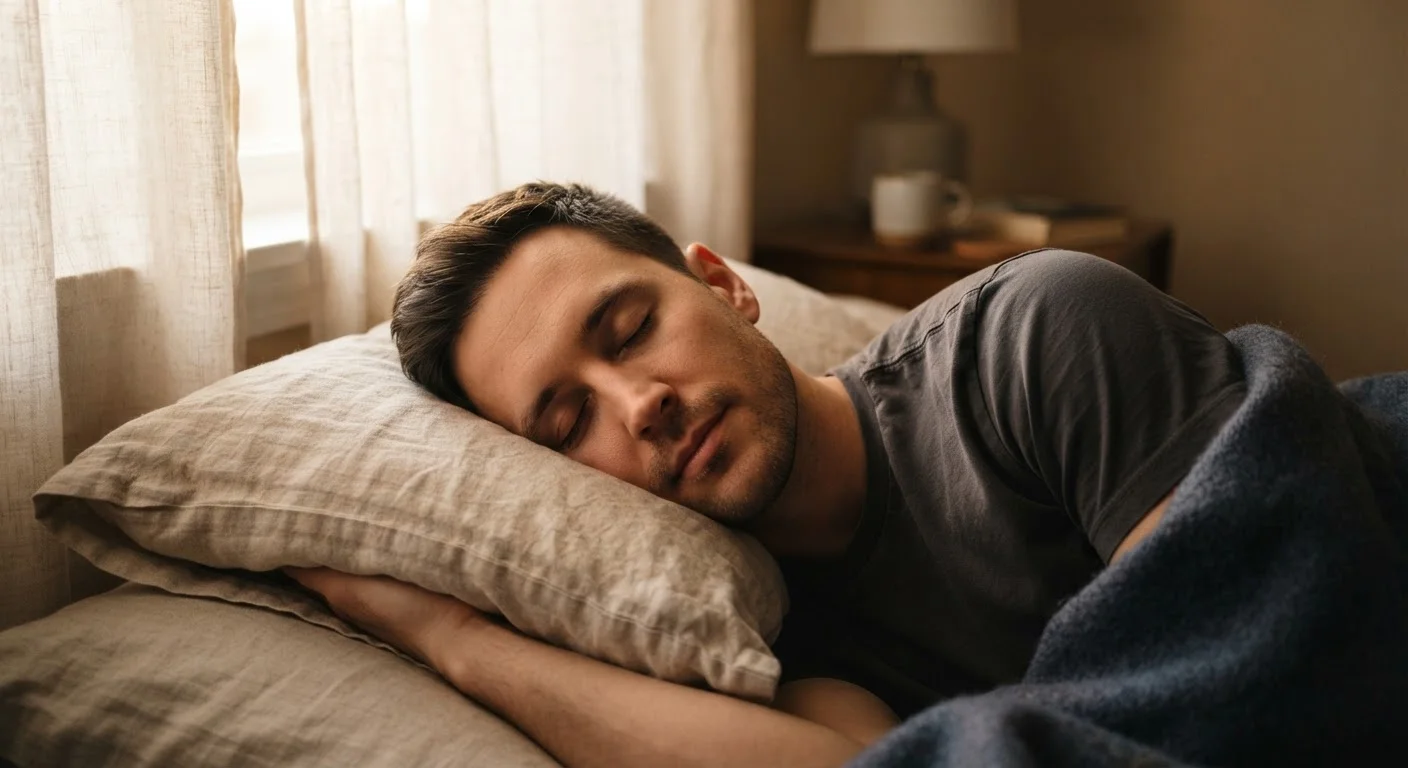
Key Takeaways
- Most daily testosterone release in men occurs during sleep, particularly in deep sleep stages.
- Research suggests even one week of sleep restriction can measurably reduce testosterone levels.
- Both sleep duration and sleep quality independently influence hormonal health.
- Lifestyle habits that support sleep — consistent schedule, limited alcohol, reduced stress — also support hormonal balance.
- Low testosterone symptoms can overlap with poor sleep symptoms, making professional evaluation important.
Sleep and Testosterone
Testosterone is the primary male sex hormone responsible for muscle mass, libido, bone density, mood, and energy. Research consistently shows that the majority of daily testosterone release in men occurs during sleep — particularly during deep, restorative stages. When sleep is cut short or fragmented, the body has less time to carry out this hormonal production.
Testosterone secretion is closely tied to sleep architecture, especially slow-wave sleep (SWS) and REM stages; disruption to these cycles suppresses the hypothalamic-pituitary-gonadal axis, which regulates testosterone output.
Why Testosterone Depends on Sleep
Testosterone doesn't operate on a fixed daily schedule — it follows a rhythm tied closely to sleep. For most men, the largest pulses of testosterone are released during sleep, especially during slow-wave and REM stages. This means the quality of your sleep has a direct bearing on how much testosterone your body produces each day.
The process is governed by the hypothalamic-pituitary-gonadal (HPG) axis — a hormonal feedback loop that signals the testes to produce testosterone. This axis is most active during sleep, which is why a poor night doesn't just leave you tired: it interrupts a core biological function. For more on how sleep affects your body's broader hormonal environment, see how sleep affects male hormonal health.
10–15%
Drop in testosterone after one week of short sleep
A JAMA study found this reduction in healthy young men restricted to five hours of sleep nightly.
7–9 hrs
Recommended nightly sleep for adults
Clinical consensus from organizations including the American Academy of Sleep Medicine supports this range for optimal health.
~30%
Men with sleep apnea estimated to have low testosterone
Research in men with obstructive sleep apnea consistently finds higher rates of testosterone suppression compared to unaffected men.
What the Research Shows
A study published in JAMA restricted healthy young men to five hours of sleep nightly for one week and found daytime testosterone levels dropped by 10–15% — a decline equivalent to roughly 10–15 years of normal age-related change. That's a meaningful hormonal shift from just one week of insufficient sleep.
The relationship isn't limited to total sleep time. Sleep quality matters independently. Men with obstructive sleep apnea — a condition that fragments sleep through repeated breathing interruptions — often exhibit lower testosterone levels compared to men without the condition. Treating sleep apnea has been associated with improvements in hormonal markers, though results vary by individual.
It's also worth noting that the testosterone-sleep relationship runs in both directions. Low testosterone itself can worsen sleep quality, creating a cycle that can be difficult to untangle without professional evaluation. This hormonal interplay is part of a broader picture that includes what testosterone actually does in the male body.
“Sleep is probably the most underrated health habit. We now have solid evidence that it affects hormonal regulation, immune function, cardiovascular health, and cognitive performance — often more directly than the lifestyle factors men tend to focus on.”
— Dr. Eve Van Cauter, Sleep and metabolism researcher, University of Chicago
Practical Steps to Protect Sleep and Hormonal Health
Supporting your sleep is one of the most evidence-aligned, low-risk steps you can take for overall hormonal health. Here's what research and clinical practice suggest:
- Prioritize consistent sleep timing. Going to bed and waking at roughly the same time daily reinforces your circadian rhythm, which anchors testosterone's natural release pattern.
- Protect sleep duration. Aim for seven to nine hours. Chronic restriction below six hours is where hormonal impact becomes most measurable.
- Limit alcohol close to bedtime. Alcohol disrupts sleep architecture — particularly REM sleep — even when it initially helps you fall asleep.
- Address chronic stress. Elevated cortisol (the stress hormone) suppresses testosterone. The link between stress and hormonal disruption is explored further in how stress affects testosterone.
- Get evaluated for sleep disorders. If you snore heavily, wake unrefreshed, or have been told you stop breathing during sleep, discuss screening for sleep apnea with your doctor.
Sleep's impact on men's health extends well beyond hormones. Poor sleep also affects emotional regulation and mental resilience — covered in depth in how sleep and mental health are connected.
This article is for general informational purposes only and does not constitute medical advice. If you are experiencing symptoms of low testosterone, sleep disruption, or related concerns, consult a qualified healthcare professional for personalized evaluation and guidance.