

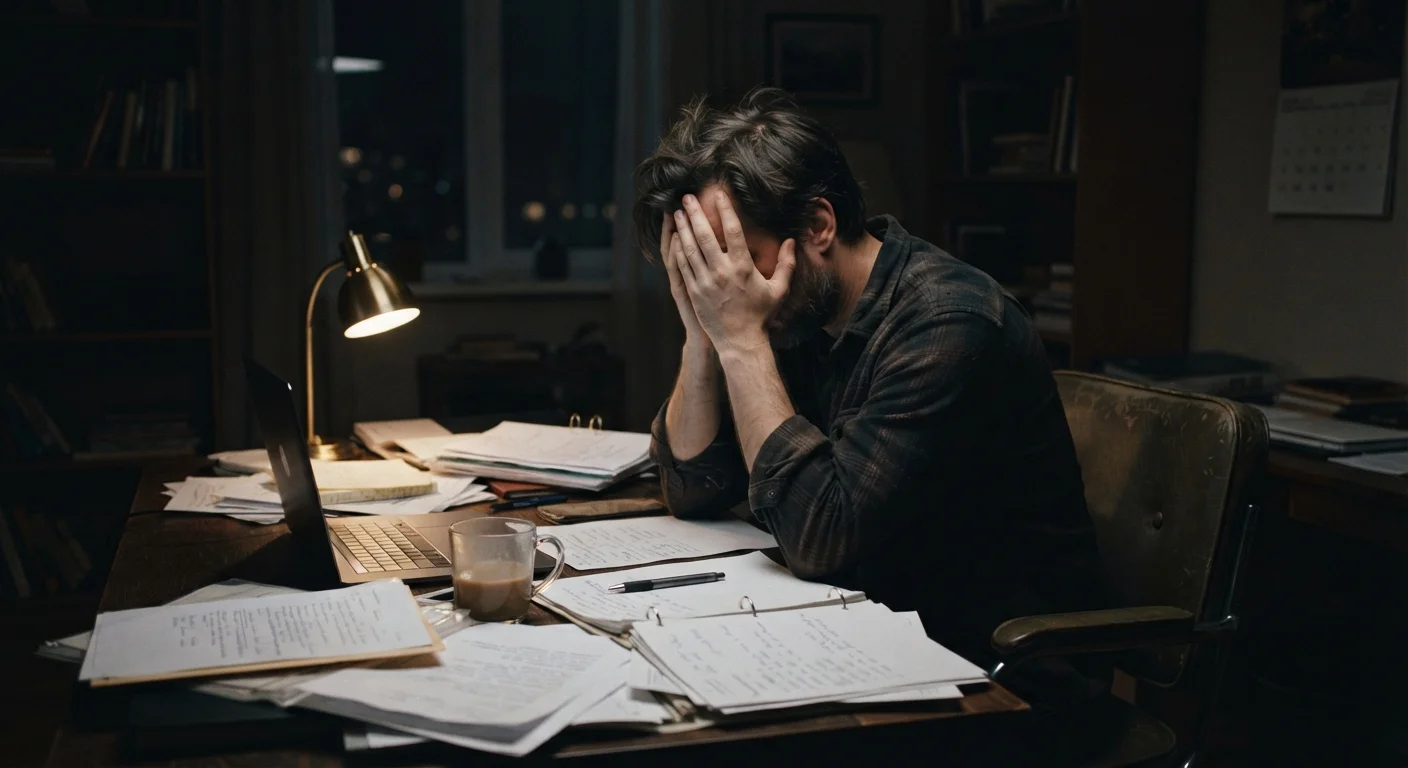
Key Takeaways
- Many common male coping strategies — like overworking or drinking — actively worsen anxiety over time.
- Avoiding anxious situations provides short-term relief but reinforces the anxiety cycle long-term.
- Men are less likely to seek professional help for anxiety, often due to stigma or minimizing symptoms.
- Evidence-based self-help tools exist, but they work best alongside professional support when anxiety is persistent.
- Recognizing unhelpful patterns is the first step toward more effective anxiety management.
Why Men's Anxiety Often Goes Unaddressed
Anxiety is one of the most common mental health conditions in the United States, affecting millions of men. Yet men are significantly less likely than women to seek professional help or even acknowledge anxiety as the source of their distress. Instead, many reach for familiar coping mechanisms — some of which can quietly make things worse.
Part of the problem is framing. Anxiety in men often doesn't look like classic worry or nervousness. It can present as irritability, restlessness, difficulty concentrating, physical tension, or a drive to stay constantly busy. When it doesn't match the stereotype, it goes unrecognized — and unaddressed. Understanding what not to do is a critical first step. For a broader view of what sustains the anxiety cycle, see our guide on patterns that make anxiety worse without you realising.
The Most Common Mistakes Men Make
The following mistakes are not signs of weakness or poor character — they're understandable responses to uncomfortable emotions. But they carry real costs to mental and physical health when relied upon consistently.
Using alcohol to take the edge off.
Why it happens: Alcohol produces short-term sedation and can feel like relief from anxious tension, making it an intuitive — if unhelpful — tool.
Staying constantly busy to avoid anxious thoughts.
Why it happens: Filling every moment with work or tasks temporarily silences worry, creating a reinforcing cycle where busyness feels productive and necessary.
Avoiding situations that trigger anxiety rather than working through them.
Why it happens: Avoidance delivers immediate relief, which the brain registers as a reward, strengthening the impulse to avoid in the future.
Dismissing anxiety as stress or a personal weakness.
Why it happens: Cultural messaging around masculinity often frames emotional difficulty as weakness, leading men to minimize or rationalize what they're experiencing.
Relying entirely on willpower to suppress anxious thoughts.
Why it happens: Men are often socialized to push through discomfort independently, making the idea of mental strategies feel like an admission of failure.
Alcohol and Anxiety: A Risky Cycle
Using alcohol regularly to manage anxiety can lead to physical dependence and can significantly worsen anxiety between drinking episodes — a pattern sometimes called 'rebound anxiety.' If you find it difficult to manage anxious feelings without alcohol, speak with a healthcare professional rather than attempting to stop abruptly on your own, as withdrawal can carry its own health risks.
When Self-Help Isn't Enough
Self-directed strategies have genuine value. Exercise, sleep hygiene, and mindfulness are all backed by evidence as tools for reducing anxiety symptoms. But they have a ceiling, particularly when anxiety is severe, chronic, or rooted in deeper patterns. Research consistently shows that structured talking therapies — especially cognitive behavioral therapy (CBT) — outperform self-help alone for clinically significant anxiety.
~1 in 5
Men affected by anxiety each year
According to the Anxiety and Depression Association of America, anxiety disorders affect a significant proportion of the adult male population, yet men remain less likely to seek treatment.
60%
Of people with anxiety receive no treatment
The majority of individuals with diagnosable anxiety disorders do not receive professional treatment, according to estimates from leading mental health organizations.
If you've been relying on willpower or lifestyle adjustments for months without meaningful improvement, it's worth speaking with a healthcare professional. This isn't failure — it's the same logic you'd apply to a persistent physical symptom. Our comparison of talking therapy vs. self-help strategies for anxiety breaks down what each approach offers and how to choose.
It's also worth examining everyday habits that may be amplifying symptoms. Lifestyle factors that quietly worsen anxiety — including caffeine, poor sleep, and sedentary routines — can sustain anxiety even when other efforts are in place.
This article is for general informational purposes only and does not constitute medical advice. If you are experiencing persistent or severe anxiety, please consult a qualified healthcare professional.