

Key Takeaways
- Dietary iron exists as haem iron (animal sources) and non-haem iron (plant and fortified sources).
- Haem iron is absorbed at roughly 15–35%, while non-haem iron absorbs at only 2–20% depending on diet context.
- Vitamin C consumed alongside non-haem iron substantially improves its absorption.
- Calcium, phytates, and polyphenols can meaningfully reduce iron uptake when consumed simultaneously.
- Certain populations — including menstruating women, pregnant individuals, and vegans — face elevated iron needs or absorption challenges.
Why Iron Matters in the Body
Iron is an essential mineral that plays a foundational role in human physiology. Its most recognized function is within hemoglobin, the protein in red blood cells responsible for transporting oxygen from the lungs to every tissue in the body. Iron also contributes to myoglobin (which stores oxygen in muscle cells), supports immune function, and is required for the synthesis of certain neurotransmitters and hormones.
When iron stores fall too low, the body prioritizes critical functions, eventually resulting in iron-deficiency anemia — characterized by fatigue, impaired concentration, shortness of breath, and pallor. According to the World Health Organization, iron deficiency is among the most prevalent nutritional deficiencies globally, making an understanding of dietary iron sources and absorption dynamics genuinely important for everyday health.
This article is for general informational purposes only and does not constitute medical advice. Consult a qualified healthcare professional for personal health concerns or before making significant dietary changes.
Haem vs. Non-Haem Iron: The Core Distinction
Dietary iron arrives in two chemically distinct forms, and the distinction has significant practical implications for how much your body can use.
Haem Iron
Haem (or heme) iron is derived exclusively from animal sources. It is structurally bound within a porphyrin ring — the same molecular structure found in hemoglobin and myoglobin in animal muscle tissue. This structure allows haem iron to be absorbed directly into intestinal cells through a dedicated transport protein, largely bypassing the regulatory mechanisms that govern non-haem iron. Bioavailability — the proportion actually absorbed — typically ranges from approximately 15% to 35%.
Non-Haem Iron
Non-haem iron comes from plant foods, dairy, eggs, and iron-fortified products. Unlike haem iron, it must first be reduced from its ferric (Fe³⁺) state to its ferrous (Fe²⁺) state before intestinal absorption can occur. This reduction step, influenced by stomach acid and dietary compounds, makes non-haem iron considerably more sensitive to surrounding dietary factors. Typical absorption rates range from approximately 2% to 20%, depending heavily on what else is consumed in the same meal.
15–35%
Haem iron absorption rate
Established range cited in nutritional biochemistry literature and referenced in NIH dietary supplement fact sheets.
2–20%
Non-haem iron absorption rate
Absorption varies widely depending on dietary enhancers and inhibitors consumed in the same meal.
~1.8×
Higher iron intake recommended for vegetarians
The NIH Office of Dietary Supplements notes vegetarians may need approximately 1.8 times the iron of omnivores due to lower bioavailability.
Top Dietary Sources of Each Iron Type
Haem Iron Sources
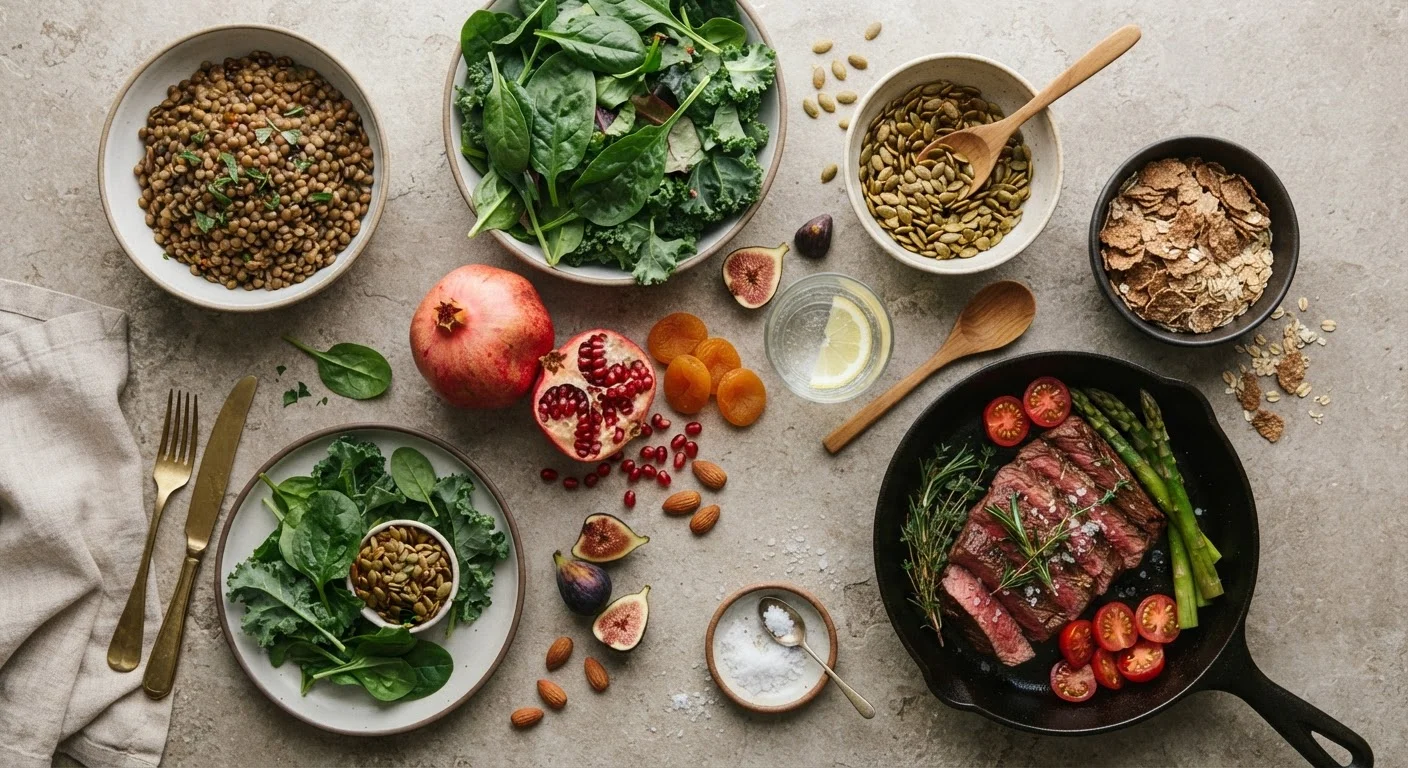
- Red meat (beef, lamb): Among the richest sources, with a 3-ounce serving of beef providing around 2–3 mg of haem iron.
- Organ meats (liver, kidney): Exceptionally concentrated sources; beef liver contains roughly 5 mg per 3-ounce serving.
- Poultry (dark meat particularly): Moderate haem iron with good bioavailability.
- Seafood (oysters, clams, mussels, sardines): Shellfish, especially oysters and clams, are among the highest haem-iron foods per serving.
Non-Haem Iron Sources
- Legumes: Lentils, chickpeas, kidney beans, and soybeans provide 3–6 mg per cooked cup.
- Dark leafy greens: Spinach, Swiss chard, and kale offer meaningful amounts, though oxalate content in some greens can limit uptake.
- Fortified cereals and grains: Many breakfast cereals are fortified to deliver 100% of the daily recommended value per serving.
- Nuts and seeds: Pumpkin seeds and hemp seeds are particularly notable sources.
- Tofu and tempeh: Soy-based foods deliver useful amounts for plant-focused diets.
For practical strategies to maximize uptake from plant foods, see our guide to plant-based iron sources.
Factors That Enhance Iron Absorption
Several dietary components and physiological factors work in your favor when it comes to absorbing iron more efficiently.
Vitamin C (Ascorbic Acid)
Vitamin C is the most well-studied absorption enhancer for non-haem iron. It reduces ferric iron to the more absorbable ferrous form and forms a soluble complex that resists the inhibitory effects of phytates and polyphenols. Adding a vitamin C-rich food — such as bell peppers, citrus fruit, strawberries, or broccoli — to a plant-based iron-containing meal can increase non-haem iron absorption by two to three times, according to research published in nutritional biochemistry literature.
Squeeze half a lemon over lentil soup or add sliced red bell pepper to a bean salad — the vitamin C in these foods actively converts non-haem iron into a form your gut can absorb far more efficiently.
Research consistently shows vitamin C can increase non-haem iron absorption two- to threefold, making it one of the most impactful and simple dietary strategies for plant-based eaters.
If you drink green or black tea regularly, try shifting it to between meals rather than alongside iron-rich foods — a gap of even one to two hours can substantially preserve absorption.
Polyphenols in tea are potent chelators of non-haem iron; timing is a low-effort intervention that doesn't require giving up a beverage many people rely on daily.
Haem Iron's "Meat Factor"
Consuming small amounts of meat alongside non-haem iron sources has been shown to enhance non-haem absorption even beyond the meat's own iron contribution. The mechanism is not entirely elucidated, but a peptide released during meat digestion is thought to be involved.
Low Body Iron Stores
The body's absorptive capacity is partially self-regulating. When iron stores are depleted, intestinal cells upregulate absorption. This is governed by the hormone hepcidin, which decreases when stores are low — a natural protective mechanism.
Factors That Inhibit Iron Absorption
Just as certain compounds boost iron uptake, others can substantially limit it — particularly for non-haem iron.
Phytates (Phytic Acid)
Found in whole grains, legumes, and nuts, phytates bind to iron in the gut and reduce its absorption. Preparation methods such as soaking, sprouting, and fermenting can meaningfully reduce phytate content in these foods.
Polyphenols
Tea, coffee, red wine, and many plant foods contain polyphenols — beneficial antioxidants that, when consumed with iron-rich meals, can chelate non-haem iron and reduce its absorption. Waiting 1–2 hours after an iron-rich meal before consuming tea or coffee is a commonly recommended practical strategy.
Calcium
Calcium, whether from dairy or supplements, competes with iron for the same intestinal transport proteins. High doses of calcium can inhibit both haem and non-haem iron absorption. Timing calcium-rich foods or supplements away from primary iron-containing meals may help.
Don't Take Iron Supplements With Calcium
Calcium competes directly with iron for intestinal absorption pathways. Taking iron supplements alongside calcium-rich foods, dairy, or calcium supplements can measurably reduce how much iron your body absorbs. If your healthcare provider has recommended iron supplementation, ask about optimal timing relative to your calcium intake.
Oxalates
Present in spinach, beets, and chocolate, oxalates can bind to iron. This is one reason spinach, despite its iron content, delivers relatively less absorbable iron than its numbers suggest.
Special Populations and Iron Needs
Iron requirements are not uniform across the population. Several groups face greater risk of deficiency or have elevated physiological demands.
- Menstruating individuals: Monthly blood loss increases iron requirements substantially compared to non-menstruating adults.
- Pregnant individuals: Iron needs increase significantly to support fetal development and expanded blood volume. Medical supervision is essential — consult a healthcare provider about individual supplementation needs during pregnancy.
- Infants and young children: Rapid growth creates high iron demand relative to body size; dietary adequacy during this phase is particularly important.
- Vegans and vegetarians: Exclusive reliance on non-haem iron, combined with high phytate and polyphenol intakes common in plant-heavy diets, can limit absorption. The NIH advises that vegetarians may require roughly 1.8 times the iron intake of omnivores to achieve comparable iron status — though individual variation is significant.
- Endurance athletes: Iron losses through sweat and foot-strike hemolysis (in runners) can elevate requirements.
If you fall into one or more of these categories, a healthcare professional can assess your iron status through blood tests and advise on appropriate dietary or supplemental strategies.
Putting It All Together
Understanding iron in food is ultimately about patterns, not individual meals. A diet that regularly pairs vitamin C-rich vegetables with legumes, times calcium and tea consumption away from iron-rich meals, and incorporates varied iron sources is well-positioned to meet most adults' needs through food alone.
Key practical principles:
- Include both haem and non-haem sources if you eat meat; rely on strategic pairing if you follow a plant-based diet.
- Add a vitamin C source to every plant-forward iron-containing meal.
- Reduce phytates through soaking or sprouting legumes and grains when practical.
- Avoid tea, coffee, and calcium supplements immediately before or after your primary iron-rich meals.
- Recognize that cooking in cast iron can modestly increase the iron content of acidic foods.
For those focusing primarily on plant foods, practical guidance on maximizing plant-based iron absorption provides targeted, evidence-informed strategies.
This article is intended as general health education and does not replace personalized advice from a registered dietitian or physician. If you suspect iron deficiency or have specific health conditions, please consult a qualified healthcare professional.