

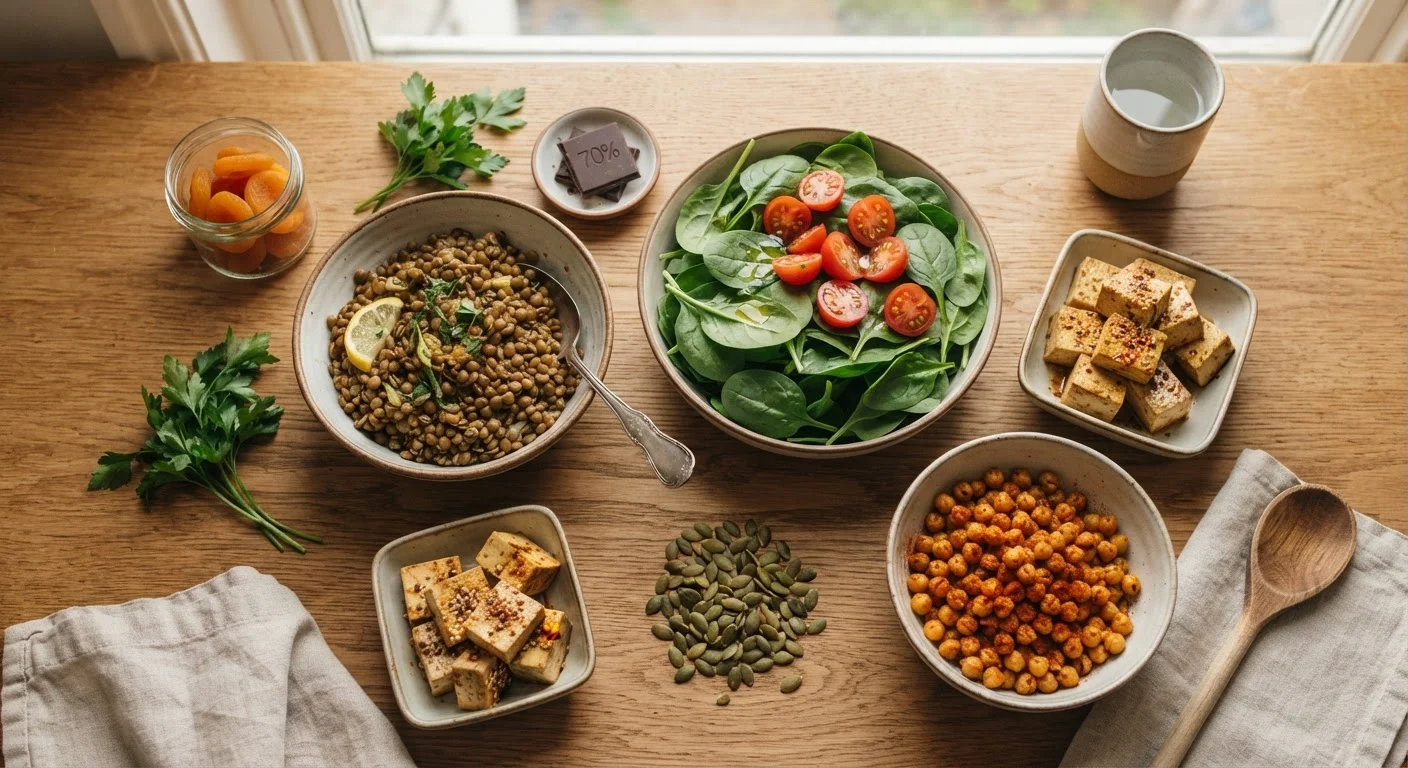
Key Takeaways
- Non-haem iron from plants is less readily absorbed than haem iron, but absorption can be significantly improved through smart food pairing.
- Vitamin C consumed in the same meal can substantially boost non-haem iron uptake by converting it to a more absorbable form.
- Soaking, sprouting, and cooking legumes and grains reduces phytates — compounds that otherwise inhibit iron absorption.
- Calcium-rich foods and coffee or tea consumed alongside iron-rich meals can suppress absorption and are best timed separately.
- People with elevated iron needs — including menstruating adults and those following entirely plant-based diets — should discuss intake with a healthcare provider.
Why Plant-Based Iron Requires a Closer Look
Dietary iron exists in two primary forms: haem iron, found in animal-based foods, and non-haem iron, the form present in all plant foods. As explained in our overview of dietary iron absorption, haem iron is absorbed at rates of roughly 15–35%, while non-haem iron is typically absorbed at only 2–20%. That gap is significant — but it is not fixed.
Absorption of non-haem iron is highly sensitive to what else is eaten in the same meal, how food is prepared, and individual physiological factors such as current iron stores. This means that people who rely primarily on plant foods for iron have genuine, evidence-based tools to work with — not just workarounds.
2–3×
Increase in non-haem iron absorption with vitamin C pairing
Research published in nutritional biochemistry literature consistently demonstrates this enhancement effect when ascorbic acid is consumed in the same meal as plant iron sources.
Up to 60%
Reduction in iron absorption from a single cup of tea at mealtime
Studies examining polyphenol-iron interactions show that tannins in black and green tea can substantially inhibit non-haem iron uptake when consumed concurrently with iron-rich food.
Best Practices for Maximizing Plant Iron Absorption
The following practices are grounded in nutritional science and practical enough to work within everyday cooking and eating habits.
Pair iron-rich plant foods with a vitamin C source at the same meal.
Ascorbic acid (vitamin C) reduces ferric iron to the ferrous form, which intestinal cells absorb more efficiently. Studies suggest this pairing can increase non-haem iron absorption by two to three times in a single meal.
Soak, sprout, or ferment legumes, grains, and seeds before eating.
Phytates (phytic acid) are natural compounds in legumes and whole grains that bind iron and reduce its bioavailability. Soaking overnight and discarding the water, sprouting seeds, or using fermented grain products like sourdough bread markedly reduces phytate content.
Avoid drinking coffee, black tea, or green tea with iron-rich meals.
Polyphenols and tannins in these beverages form insoluble complexes with non-haem iron in the digestive tract, sharply reducing absorption. Even one cup of tea consumed with a meal can reduce iron uptake by 60% or more according to some research.
Keep high-calcium foods and iron-rich foods at separate meal occasions when possible.
Calcium competes with iron for the same intestinal transport proteins, meaning a calcium-rich meal can suppress non-haem iron uptake. This does not mean eliminating calcium — it means timing matters. Our guide to calcium bioavailability explores this balance further.
Cook in cast iron cookware when preparing acidic or moist dishes.
Small but meaningful amounts of iron can leach from cast iron cookware into food, particularly when cooking acidic foods like tomato-based sauces. While this is a supplementary rather than primary strategy, it is an effortless way to increase iron intake.
Prioritize the most iron-dense plant foods as regular staples.
Not all plant foods contribute equally. Choosing ingredients at the higher end of the iron spectrum means more iron available for absorption even after accounting for inhibiting factors.
Timing and Pairing: The Practical Framework
Strategic meal timing is one of the most underused tools in plant-based nutrition. Rather than eliminating foods that inhibit iron absorption, the goal is simply to separate them from your highest-iron meals where feasible.
A Simple Rule for Meal Planning
Think of each iron-rich plant meal as having two categories of companions: enhancers (vitamin C sources like citrus, bell peppers, and strawberries) and inhibitors (tea, coffee, dairy, and calcium-fortified foods). Aim to load the enhancers into the meal and delay the inhibitors by at least an hour. Over time, this mental model becomes second nature and meaningfully improves iron status without requiring strict dietary restriction.
For example, if lentil soup is a main course, enjoying a glass of milk or a cup of tea an hour later — rather than alongside the meal — sidesteps the competitive absorption issue without restricting either food overall. This approach allows flexibility without sacrificing nutritional variety.
Iron needs vary considerably by life stage and physiology. Iron is one of the nutrients many adults fall short on, as discussed in our article on commonly under-consumed nutrients and their food sources. Those with elevated requirements — including people who menstruate, are pregnant, or follow exclusively plant-based diets — should consider speaking with a registered dietitian or physician about whether dietary strategies alone are sufficient for their needs.
This article is for general informational and educational purposes only and is not a substitute for professional medical or nutritional advice. Consult a qualified healthcare provider before making significant dietary changes, particularly if you have a health condition or suspect a nutritional deficiency.