

Key Takeaways
- Milling removes the bran and germ, stripping fibre, B vitamins, magnesium, zinc, and healthy fats.
- Fortification restores some B vitamins and iron, but does not replace fibre, potassium, or phytochemicals.
- Whole grains are linked to lower risks of cardiovascular disease and type 2 diabetes in observational research.
- Refined grains are not uniformly 'bad' — context, portion size, and overall diet pattern matter.
- Reading labels for '100% whole grain' or 'whole wheat flour' as the first ingredient helps identify genuine whole grain products.
Option A
Whole Grains
The complete, structurally intact grain.
Best for: Anyone seeking the full spectrum of fibre, micronutrients, and phytochemicals a grain naturally contains.
Option B
Refined Grains
The milled, streamlined staple.
Best for: Situations where shelf stability, texture, or fortified nutrient delivery is a priority, with awareness of trade-offs.
If you want maximum fibre and micronutrient density
Whole Grains
Whole grains retain the bran and germ, delivering fibre, magnesium, B vitamins, and phytochemicals that refined grains cannot match without fortification.
If you are managing specific digestive sensitivities requiring lower-fibre foods
Refined Grains
In certain clinical contexts — such as during gastrointestinal flares — lower-fibre refined grains may be better tolerated. Always consult a healthcare professional.
If blood glucose management is a concern
Whole Grains
The intact fibre matrix in whole grains slows carbohydrate digestion, producing a more gradual rise in blood glucose compared with refined grain counterparts.
If shelf stability and versatile baking are priorities
Refined Grains
Removing the oil-rich germ extends shelf life and produces lighter textures, which is why refined flour remains common in commercial baking applications.
The Three-Part Structure Milling Disrupts
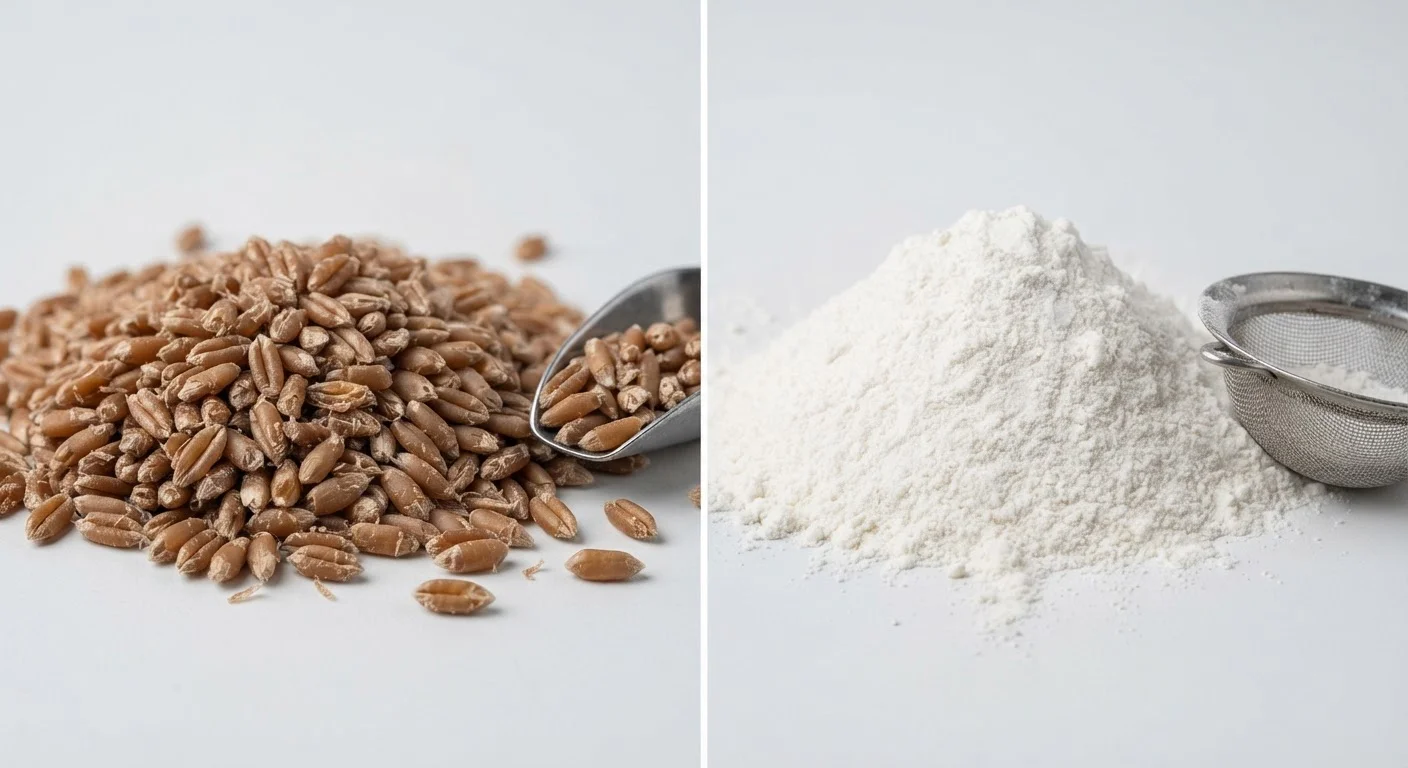
Every grain kernel is built from three layers: the bran (outer shell), the germ (embryo), and the endosperm (starchy interior). A whole grain, by definition, retains all three in their natural proportions. When grain is refined — through roller or stone milling — the bran and germ are mechanically separated and discarded, leaving only the endosperm.
This isn't a minor cosmetic change. The bran contributes most of the fibre and a substantial share of B vitamins and trace minerals. The germ is dense with vitamin E, healthy unsaturated fats, phytochemicals, and additional B vitamins. What remains after milling — the endosperm — is primarily starch and protein, with a far narrower micronutrient profile.
| Criterion | Whole Grains | Refined Grains |
|---|---|---|
| Parts retained | Bran, germ, endosperm | Endosperm only |
| Dietary fibre | High (e.g., ~3.5 g per slice whole wheat bread) | Low (e.g., ~0.6 g per slice white bread) |
| Magnesium | Substantially preserved | Up to 80% lost; not routinely restored |
| B vitamins | Naturally present | Mostly removed; some restored via enrichment |
| Vitamin E | Present (from germ) | Largely removed; not required to be restored |
| Phytochemicals | Lignans, phenolic acids, antioxidants | Substantially absent |
| Glycaemic response | Generally lower and more gradual | Generally higher and faster |
| Shelf life | Shorter (germ oils can go rancid) | Longer (oil-rich germ removed) |
What Fortification Does — and Doesn't — Restore
Many countries, including the United States, require refined grain products such as white flour and white rice to be enriched or fortified — meaning certain stripped nutrients are added back. The FDA mandates restoration of thiamine (B1), riboflavin (B2), niacin (B3), folic acid, and iron in enriched grains.
Fortification meaningfully reduces deficiency risks. Folic acid enrichment of refined grains has been specifically credited with a significant decline in neural tube defects since its U.S. introduction in 1998. However, fortification has clear limits:
- Fibre is not restored. Dietary fibre — the nutrient most broadly associated with digestive health, cardiovascular benefits, and satiety — remains absent in refined grains.
- Magnesium and potassium are largely unreplaced. Milling removes roughly 75–80% of magnesium; enrichment standards do not mandate its replacement.
- Phytochemicals and antioxidants are not added. Whole grains contain lignans, phenolic acids, and other bioactive compounds that research associates with reduced inflammation; these are not replicated in enriched products.
- Vitamin E is not routinely restored. The germ's vitamin E content, which supports antioxidant function, is lost in milling and not required to be replaced.
Ancient and Sprouted Grains: A Middle Ground?
Sprouted whole grain products and less-processed ancient grains such as farro, einkorn, and spelt retain their bran and germ and are considered whole grains. Some research suggests sprouting may enhance mineral bioavailability by reducing phytic acid. These can be useful options for diversifying whole grain intake, though individual digestive tolerance varies.
The gap between whole and refined grains is a useful lens for understanding the broader difference between minimally processed and heavily processed foods. For a wider perspective on how processing shapes nutrition, see our guide to whole foods versus ultra-processed foods.
Practical Implications for Everyday Eating
Current USDA Dietary Guidelines recommend that at least half of all grains consumed be whole grains — a target most American adults do not consistently meet. From a practical standpoint, several points help translate this into realistic choices:
~5%
U.S. adults meeting whole grain recommendations
Research using NHANES data has consistently found that only a small minority of American adults consume the recommended amount of whole grains daily.
21–29 g
Daily fibre recommended for adult women
According to the National Academy of Medicine's Dietary Reference Intakes, adult women need 21–25 g and adult men 30–38 g of fibre daily, depending on age.
~20–30%
Reduced cardiovascular disease risk with whole grains
Multiple large cohort studies, including those reviewed by the American Heart Association, associate high whole grain intake with meaningfully lower cardiovascular disease risk.
Label literacy matters. Terms like "multigrain," "wheat bread," or "made with whole grains" do not guarantee a product is predominantly whole grain. Look for "100% whole grain" or "whole wheat flour" listed as the first ingredient. The Whole Grain Stamp (an industry marker) can also indicate the gram quantity of whole grains per serving.
Context shapes impact. A single meal containing refined pasta is not equivalent to a dietary pattern built around refined grains. Research linking whole grains to reduced cardiovascular disease and type 2 diabetes risk — including large prospective cohort studies — reflects long-term dietary patterns, not isolated food choices.
Special populations should seek individualized guidance. People with certain gastrointestinal conditions, celiac disease, or specific therapeutic dietary needs should work with a registered dietitian or physician before making significant grain-related changes.
This article provides general nutrition education and is not a substitute for personalized medical or dietary advice. Consult a qualified healthcare professional for guidance specific to your health needs.