

Key Takeaways
- PCOS is a hormonal condition affecting roughly 1 in 10 women of reproductive age.
- Elevated androgens and insulin resistance are central to most PCOS presentations.
- Symptoms vary widely — not everyone with PCOS looks the same or experiences the same signs.
- PCOS carries long-term metabolic health implications beyond reproductive symptoms.
- Diagnosis requires meeting established clinical criteria, not just the presence of ovarian cysts.
- Management is individualized and should involve a qualified healthcare provider.
Polycystic Ovary Syndrome (PCOS)
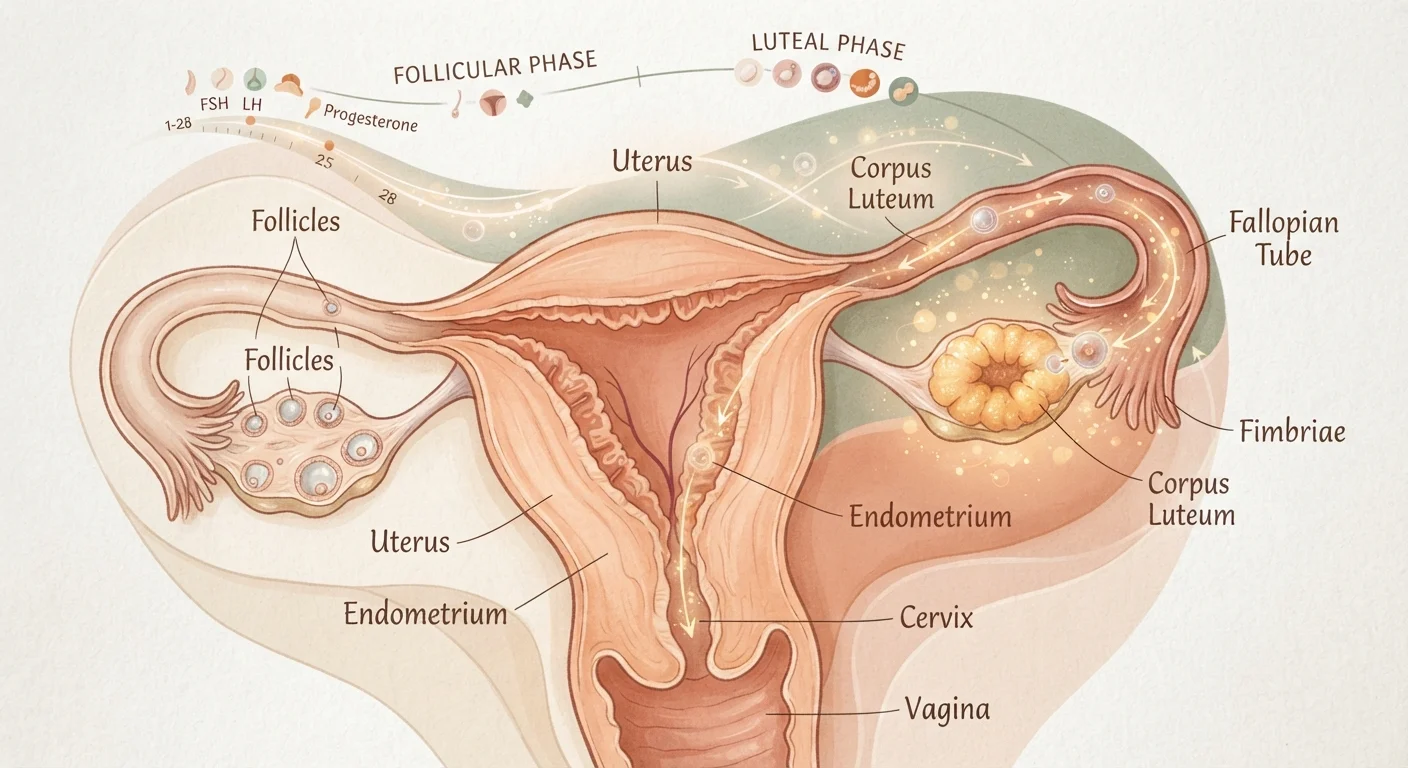
Polycystic ovary syndrome (PCOS) is a common hormonal condition that affects how the ovaries function. It's characterized by irregular menstrual cycles, elevated levels of androgens (male-type hormones), and often the presence of multiple small follicles on the ovaries visible on ultrasound. PCOS is one of the leading causes of hormonal imbalance and irregular periods in women of reproductive age.
PCOS is diagnosed using the Rotterdam criteria, which requires at least two of three features: irregular or absent ovulation, clinical or biochemical signs of excess androgens, and polycystic ovarian morphology on ultrasound.
What's Actually Happening Hormonally in PCOS
At its core, PCOS is a disorder of hormone signaling — and understanding what goes wrong helps explain why symptoms are so varied. In a typical menstrual cycle, the pituitary gland releases follicle-stimulating hormone (FSH) and luteinizing hormone (LH) in a carefully calibrated rhythm that triggers ovulation. In people with PCOS, this rhythm is disrupted. LH levels are often disproportionately elevated relative to FSH, which drives the ovaries to produce excess androgens — hormones like testosterone — instead of maturing and releasing a healthy egg.
Elevated androgens are responsible for many of PCOS's most recognizable symptoms: excess hair growth in androgen-sensitive areas (hirsutism), acne along the jawline and back, and scalp hair thinning. But androgens don't tell the whole hormonal story.
Insulin resistance — where the body's cells respond less effectively to insulin — is present in a significant proportion of people with PCOS, including those who are not overweight. When insulin levels rise to compensate, the ovaries respond by producing even more androgens, creating a reinforcing cycle. This is why insulin resistance is considered a key driver of the condition, not just a side effect.
A Note on the Name 'Polycystic'
The word 'polycystic' in PCOS is frequently misunderstood. The ovaries in PCOS don't contain true cysts — they contain multiple small, undeveloped follicles that stalled before ovulation. This distinction matters because the presence of follicles on ultrasound alone is not enough to diagnose PCOS; it must be interpreted alongside hormonal and clinical findings. Some healthy women also have a similar ultrasound appearance without meeting diagnostic criteria for PCOS.
Why PCOS Looks Different in Different People
One of the most clinically important things to understand about PCOS is its heterogeneity. Using the widely adopted Rotterdam diagnostic criteria, researchers have identified at least four recognized phenotypes — combinations of the three core features — that can look very different from each other.
Some women present primarily with irregular cycles and androgen excess but show no polycystic morphology on ultrasound. Others have polycystic ovaries and irregular periods but no measurable androgen elevation. This variability means that two people with the same diagnosis may have quite different hormonal profiles, symptoms, and long-term health risks.
Body weight adds another layer of complexity. While PCOS is more commonly discussed in the context of higher body weight, it affects people across the weight spectrum. Lean individuals with PCOS often have more pronounced LH dysregulation rather than insulin resistance as the primary driver — which can affect both symptoms and management strategies.
~10%
Women of reproductive age affected by PCOS
According to the World Health Organization, PCOS affects an estimated 8–13% of women of reproductive age globally, making it one of the most common endocrine disorders.
Up to 70%
PCOS cases that go undiagnosed
Research published in the journal Human Reproduction suggests that up to 70% of women with PCOS remain undiagnosed, often because symptoms are attributed to other causes.
4x
Increased risk of type 2 diabetes in PCOS
Studies have found women with PCOS are approximately four times more likely to develop type 2 diabetes compared to those without the condition, largely driven by insulin resistance.
For a broader look at how hormonal signals can be misread or misunderstood, see our overview of hormonal health myths that persist despite better evidence.
Long-Term Health Implications the Evidence Highlights
PCOS is not solely a reproductive condition, and the research is clear that its effects extend well into midlife and beyond. People with PCOS have a substantially elevated risk of developing type 2 diabetes — particularly those with insulin resistance — as well as metabolic syndrome, which includes high blood pressure, abnormal lipid levels, and central adiposity.
Endometrial health is another important consideration. Chronic anovulation (lack of regular ovulation) means the uterine lining is not shed regularly, and without the progesterone produced after ovulation, the endometrium can overgrow over time, increasing the risk of endometrial hyperplasia. Regular monitoring and management of menstrual irregularities helps mitigate this risk.
Mental health effects are also well-documented. Studies consistently find higher rates of anxiety, depression, and reduced quality of life among women with PCOS compared to the general population. The mechanisms are multifactorial — hormonal, metabolic, and psychosocial. The hormonal roots of depression in women explores this connection in greater depth.
It's also worth noting that thyroid dysfunction can mimic or worsen PCOS-related symptoms, and both conditions can co-exist. Thyroid function and female hormones is a distinction clinicians routinely evaluate during workup.
Approaching PCOS Management: What Research Supports
There is no one-size-fits-all approach to managing PCOS, and current evidence supports a highly individualized strategy guided by a healthcare provider. Broadly, management focuses on addressing the specific symptoms and risks that are most relevant for each person — which may include menstrual regulation, androgen-related symptoms, metabolic health, or fertility concerns.
Lifestyle interventions — including dietary patterns that support insulin sensitivity and regular physical activity — are supported by evidence as first-line approaches for metabolic and reproductive outcomes in PCOS, particularly for those with insulin resistance. These work alongside, not instead of, medical management when it's indicated.
If you're noticing signs such as irregular cycles, unexplained hair changes, or persistent skin symptoms, reviewing signs your hormones may be out of balance can help you understand when a clinical evaluation is warranted. For those specifically concerned about fertility, our article on PCOS and fertility outlines what current research shows about ovulation and conception.
This article is for informational purposes only and does not constitute medical advice. Always consult a qualified healthcare professional for evaluation, diagnosis, or treatment of any health condition.