

Key Takeaways
- Women are 5 to 8 times more likely than men to develop a thyroid disorder.
- Both underactive and overactive thyroid conditions can disrupt the menstrual cycle and impair fertility.
- Thyroid symptoms — fatigue, mood changes, weight shifts — are frequently attributed to stress or hormonal imbalance without thyroid testing.
- Autoimmune thyroid disease often co-occurs with other hormonal conditions like PCOS and endometriosis.
- A simple blood test measuring TSH can screen for most common thyroid disorders.
- Effective management of thyroid conditions can improve menstrual regularity and reproductive outcomes.
Thyroid-Hormone Interaction
The thyroid gland produces hormones that regulate metabolism, energy, and body temperature — but they also interact closely with the hormones that control the menstrual cycle and reproductive health. When thyroid function is disrupted, it can throw off estrogen, progesterone, and other sex hormones, affecting everything from period regularity to fertility and mood. This bidirectional relationship means thyroid conditions are often mistaken for purely gynecological or psychological problems.
Thyroid hormones influence sex hormone-binding globulin (SHBG) levels and can alter the metabolism of estrogen and progesterone, creating downstream effects across the hypothalamic-pituitary-ovarian axis.
Why the Thyroid Matters for Women's Health
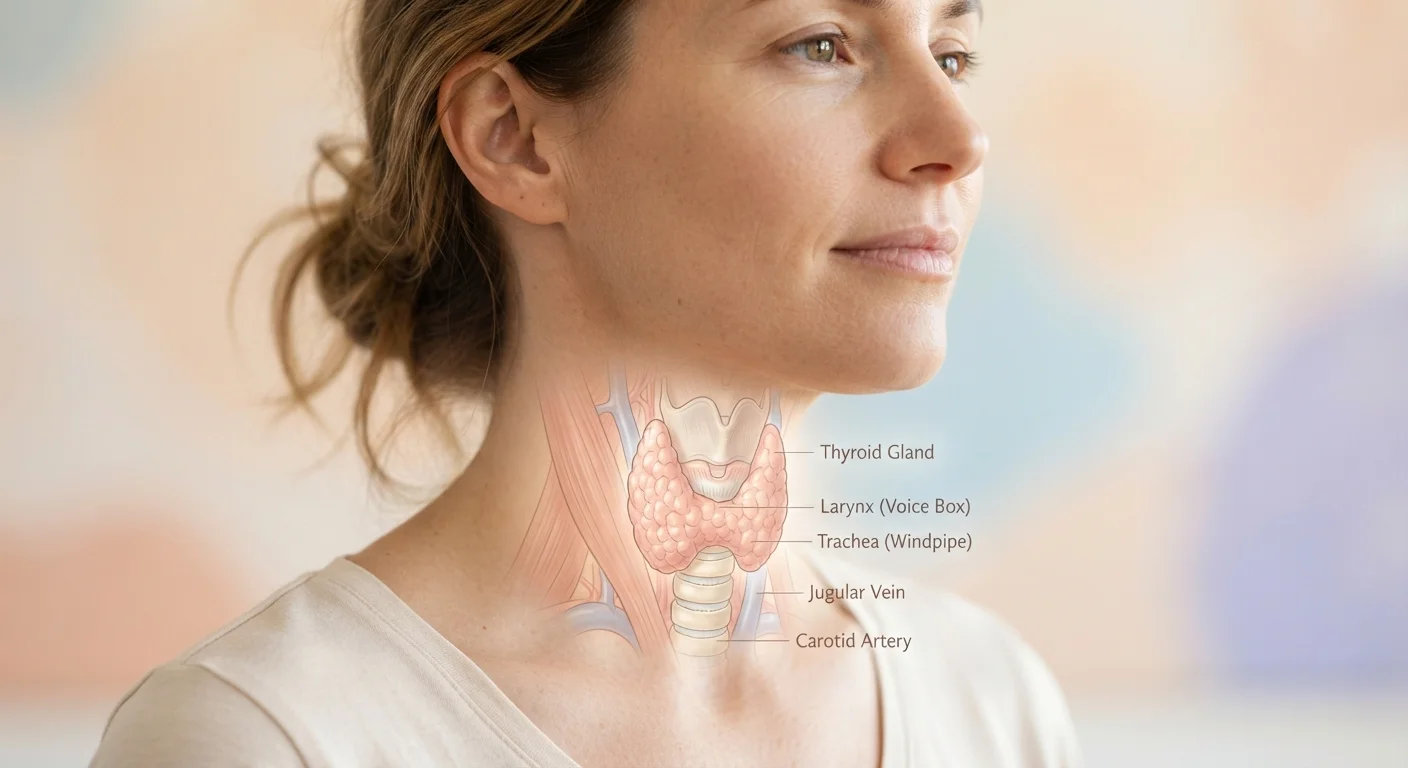
The thyroid is a small, butterfly-shaped gland at the base of your throat, but its reach across your body is significant. It produces two key hormones — thyroxine (T4) and triiodothyronine (T3) — that influence nearly every cell, regulating heart rate, body temperature, metabolism, and energy production. What's less commonly understood is how tightly thyroid function is woven into the fabric of female hormonal health.
Women are five to eight times more likely than men to develop a thyroid disorder, and the risk increases at hormonally significant life stages: puberty, pregnancy, the postpartum period, and perimenopause. Despite this, thyroid dysfunction often goes unrecognized because its symptoms — fatigue, weight changes, mood shifts, and cycle irregularities — can look a lot like general stress or other hormonal conditions.
Understanding the thyroid-hormone connection is particularly important when you're trying to make sense of signs that your hormones may be out of balance — because the thyroid may be contributing more than you realize.
5–8x
More likely than men to have thyroid disorders
According to the American Thyroid Association, women are significantly more susceptible to thyroid conditions across their lifespan.
1 in 8
Women affected by thyroid disorders in their lifetime
The American Thyroid Association estimates that approximately one in eight women will develop a thyroid condition at some point in their life.
60%
People with thyroid disease unaware of their condition
The American Thyroid Association estimates that 60% of people with thyroid disease are undiagnosed, highlighting a significant gap in detection.
How Thyroid Hormones Interact With Sex Hormones
Thyroid hormones and sex hormones don't operate in separate silos — they interact through several mechanisms that matter for women's health. One key pathway involves sex hormone-binding globulin (SHBG), a protein that transports estrogen and testosterone through the bloodstream. Thyroid hormones influence how much SHBG the liver produces, which in turn affects how much estrogen is freely available to body tissues.
Thyroid function also connects to the hypothalamic-pituitary-ovarian (HPO) axis — the hormonal control system responsible for regulating the menstrual cycle. If thyroid hormone levels are off, signals within this axis can be disrupted, affecting whether ovulation happens on schedule. This is why thyroid disorders frequently show up as menstrual irregularities long before other symptoms become obvious. For a deeper look at how this hormonal cascade unfolds month to month, see what your body is actually doing each month.
Autoimmune overlap adds another layer of complexity. Hashimoto's thyroiditis and Graves' disease — the two most common thyroid disorders — are immune-mediated, and autoimmune conditions tend to cluster together. Women with thyroid autoimmunity have a higher likelihood of also experiencing conditions like polycystic ovary syndrome. The hormonal picture in PCOS can be further complicated when thyroid function is also impaired.
Recognizing the Symptoms — and the Overlap
One of the biggest challenges with thyroid disorders is that their symptoms are remarkably easy to attribute to something else. Hypothyroidism — an underactive thyroid — can cause fatigue, cold intolerance, constipation, brain fog, low mood, weight gain, and heavier or less frequent periods. Hyperthyroidism — an overactive thyroid — tends to produce anxiety, heart palpitations, heat sensitivity, unintentional weight loss, and lighter or absent periods.
Both ends of the spectrum can affect mood in ways that overlap significantly with depression and anxiety. This is worth noting because the hormonal roots of depression in women are often multifactorial, and an undiagnosed thyroid condition can be a contributing piece. Similarly, during perimenopause, thyroid and menopausal symptoms can look nearly identical — a concern explored further in our piece on menopause and mental health.
A TSH blood test is the standard first-line screening tool and is widely available. If your results are borderline or symptoms persist, your provider may recommend additional testing, including free T4, T3, and thyroid antibody levels.
What This Means in Practice
If you're experiencing menstrual irregularities, unexplained fatigue, fertility challenges, or mood changes that don't respond to typical interventions, asking your healthcare provider about thyroid screening is a reasonable and well-supported step. Thyroid disorders are diagnosable and, in most cases, highly manageable — with treatment shown to improve cycle regularity, mood, and reproductive outcomes.
It's also worth questioning assumptions. Symptoms are sometimes dismissed as stress or simply attributed to being a woman without adequate investigation. The evidence firmly supports thyroid function as a legitimate and frequently overlooked piece of the female hormonal picture. The hormonal health myths that persist despite better evidence often extend to thyroid health — including the idea that abnormal fatigue or cycle changes are just normal variation.
If you have a known thyroid condition and are planning a pregnancy, it's especially important to work closely with your provider, as thyroid hormone needs often change during pregnancy and optimal TSH ranges differ from those outside of pregnancy.
This article is for general informational purposes only and does not constitute medical advice. Please consult a qualified healthcare professional for personal health concerns, diagnosis, or treatment decisions.