
Tracking Hormonal Patterns: Symptom Journals, Cycle Apps, and What Each Can Tell You

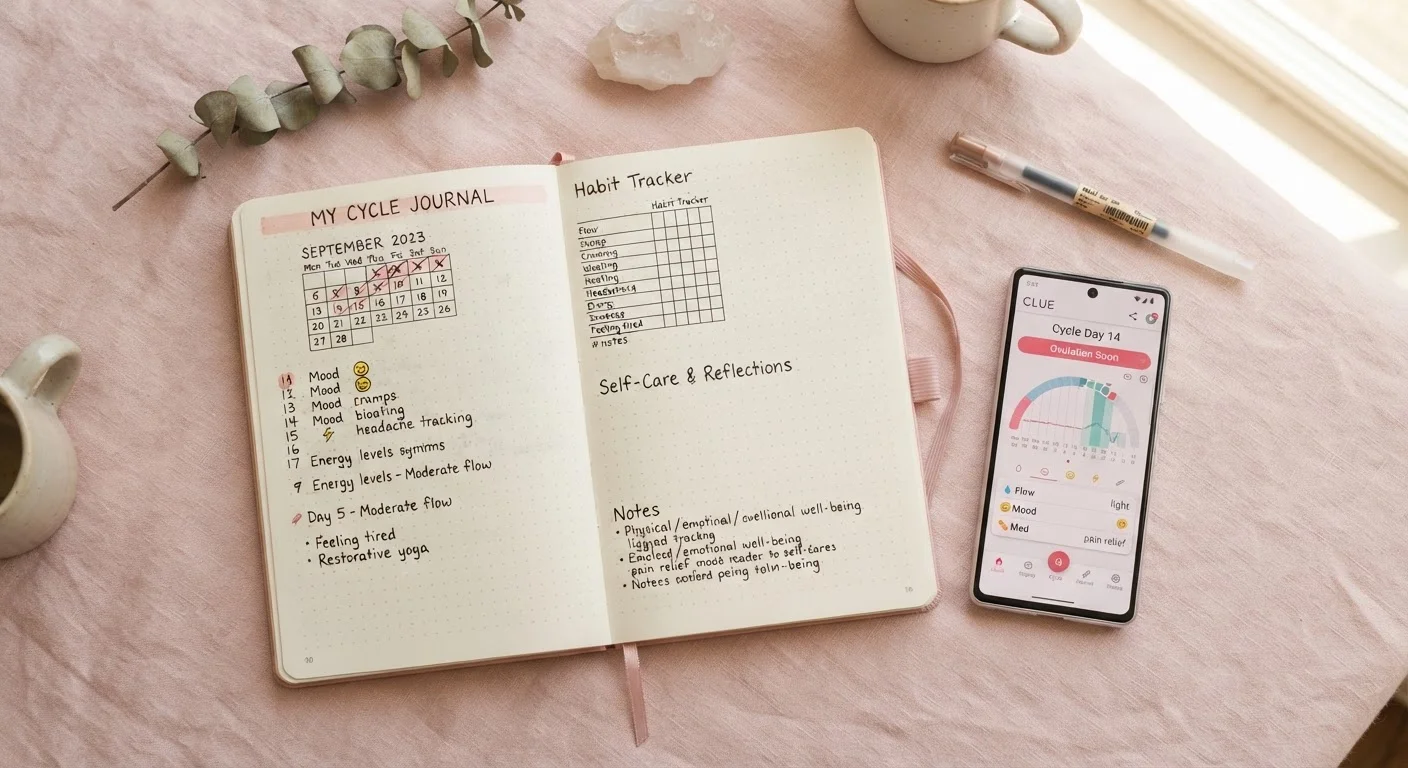
Key Takeaways
- Symptom journals capture nuanced, subjective experience that apps cannot automatically detect or categorize.
- Cycle-tracking apps excel at pattern recognition over time but rely on the accuracy of your data inputs.
- Neither tool replaces clinical hormone testing or a professional medical evaluation.
- Combining both methods often provides the most complete picture to share with a healthcare provider.
- Data from either tool becomes more clinically useful after at least two to three full cycles of consistent recording.
Our Verdict
Symptom journals and cycle-tracking apps are genuinely complementary rather than competing tools. Apps surface patterns in timing and regularity efficiently, while journals preserve the qualitative detail — the severity, the emotional texture, the unexpected connections — that algorithms miss. Used together and shared with a clinician, they can meaningfully support conversations about hormonal health.
| Best for | Recommended |
|---|---|
| Those who want structured, automated pattern analysis with minimal effort | Cycle-tracking app |
| Those experiencing complex, hard-to-categorize symptoms needing rich detail | Symptom journal |
| Anyone preparing for a hormonal health appointment with a clinician | Both tools combined |
| Those focused on understanding cycle regularity and ovulation timing | Cycle-tracking app |
Why Tracking Hormonal Patterns Matters
Hormones fluctuate constantly — across a menstrual cycle, across decades of life, and in response to stress, sleep, and illness. These fluctuations are entirely normal, yet they can produce symptoms ranging from mild to disruptive. The challenge is that hormonal patterns are inherently personal: what one woman experiences as PMS, another may recognize as a thyroid issue in disguise.
Tracking is how you move from vague awareness ("I always feel terrible the week before my period") to documented evidence a clinician can actually use. Whether you use a paper journal or a digital app, the goal is the same: to externalize what your body is doing so patterns become visible over time. For a broader look at how hormones shift across different life stages, see our complete hormonal health reference.
What differs between tools is what kind of information they capture best — and understanding that distinction helps you choose wisely.
What Symptom Journals Do Best
A symptom journal — whether a dedicated notebook, a structured template, or a notes app — puts you entirely in control of what gets recorded. That flexibility is its core strength. You can log not just what happened but how it felt: the quality of a headache, the specific nature of your mood shift, the way bloating interfered with work, or an unusual craving pattern you noticed mid-cycle.
Journals are particularly valuable for capturing symptoms that don't fit neatly into pre-set app categories — joint pain, brain fog, changes in libido, skin changes, or sleep disruption. They also allow free-text notes on contextual factors like a stressful week, a change in diet, or a new medication, all of which can meaningfully influence hormonal symptoms.
Make Your Journal Work Harder
Try rating each symptom on a simple 1–5 scale alongside a brief description. This adds a quantitative layer to your qualitative notes, making it easier to spot trends across months and to communicate symptom severity clearly to a healthcare provider. Even five minutes at the end of each day is enough to build a meaningful record.
The main limitation is consistency. A journal only reflects what you actually record, and gaps are common during high-symptom days when writing feels like effort. Building a brief daily habit — even just three to five data points per day — tends to produce more clinically useful records than detailed entries written sporadically. Our article on building a useful symptom log offers practical guidance on what to capture and how often.
What Cycle-Tracking Apps Do Best
Cycle-tracking apps automate the pattern-recognition work that would take you considerable effort to do manually. By logging period start and end dates, basal body temperature, cervical mucus observations, or LH (luteinizing hormone) test results, these apps build a longitudinal picture of your cycle length, variability, and predicted fertile windows.
Their strength lies in visualization and consistency alerts. An app can immediately flag that your luteal phase has shortened compared to previous cycles, or that your cycle length has become irregular — observations that would take considerable effort to extract from a handwritten log. This makes them especially useful for anyone monitoring reproductive health or noticing cycle irregularities worth discussing with a provider.
| Symptom Journal | Cycle-Tracking App | |
|---|---|---|
| Data type captured | Open-ended, qualitative, narrative | Structured, quantitative, predefined categories |
| Pattern detection | Manual — requires your own analysis | Automated — algorithm flags trends for you |
| Flexibility | High — record anything you notice | Limited to app's input fields and categories |
| Effort required | Higher — free-text takes more time | Lower — quick taps for common data points |
| Contextual detail | Excellent — captures life events, mood nuance | Limited — few apps allow free-text notes |
| Clinician usefulness | Rich but may need summarizing | Visual summaries easy to share quickly |
| Requires consistent habit | Yes — gaps reduce reliability | Yes — predictions improve with more data |
| Hormone measurement | None — self-reported only | None — predictive, not diagnostic |
It's worth understanding that most consumer apps use algorithmic predictions based on your historical data, not real-time hormone measurement. Predictions improve with more data, but they can be thrown off by illness, travel, or significant stress. Apps also vary considerably in their evidence base; some incorporate research-backed models, while others rely on simple averages. If you're interested in how cycle tracking intersects with reproductive planning, our fertility awareness guide explores both the potential and the limitations in depth.
Using Your Data Effectively — Including With Your Doctor
Data collected in isolation only goes so far. The real value of tracking — whether by journal, app, or both — emerges when that information is shared with a qualified healthcare professional who can interpret it alongside physical examination, medical history, and, where appropriate, laboratory hormone testing. If you notice signs that something may be off, our article on recognizing signs of hormonal imbalance can help you decide when to seek a consultation.
When preparing for an appointment, bring at least two to three months of consistent data if possible. Highlight any patterns you've noticed yourself, and note any significant life events that coincided with symptom changes. This kind of prepared, organized information can make a significant difference in how productive the conversation is — something we explore fully in getting the most out of a hormonal health appointment.
For those who want to explore digital tools beyond tracking apps, symptom checkers can also help you organize concerns before a clinical visit — though they are never a substitute for professional assessment.
This article is for general informational purposes only and does not constitute medical advice. Always consult a qualified healthcare professional for personal health concerns, diagnosis, or treatment decisions.