

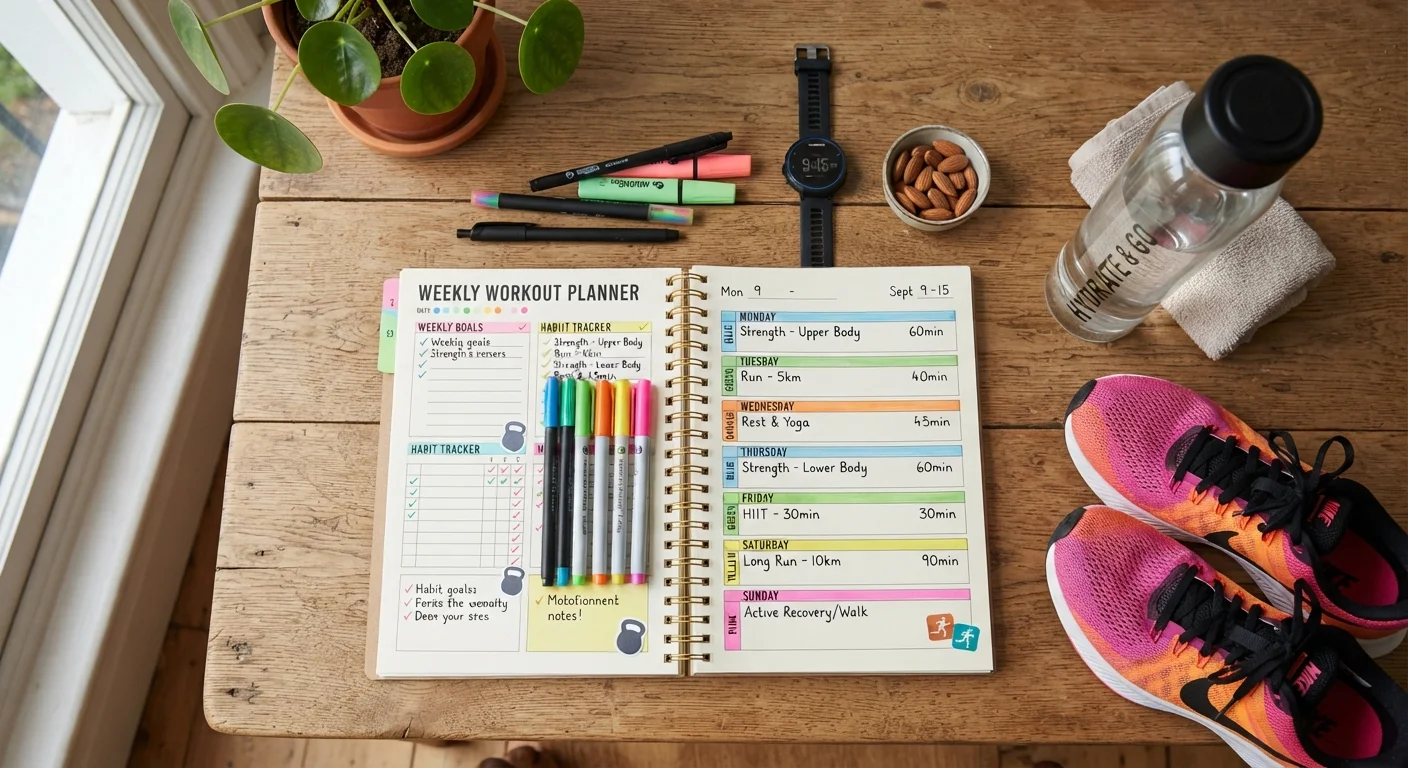
Key Takeaways
- Most adults benefit from 150–300 minutes of moderate aerobic activity per week, per ACSM and AHA guidelines.
- A balanced weekly plan includes cardiovascular training, strength work, and at least one full rest day.
- Starting with three days per week and progressing gradually reduces injury risk and supports habit formation.
- Scheduling workouts in advance — like appointments — significantly improves follow-through.
- Adapting rather than abandoning your plan when life disrupts it is the key to long-term consistency.
What you will need
Why Most Exercise Plans Fail — and What to Do Differently
Most exercise routines collapse not from lack of effort but from poor structure. Plans that demand too much too soon, ignore recovery, or ignore real-life constraints tend to unravel within the first few weeks. Understanding this is the first step toward building something more durable.
The most effective weekly exercise plans share three characteristics: they are realistic given the individual's schedule, they balance different types of physical stress, and they include built-in flexibility. Perfection is not the goal — consistency over months and years is.
Understanding why motivation dips are predictable can help you stay committed when the initial enthusiasm fades — and it will, for almost everyone. That dip is normal, and planning for it is a practical fitness strategy.
Consult a Professional Before Starting
If you have a chronic health condition, recent injury, or have been inactive for an extended period, speak with a qualified healthcare provider before beginning a new exercise program. This guide provides general fitness education, not personalized medical advice. Certain populations — including those who are pregnant, older adults, or managing diagnosed conditions — should seek individualized guidance.
It is also worth remembering that structured workouts are not the only way to accumulate meaningful movement. Everyday incidental activity — walking, taking stairs, active commuting — contributes to your overall weekly total and supports your formal sessions.
What You Need Before You Begin
Getting the foundations right before writing out your weekly plan prevents the most common early mistakes. Review what you will need:
What you will need
Weekly planner or calendar app
Used to schedule and visualize your training sessions, rest days, and recovery activities across the week.
Fitness or activity tracker
Helps monitor session duration, heart rate zones, and weekly activity totals to gauge progress over time.
Resistance bands or free weights
Provide adjustable resistance for strength training sessions at home or in the gym.
With these in place, you are ready to build a plan that reflects your actual life — not an idealized version of it.
Treat Workouts Like Appointments
Block training sessions in your calendar the same way you would a meeting or medical appointment. Research consistently shows that implementation intentions — deciding in advance when, where, and how you will exercise — markedly improve follow-through. Even a 20-minute slot counts.
Building Your Weekly Routine: Step by Step
Follow the steps below in sequence. Each builds on the previous one. The goal is a weekly structure you can repeat, refine, and sustain — not a rigid prescription.
Assess Your Current Fitness Starting Point
Before building a schedule, take stock of where you are. How many days per week are you currently active? What types of movement do you genuinely enjoy? Honest answers here shape a plan you can actually sustain. If you have been largely sedentary, three moderate sessions per week is a reasonable starting target — not five.
Identify your available time windows. A 30-minute lunch break is a real opportunity. A two-hour Saturday morning is a different kind of asset. Map both.
Choose a Weekly Session Frequency
The American College of Sports Medicine (ACSM) recommends most adults aim for at least 150 minutes of moderate-intensity aerobic activity per week, alongside two or more days of muscle-strengthening activity. For beginners, translating this into three to four dedicated sessions is a practical starting structure.
A simple three-day framework might look like: two cardiovascular sessions and one strength session. As fitness improves over several weeks, a four-day split — alternating emphasis — allows for greater variety without excessive fatigue. For a deeper look at balancing these two training types, see our guide to structuring strength and cardio together.
Map Session Types Across the Week
Distribute your session types so that intense efforts are separated by at least 48 hours of recovery or lower-intensity movement. For example: strength training on Monday and Thursday, moderate cardio on Wednesday, and light walking or stretching on Saturday.
Alternating muscle groups and energy demands reduces cumulative fatigue and lowers injury risk. Hard-easy sequencing — a principle used in structured athletic training — applies equally well to general fitness routines.
Define Intensity Levels in Advance
Not every session should feel equally demanding. Classify each planned session as light, moderate, or vigorous before the week begins. A useful shorthand: at moderate intensity you can speak in sentences but not sing; at vigorous intensity, conversation becomes difficult.
Keeping one or two sessions at moderate intensity each week helps maintain consistency without excessive fatigue accumulation — especially important in the first four to six weeks of a new routine.
Schedule Rest and Active Recovery Days
Rest is not a reward for training — it is a required component of adaptation. Muscle repair, cardiovascular adaptation, and nervous system recovery all happen between sessions, not during them. Plan at least one full rest day per week and consider one additional active recovery day (light walking, gentle stretching, or yoga).
For a structured approach to building recovery into your week, explore our weekly recovery planning guide.
Build In a Weekly Review and Adjustment Process
At the end of each week — even five minutes is enough — review what you completed, what you skipped, and why. Did a session feel too hard? Consider reducing duration or intensity. Did three days feel manageable with energy to spare? That is a signal to add a fourth in the following weeks.
If you use a fitness tracker, reviewing your data regularly adds another layer of useful feedback. Our practical guide to reviewing tracker data walks through how to turn those numbers into meaningful decisions.
Create a Plan for Disrupted Weeks
Travel, illness, overtime, and family demands will interrupt your schedule. Deciding in advance how you will handle disruptions removes the need to negotiate with yourself in the moment. Options include: a shortened 15-minute home workout, a brisk walk instead of a gym session, or simply accepting a missed day and resuming the next scheduled session without guilt.
If you find consistency particularly challenging around a busy work schedule, the guidance on training around a full-time job offers practical strategies for protecting training time without burning out.
Avoid Doing Too Much Too Soon
One of the most common reasons new routines fail is starting at too high a volume or intensity. Increasing weekly training load by more than 10% at a time raises injury risk significantly. Build gradually, and treat soreness that lasts more than 72 hours as a signal to reduce intensity, not push harder.
Nutrition plays a supporting role in any training routine. A well-structured eating plan ensures your body has the fuel to train and recover effectively. Our weekly meal planning framework is a practical companion to the routine you build here.
This article is for general informational and educational purposes only. It does not constitute medical advice. Always consult a qualified healthcare professional before starting a new exercise program, particularly if you have any health conditions or concerns.