

| Number of essential vitamins | 13 (NIH Office of Dietary Supplements) |
| Essential dietary minerals (approx.) | ~16 (National Academies of Sciences, Engineering, and Medicine) |
| Most common global micronutrient deficiency | Iron deficiency (World Health Organization) |
| Vitamin D insufficiency prevalence (U.S. adults) | ~35% (NHANES data, CDC) |
| Folate's critical role in pregnancy | Neural tube development (CDC Folic Acid recommendations) |
What Are Micronutrients and Why Do They Matter?
Unlike macronutrients like carbohydrates, proteins, and fats, micronutrients — vitamins and minerals — are needed only in small amounts. But their impact is anything but small. These compounds drive hundreds of essential physiological processes: energy metabolism, immune defense, bone formation, blood clotting, hormone synthesis, and DNA repair, among others.
The body cannot manufacture most micronutrients on its own, which means diet is the primary delivery mechanism. When intake falls short — even for a single nutrient — those interconnected systems can begin to falter. Deficiencies often develop gradually, producing vague symptoms like fatigue, poor concentration, or slow wound healing before they become clinically detectable.
For a plain-language foundation on dietary terminology, the Nutrition & Diet Reference Glossary is a useful companion to this guide.
| Number of essential vitamins | 13 (NIH Office of Dietary Supplements) |
| Essential dietary minerals (approx.) | ~16 (National Academies of Sciences, Engineering, and Medicine) |
| Most common global micronutrient deficiency | Iron deficiency (World Health Organization) |
| Vitamin D insufficiency prevalence (U.S. adults) | ~35% (NHANES data, CDC) |
| Folate's critical role in pregnancy | Neural tube development (CDC Folic Acid recommendations) |
Key Vitamins and Their Roles
Vitamins are divided into two groups based on how the body stores and transports them.
Fat-Soluble Vitamins (A, D, E, K)
These dissolve in fat and are stored in the liver and fatty tissues, meaning they accumulate over time. Vitamin A supports vision, immune function, and cellular growth. Preformed vitamin A is found in liver and dairy; beta-carotene — a precursor the body converts to vitamin A — is abundant in orange and dark-green vegetables. Vitamin D regulates calcium absorption and bone mineralization, and supports immune modulation; fatty fish, fortified dairy, and moderate sun exposure are primary sources. Vitamin E acts as an antioxidant, protecting cell membranes from oxidative damage; nuts, seeds, and vegetable oils are rich sources. Vitamin K is essential for blood clotting and bone metabolism; leafy greens such as kale and spinach are the most concentrated food sources.
Water-Soluble Vitamins (C and the B Vitamins)
These are not stored in significant quantities, so regular dietary intake matters more day-to-day. Vitamin C supports collagen synthesis, wound healing, and immune function, and enhances non-heme iron absorption from plant foods. Citrus fruits, bell peppers, and broccoli are excellent sources. The B vitamins — including B1 (thiamine), B2 (riboflavin), B3 (niacin), B6, B12, and folate — collectively support energy metabolism, red blood cell production, and nervous system function. Folate is especially critical during early pregnancy for neural tube development. Whole grains, legumes, eggs, meat, and fortified foods are key contributors across this group.
Micronutrient
Vitamins and minerals required by the body in small but essential amounts to support growth, metabolism, and physiological function. They do not provide energy directly, unlike macronutrients.
Fat-soluble vitamin
Vitamins A, D, E, and K, which dissolve in fat and are stored in the liver and adipose tissue. Because they accumulate, both deficiency and excess can have health consequences.
Water-soluble vitamin
Vitamins C and the B-complex group, which dissolve in water and are not stored in meaningful quantities. Regular dietary intake is needed to maintain adequate levels.
Bioavailability
The proportion of a nutrient that the body can absorb and use from a given food or supplement. Factors such as food preparation, gut health, and co-consumed nutrients all influence bioavailability.
Trace mineral
A mineral the body requires in very small amounts — such as iron, zinc, selenium, and iodine — but that is nonetheless essential for specific physiological functions.
Macromineral
A mineral needed in relatively larger quantities, including calcium, magnesium, potassium, phosphorus, sodium, and chloride, each supporting major structural or regulatory roles.
Essential Minerals and Their Functions
Minerals are inorganic elements that serve both structural and regulatory roles in the body. They are broadly categorized as macrominerals (needed in larger amounts) and trace minerals (required in smaller quantities).
Macrominerals
Calcium is the most abundant mineral in the human body, primarily supporting bone and tooth structure; it also participates in muscle contraction and nerve signaling. Dairy products, fortified plant milks, and leafy greens are common sources. Magnesium is involved in over 300 enzymatic reactions, including energy production and protein synthesis; found in whole grains, legumes, and nuts. Potassium helps regulate fluid balance and blood pressure, and supports proper muscle and heart function; bananas, potatoes, and beans are rich sources.
Trace Minerals
Iron is central to oxygen transport via hemoglobin; heme iron from red meat is more bioavailable than non-heme iron from plant sources, though vitamin C can enhance the latter. Zinc plays a role in immune response, wound healing, and protein synthesis; meat, shellfish, legumes, and seeds are good sources. Iodine is required for thyroid hormone production, which governs metabolism and development; iodized salt and seafood are the main dietary sources in the U.S. Selenium supports antioxidant enzymes and thyroid function; Brazil nuts are notably high, though moderate intake from a varied diet is sufficient for most people.
For broader context on how these nutrients fit into an overall eating pattern, explore the Nutrients & Food Groups hub.
Building Micronutrient Adequacy Through Diet
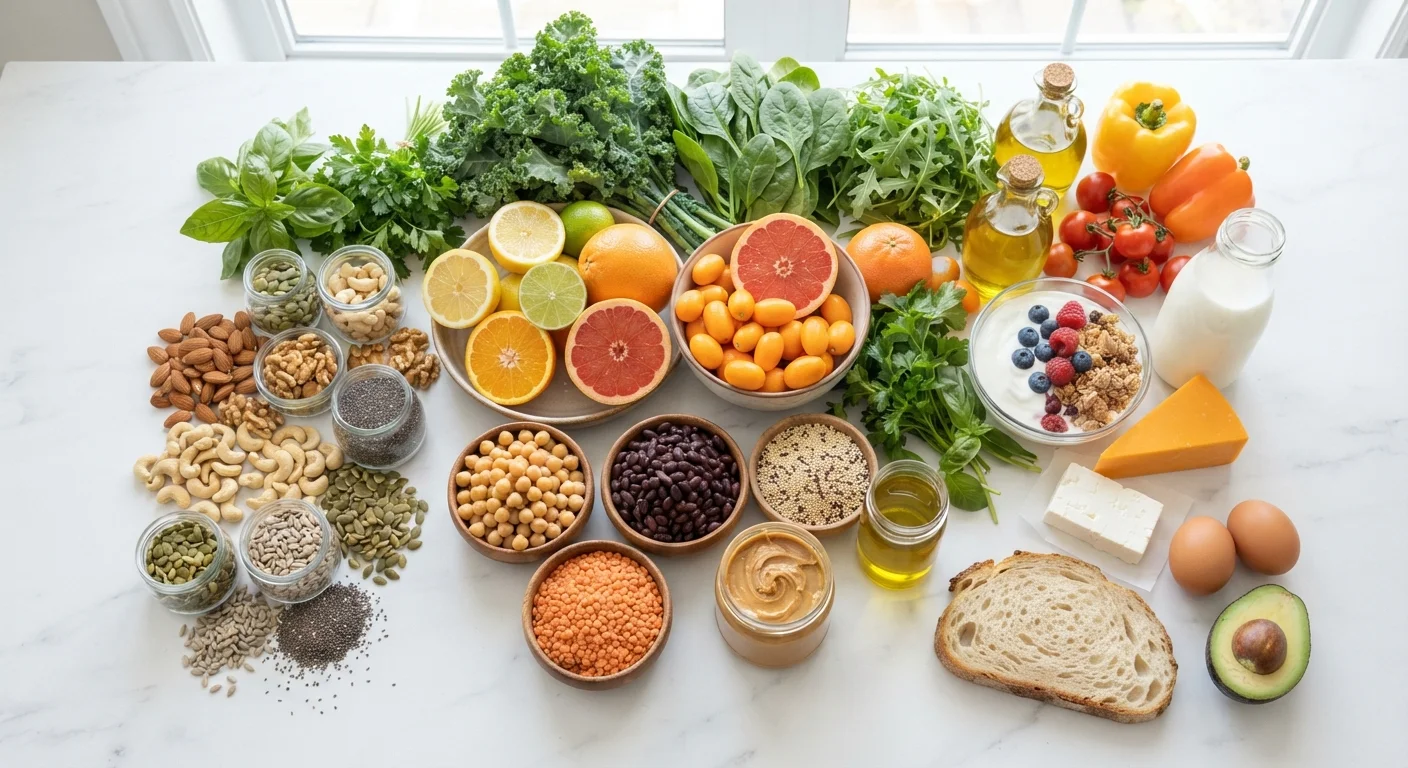
No single food supplies every micronutrient in adequate amounts. Dietary variety — across vegetables, fruits, whole grains, lean proteins, legumes, and dairy or fortified alternatives — is the most reliable strategy for meeting daily needs. Highly processed foods tend to displace micronutrient-dense options without offering comparable nutritional value.
Certain groups may benefit from targeted attention. Older adults often absorb vitamin B12 and calcium less efficiently. Those following plant-based diets should monitor B12, iron, zinc, iodine, and vitamin D. People with limited sun exposure are at higher risk of vitamin D insufficiency. Individuals managing chronic health conditions, those who are pregnant or breastfeeding, and older adults should discuss individual micronutrient needs with a qualified healthcare provider before making significant dietary changes or considering supplementation.
Supplements can address specific documented deficiencies, but they do not replicate the full matrix of nutrients and phytochemicals found in whole foods. A registered dietitian can help assess dietary gaps accurately rather than guessing.
This article is for general informational and educational purposes only and does not constitute medical or nutritional advice. Speak with a qualified healthcare professional before making significant changes to your diet or starting any supplement regimen.