

| Number of main transmission route categories | 5 (direct contact, droplet, airborne, faecal-oral, vector-borne) (CDC and WHO infection prevention frameworks) |
| Airborne pathogen travel distance | Greater than 1 metre (often room-scale) (WHO infection prevention guidelines) |
| Respiratory droplet fall distance | Typically within 1–2 metres of source (Standard infection control classification) |
| Hand hygiene efficacy | Reduces respiratory illness risk by ~20% (CDC hygiene evidence review) |
| Proportion of enteric infections linked to faecal-oral route | Majority of gastrointestinal infections globally (WHO global burden of disease data) |
What Transmission Routes Mean — and Why They Matter
When a pathogen moves from one host or surface to another and causes infection, it follows a transmission route — a defined biological pathway that determines how the microorganism travels, how far it can reach, and what barriers can stop it. Identifying the correct route is not a purely academic exercise: it directly shapes which protective measures are useful and which are unnecessary for a given infection.
If you are new to how infections work, see our beginner's overview of infections and immunity for foundational context. Transmission route knowledge also links closely to why susceptibility varies between individuals — the same pathogen may transmit efficiently to one person and not another depending on immune status and exposure dose.
| Number of main transmission route categories | 5 (direct contact, droplet, airborne, faecal-oral, vector-borne) (CDC and WHO infection prevention frameworks) |
| Airborne pathogen travel distance | Greater than 1 metre (often room-scale) (WHO infection prevention guidelines) |
| Respiratory droplet fall distance | Typically within 1–2 metres of source (Standard infection control classification) |
| Hand hygiene efficacy | Reduces respiratory illness risk by ~20% (CDC hygiene evidence review) |
| Proportion of enteric infections linked to faecal-oral route | Majority of gastrointestinal infections globally (WHO global burden of disease data) |
The Five Core Transmission Routes
1. Direct and Indirect Contact
Direct contact involves physical touching — skin-to-skin, kissing, or sexual contact — that transfers a pathogen. Indirect contact occurs when a person touches a contaminated surface (fomite) and then introduces the pathogen to a mucosal entry point such as the eyes, nose, or mouth. Many common bacterial skin infections and some gastrointestinal viruses spread this way.
2. Respiratory Droplets
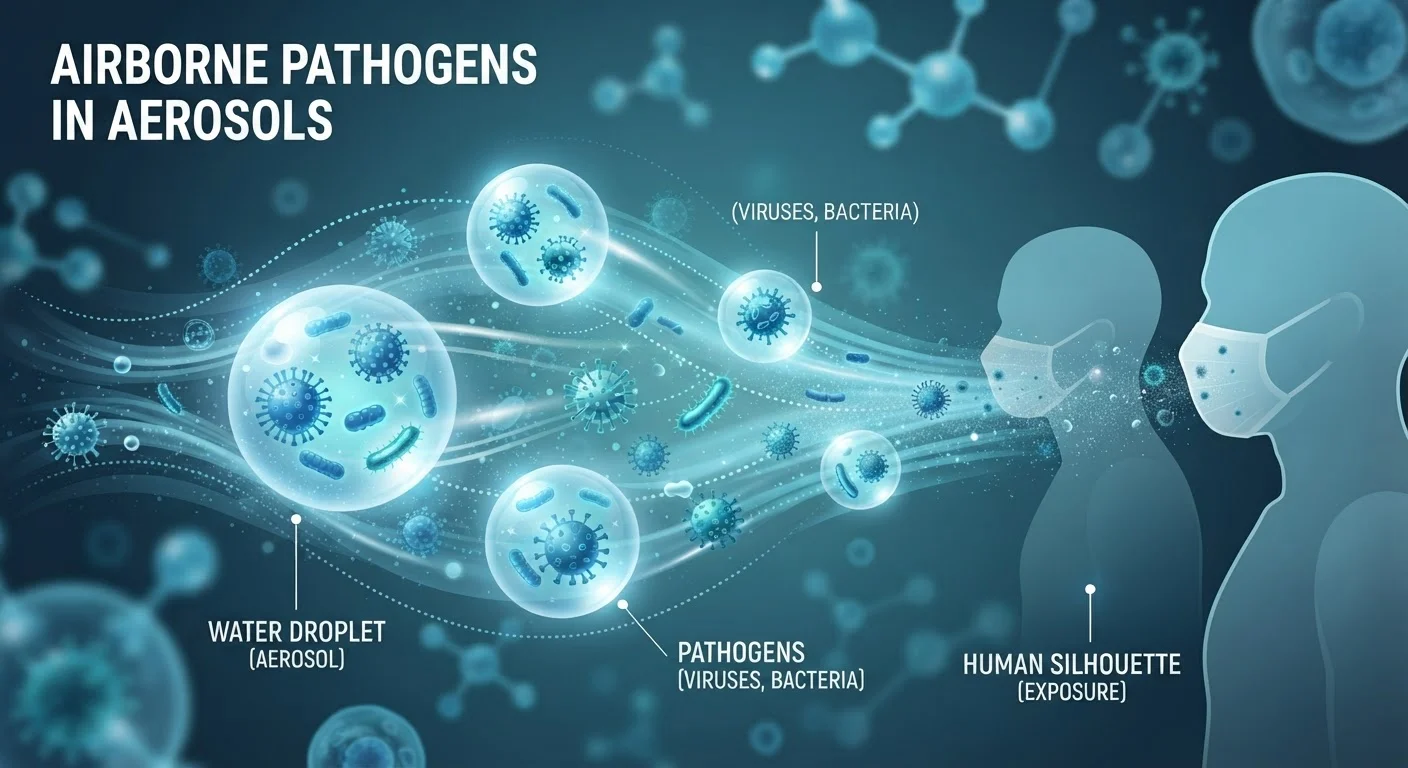
Coughing, sneezing, and speaking propel liquid particles containing pathogens. Large droplets (generally >5 µm) fall relatively quickly under gravity, typically within 1–2 metres of the source, reducing transmission risk at greater distances. Influenza and many cold viruses rely heavily on droplet spread.
3. Airborne Transmission
Smaller particles — sometimes called droplet nuclei — can linger in the air for minutes to hours and travel beyond 2 metres. Measles, tuberculosis, and varicella (chickenpox) are canonical examples of airborne diseases. Adequate ventilation and, in healthcare settings, appropriate respiratory protection are the primary controls.
Transmission Routes Can Overlap
Many pathogens use more than one transmission route simultaneously. SARS-CoV-2, for example, spreads via both droplets and airborne particles, with contact transmission also possible. Understanding that a single infection can exploit multiple pathways helps explain why layered prevention measures — ventilation, masks, and hand hygiene together — are often recommended.
4. Faecal-Oral Route
Pathogens shed in faeces contaminate water, food, or surfaces and enter a new host via ingestion. Norovirus, hepatitis A, and many enteric bacteria spread this way. Safe food handling, potable water infrastructure, and hand hygiene after toilet use are the cornerstone interventions.
5. Vector-Borne Transmission
Some pathogens require a living intermediary — a vector — to complete their life cycle and reach a human host. Mosquitoes transmit malaria and dengue; ticks carry Lyme disease and Rocky Mountain spotted fever. Controlling vector populations and using personal protective measures (such as insect repellent and protective clothing) are the primary prevention strategies here.
For a deeper look at how the body responds once a pathogen enters via any of these routes, see our article on how the immune system recognises and fights infection.
Applying This Knowledge to Everyday Prevention
Understanding transmission routes allows you to match your protective behaviours to real risk — rather than applying effort where it has no effect. A few evidence-grounded principles:
- Hand hygiene disrupts both contact and faecal-oral transmission and is one of the most consistently supported single interventions across multiple infection types.
- Improving indoor ventilation addresses airborne and droplet risk; opening windows and using air filtration can dilute suspended particles in shared spaces.
- Safe food and water practices — cooking food to safe temperatures, refrigerating perishables promptly, and using treated water — block the faecal-oral route effectively.
- Vaccination does not interrupt the route itself, but reduces the probability of successful infection after exposure, regardless of how a pathogen reaches you.
Pathogen
A microorganism — such as a virus, bacterium, fungus, or parasite — that can cause disease in a host. Pathogens vary widely in how they spread and how the immune system responds to them.
Fomite
An inanimate object or surface that can harbour and transfer infectious agents. Common fomites include doorknobs, keyboards, and shared utensils.
Vector-borne transmission
The spread of infection via a living intermediary organism, such as a mosquito or tick, that carries the pathogen from one host to another.
Incubation period
The time between initial exposure to a pathogen and the appearance of symptoms. During part or all of this window, an infected person may still be capable of transmitting the pathogen to others.
Droplet nuclei
Tiny, dried residues of respiratory droplets that remain suspended in air for extended periods and can carry airborne pathogens across larger distances than standard droplets.
Zoonosis
An infection that is naturally transmissible from animals to humans. Examples include rabies, certain influenza strains, and some forms of salmonellosis.
If you notice symptoms that may indicate a developing infection, our guide on recognising early signs of infection outlines when to seek professional care. For a broader vocabulary of clinical terms, key clinical terms explained is a useful companion reference.
This article is for general informational and educational purposes only and does not constitute medical advice. Always consult a qualified healthcare professional for guidance on your personal health concerns.