

Key Takeaways
- Infections occur when pathogens — viruses, bacteria, fungi, or parasites — invade and multiply in the body.
- The immune system uses two layers of defense: innate (rapid, general) and adaptive (targeted, memory-forming).
- Infections can be acute or chronic, and spread through multiple routes including air, touch, and contaminated surfaces.
- Everyday habits like handwashing and vaccination are among the most evidence-supported ways to reduce infection risk.
- Not all infections require antibiotic treatment — using antibiotics for viral infections contributes to resistance.
Start here
What Is an Infection?
Next
Types of Pathogens
Then
How the Immune System Responds
Also useful
How Infections Spread
Apply it
Prevention and Everyday Protection
What Is an Infection?
An infection occurs when a foreign microorganism enters the body, establishes itself, and begins to multiply. That process can trigger an immune response — the collection of symptoms we associate with being sick, such as fever, fatigue, or inflammation, are often signs of the body fighting back rather than the pathogen itself causing direct damage.
Infections differ from other health conditions in that they are caused by external agents rather than internal malfunction. They may be mild and self-limiting, resolving within days, or serious and persistent — a distinction covered in depth in our article on acute vs. chronic infections.
Pathogen
Any microorganism — such as a virus, bacterium, fungus, or parasite — capable of causing disease in a host.
Innate immunity
The body's immediate, non-specific defense system that responds rapidly to any perceived foreign threat, present from birth.
Adaptive immunity
A slower but highly targeted immune response that produces specific antibodies and creates memory cells for future protection against the same pathogen.
Antibody
A protein produced by the immune system that binds to a specific part of a pathogen, marking it for destruction or neutralising it directly.
Antigen
A molecule — usually on the surface of a pathogen — that the immune system recognises as foreign and uses as a target.
Asymptomatic infection
An infection where the pathogen is present in the body but causes no noticeable symptoms, even though the person may still be able to transmit the pathogen to others.
Types of Pathogens
The organisms capable of causing infection fall into four main categories:
- Bacteria — single-celled organisms that can reproduce independently. Examples include Streptococcus (strep throat) and Escherichia coli (some gut infections). Bacterial infections may respond to antibiotics.
- Viruses — microscopic particles that hijack host cells to replicate. Influenza, the common cold, and COVID-19 are viral. Antibiotics are ineffective against viruses.
- Fungi — including yeasts and moulds; most fungal infections in healthy people are superficial, such as athlete's foot, but can be serious in immunocompromised individuals.
- Parasites — organisms that live on or inside a host, such as the malaria-causing Plasmodium parasite transmitted by mosquitoes.
Understanding what type of pathogen is responsible for an illness matters clinically, because treatment strategies differ significantly across categories.
How the Immune System Responds
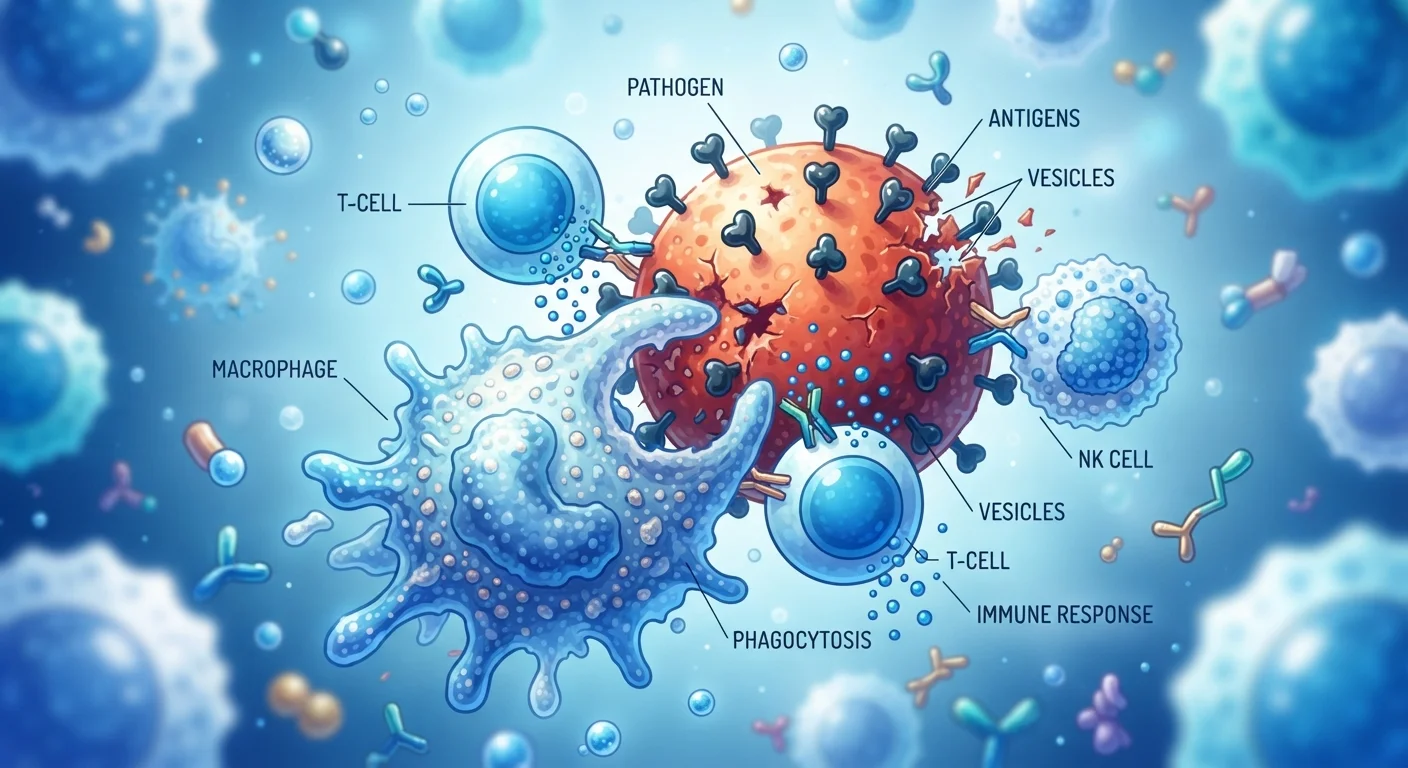
The immune system operates in two coordinated layers. The innate immune system is the body's first line of defense — it activates within minutes to hours of detecting an invader, using physical barriers (skin, mucus membranes) and generalist immune cells that attack anything recognised as foreign.
If the innate response is insufficient, the adaptive immune system engages. This layer is slower to activate — typically days — but highly specific. It produces antibodies tailored to the particular pathogen and generates memory cells so future encounters can be handled faster and more effectively. This is also the biological principle behind vaccination.
For a full walkthrough of this process, see how the immune system recognises and fights infection. You can also explore essential terminology in our immune system glossary.
Immunity Is Built Over Time
Each infection the immune system successfully clears adds to its 'memory bank,' making future responses more efficient. Vaccination mimics this process safely, without requiring you to experience the illness itself. Keeping your vaccination schedule current is a proactive way to support long-term immune preparedness.
How Infections Spread
Pathogens use several transmission routes to move between hosts. Common mechanisms include:
- Airborne and droplet transmission — respiratory pathogens spread when an infected person coughs, sneezes, or breathes, releasing particles that others inhale.
- Direct contact — touching an infected person or surface and then touching the eyes, nose, or mouth.
- Faecal-oral route — ingesting food or water contaminated with pathogens from faecal matter, common with some gastrointestinal infections.
- Vector-borne transmission — an intermediate organism, such as a mosquito or tick, carries the pathogen from one host to another.
Understanding these routes is foundational to prevention. Our plain-language guide to transmission routes explains each pathway in greater detail.
Prevention and Everyday Protection
Evidence-based prevention strategies work by either blocking transmission routes or strengthening immune readiness:
- Hand hygiene — washing hands with soap and water for at least 20 seconds, particularly before eating and after using the restroom, remains one of the most effective individual interventions.
- Vaccination — vaccines prime the adaptive immune system to recognise specific pathogens without requiring a natural infection. They are among the most rigorously studied tools in public health.
- Respiratory hygiene — covering coughs and sneezes, and wearing appropriate masks in high-risk settings, reduces airborne transmission.
- Food safety — proper cooking temperatures and safe food handling reduce faecal-oral transmission risks.
CDC: Understanding How Vaccines Work
A clear, evidence-based explanation from the US Centers for Disease Control and Prevention on how vaccines interact with the immune system and why they are effective.
MedlinePlus: Infections
A trusted consumer health resource from the US National Library of Medicine covering types of infections, how they are diagnosed, and general treatment approaches.
Individual susceptibility also varies. Factors including age, underlying conditions, nutrition, sleep quality, and stress levels all influence how robustly the immune system functions — explored further in our article on why some people get sick more often than others.
This article is for general informational purposes only and does not constitute medical advice. Always consult a qualified healthcare professional for personal health concerns, symptoms, or before making changes to your healthcare routine.