

Key Takeaways
- Manual logging gives you full control over what data you capture, but requires consistent effort to maintain.
- Automatic sync reduces friction and captures continuous data, though accuracy varies by device and activity type.
- Neither method is universally superior — the best choice depends on your fitness goals, routine, and how you use data.
- Combining both approaches is a practical strategy for many people tracking diverse workout types.
- Always verify automatically synced data against your perceived effort, especially before sharing with a care provider.
Our Verdict
Manual logging excels for people who want precise control over their records or perform activities that devices struggle to detect accurately. Automatic sync is better suited to those who prioritize consistency and low friction, particularly for steady-state cardio and daily activity. For most users, a hybrid approach — letting a device capture baseline data while manually adding context — delivers the clearest picture.
| Best for | Recommended |
|---|---|
| Those who perform varied or equipment-based workouts | Manual Logging |
| Those who want consistent, effort-free tracking of daily movement | Automatic Sync |
| Those managing fitness alongside a health condition | Manual Logging (with professional guidance) |
| Those building a long-term activity dataset for trend review | Hybrid approach |
What Each Method Actually Does
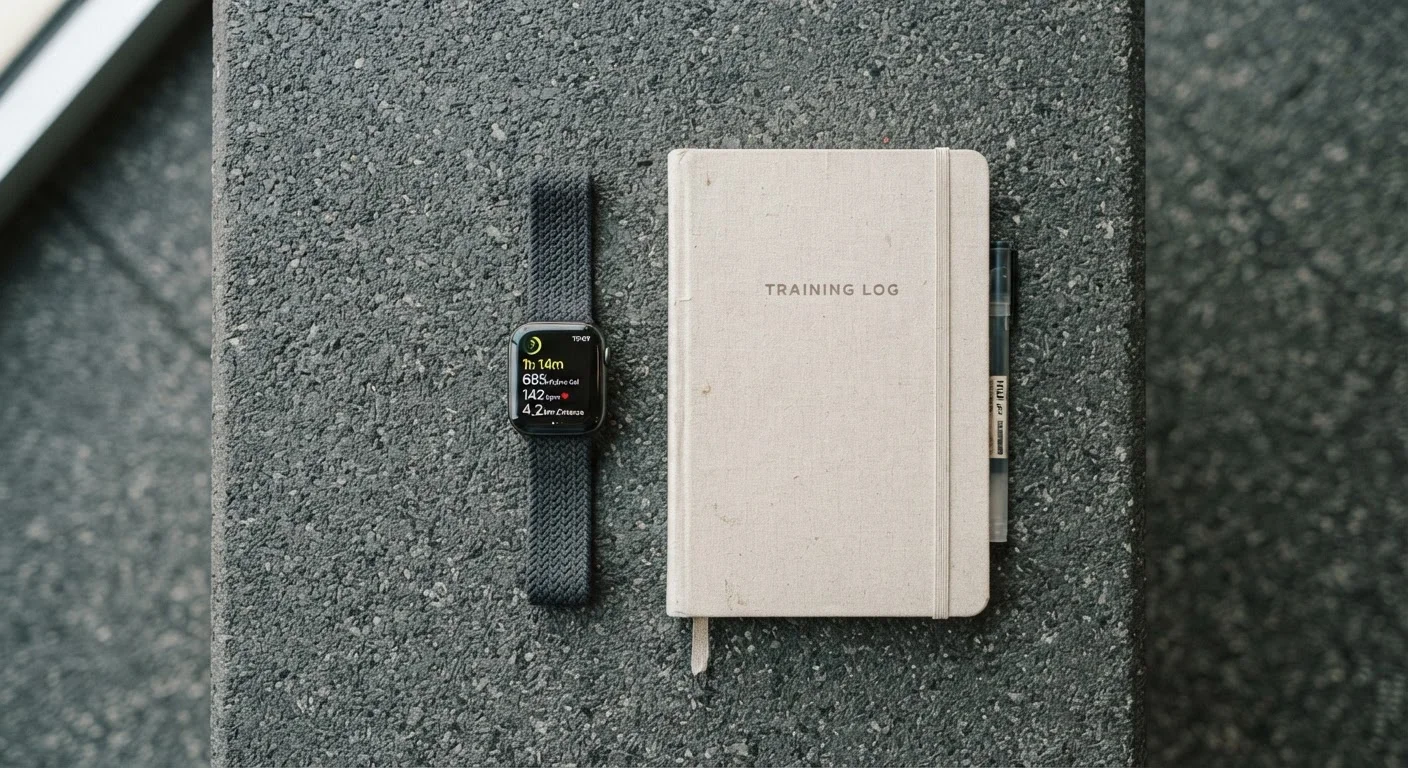
Workout tracking generally falls into two categories: manual logging, where you actively enter session details — sets, reps, distance, duration, perceived exertion — into an app or journal after or during exercise; and automatic sync, where a wearable device or smartphone sensor detects movement and records activity data without requiring you to do anything.
Manual logging puts you in the driver's seat. You decide what counts, how it's categorized, and what context to add. Automatic sync prioritizes convenience — your device uses accelerometers, GPS, heart rate sensors, and motion algorithms to classify and record activity in the background.
Both methods feed into the same broader goal: building a usable record of your physical activity over time. Where they diverge is in effort, accuracy, and the type of insight they produce. Understanding those differences is the starting point for choosing the right approach — or the right combination. See also how to track activity, nutrition, and sleep together for a broader view of integrated tracking.
Manual Logging: Strengths and Limitations
The primary advantage of manual logging is specificity. A device cannot know you paused a set to adjust form, switched from barbell to dumbbell mid-workout, or felt unusually fatigued. You can record all of that. For strength training, yoga, rock climbing, or any activity with complex structure, manual entry typically produces richer, more actionable data.
Manual logging also promotes mindfulness. The act of recording a session reinforces awareness of what you actually did versus what you planned — a subtle but meaningful feedback loop for goal-setting.
The downsides are real, though. Logging takes time and depends on your discipline. Missed sessions create gaps that distort trend data. Retrospective entries — typed hours after a workout — are prone to inaccuracy. Fatigue or busy schedules are the most common reasons people abandon manual logs.
Keep Entries Brief to Stay Consistent
Manual logs don't need to be exhaustive. Recording just the exercise type, duration, and a one-word effort rating (easy, moderate, hard) takes under a minute and is far more sustainable than detailed entries. Brevity preserves the habit — you can always add more detail on days when time allows.
If you're also tracking symptoms or health events alongside workouts, consistent manual entries become especially valuable. The practice of logging symptoms over time follows the same discipline principles as workout logging — structured, timestamped, and shared with your provider when relevant.
Automatic Sync: Strengths and Limitations
Automatic sync removes the single biggest barrier to consistent tracking: the requirement to remember and act. Because your device captures data passively, you're far less likely to have blank days in your record simply because you were tired or forgot. For people tracking overall activity levels, resting heart rate trends, or sleep patterns, this continuity is genuinely valuable.
Wearables are particularly reliable for steady-state cardiovascular activities — outdoor runs, cycling, and walking — where GPS and heart rate sensors perform well. Step counts and active minutes are also reasonably consistent across most devices.
Accuracy drops, however, for strength training (most devices significantly miscount calories burned during resistance work), water-based exercise, and activities involving equipment that limits wrist movement. Algorithm-based calorie estimates in particular should be treated as rough approximations. Before making decisions based on synced data, it's worth reviewing key questions about tracker data accuracy.
| Manual Logging | Automatic Sync | |
|---|---|---|
| Effort required | High — active input each session | Low — passive background capture |
| Best activity types | Strength, HIIT, yoga, complex workouts | Running, cycling, walking, daily steps |
| Data specificity | High — you control every field | Moderate — device-interpreted categories |
| Consistency risk | Gaps likely if habit lapses | Continuous unless device not worn |
| Calorie estimate accuracy | User-determined or app-estimated | Often imprecise, especially for resistance work |
| Contextual notes | Easy — add fatigue, mood, form notes | Limited or not supported |
| Setup complexity | Minimal — just an app or notebook | Requires device purchase and pairing |
Choosing or Combining Both Approaches
For many people, the most practical answer isn't either/or. A common hybrid model: let your wearable auto-record daily steps, heart rate, and cardio sessions, then manually log strength or specialty workouts with the detail those sessions require. This preserves continuity without sacrificing precision where it matters most.
When deciding, ask yourself three questions:
- What workout types dominate your routine? Device-friendly cardio favors auto-sync; varied or equipment-based training favors manual entry.
- What will you do with the data? Reviewing weekly trends is well-served by automatic data; sharing specific session details with a trainer or clinician benefits from manual notes.
- How consistent are you realistically? Honest self-assessment matters. A partially completed manual log is less useful than a complete automatic one.
Once you've built a tracking habit, the next step is making it actionable. Structuring a weekly data review turns raw records into decisions. And if monitoring starts to feel stressful rather than helpful, recognizing when tracking becomes counterproductive is an important read.
This article is for informational purposes only and is not a substitute for professional medical or fitness advice. Consult a qualified healthcare provider before making changes to your exercise routine, particularly if you have an existing health condition.