

Key Takeaways
- Tracking activity, nutrition, and sleep together reveals connections that no single metric can show alone.
- Consistency of logging matters more than perfect data accuracy for identifying useful trends.
- Trackers are educational tools, not diagnostic devices — always involve a clinician for health decisions.
- A weekly review routine turns raw data into actionable insight.
- Watch for signs that tracking is increasing anxiety rather than supporting wellbeing.
Why Integrated Tracking Outperforms Isolated Apps
Most people who track their health start with one tool — a step counter, a calorie log, or a sleep app — and treat each in isolation. The problem is that these three systems are deeply interdependent. Poor sleep reduces workout performance; a high-carbohydrate dinner influences sleep latency; an intense training day shifts hunger hormones the following morning. When you track each variable in a separate silo, you miss those connections entirely.
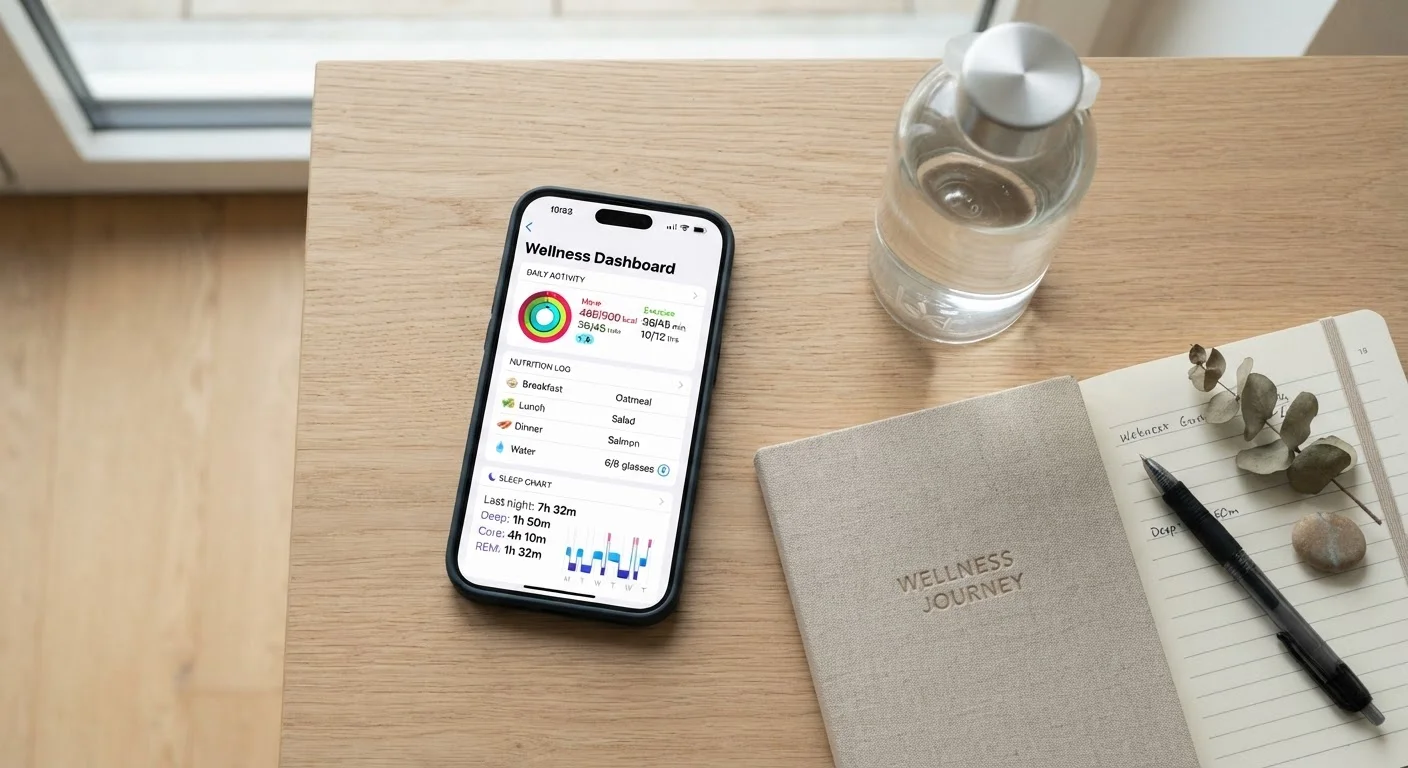
Integrated tracking means capturing activity, nutrition, and sleep within a unified view — whether that is a single platform that consolidates all three, or a deliberate habit of reviewing each data source together at regular intervals. The goal is not more data, but more meaningful data.
See our overview of health metric categories to understand the full range of variables modern trackers can capture before deciding what to prioritize.
80%
Adults who own at least one health tracking device
Pew Research Center surveys have consistently found high wearable and health app ownership among U.S. adults, with rates rising each year.
3x
More likely to meet activity goals with combined tracking
Research published in the Journal of Medical Internet Research suggests users who track multiple health behaviors simultaneously show greater goal adherence than single-metric trackers.
7–9 hrs
Recommended nightly sleep for most adults
The American Academy of Sleep Medicine and Sleep Research Society jointly recommend 7–9 hours of sleep per night for adults aged 18–60.
The Three Pillars: What to Track and Why
Activity
Activity data typically includes step count, active minutes, workout type and duration, heart rate zones, and estimated calorie expenditure. These metrics reflect both structured exercise and incidental movement throughout the day. For a deeper look at how activity wristbands and dedicated heart rate devices differ in what they measure, see our comparison of activity trackers vs. heart rate monitors.
Nutrition
Nutrition logs capture macronutrient intake (protein, carbohydrates, fat), micronutrients, hydration, and meal timing. Even rough logging — scanning barcodes or selecting portion sizes from a database — gives enough signal to spot patterns like undereating on training days or inconsistent protein intake. Health calculators can complement your logs by helping you contextualize totals like calorie balance or macronutrient ratios.
Sleep
Sleep metrics from wearables typically estimate total sleep duration, sleep stages (light, deep, REM), and interruptions. It is important to understand that consumer devices estimate these stages using movement and heart rate signals — they do not measure brain activity directly. Our article on sleep tracking in wellness apps covers what the data can and cannot reliably tell you.
Don't aim to log every day from the start — track for five consistent days per week and use the gaps as rest from data-consciousness. Sustainable logging over months outperforms perfect logging for two weeks.
Behavioral research on habit formation consistently shows that lower-friction routines have higher long-term adherence, and five days of data per week is sufficient to identify weekly patterns.
When reviewing sleep data, focus on your 7-day average rather than nightly scores. Single nights are too noisy to act on, but a week-long trend is a meaningful signal.
Consumer sleep trackers carry enough measurement error that night-to-night variation often reflects device noise rather than true biological change; weekly averages smooth this out.
Building Your Tracking System
A practical integrated system does not require expensive hardware. The priority is choosing a setup you will actually sustain.
- Choose a consolidation point. Many fitness apps accept data imports from nutrition and sleep platforms via APIs or manual export. Identify one dashboard — app or spreadsheet — where all three data types will live side by side.
- Decide on logging method. Automatic sync from a wearable reduces friction for activity and sleep; nutrition almost always requires some manual input. Review the trade-offs in manual logging vs. automatic sync to set realistic expectations.
- Set a minimum viable log. Tracking every meal perfectly is often unsustainable. Many users find that logging at least two of three daily meals consistently produces enough pattern data to be useful. Start there rather than aiming for perfection.
- Schedule a weekly review. Raw numbers are noise without reflection. A structured weekly review — covered in detail in our weekly tracker review guide — is where integrated tracking pays off.
Reading Patterns Across All Three Data Streams
Once you have a few weeks of combined data, look for recurring cross-pillar patterns rather than single-day anomalies. Common examples include:
- Sleep quality and next-day activity: Lower sleep scores often correlate with shorter active minutes the following day. Noticing this pattern can help you schedule easier recovery sessions after poor nights rather than pushing through ineffectively.
- Caloric intake and resting heart rate: Significant undereating over several days can elevate resting heart rate — a subtle signal that the body is under physiological stress.
- Workout intensity and meal timing: Some individuals find that training in a fasted state produces lower average heart rate performance; others see no difference. Your own data over several weeks is more useful than general recommendations.
Approach these correlations as hypotheses, not conclusions. A pattern in your tracker does not confirm causation. Use it as a starting point for behavioral experiments or a conversation with a healthcare provider.
To verify that the data you are reading is trustworthy enough to act on, consult our tracker accuracy checklist.
Limitations and When to Seek Professional Guidance
Integrated tracking is a powerful self-awareness tool, but it carries real limitations that every user should keep in mind.
Data accuracy varies by device and metric. Step counts are generally reliable; sleep stage estimates and calorie burn calculations carry meaningful error margins. Do not treat any single reading as a clinical measurement.
Tracking can become counterproductive. If reviewing your data generates anxiety, disrupts your relationship with food, or leads to compulsive checking, it may be causing more harm than benefit. Our article on when fitness tracking becomes counterproductive outlines the warning signs to watch for.
Trackers do not replace clinical assessment. If your data reveals persistent sleep disruption, unexplained drops in activity tolerance, or significant unintended weight change, those findings warrant a conversation with a qualified healthcare provider — not a tracker adjustment. Symptom checkers can help you organize concerns before a clinical visit, but should not substitute for professional evaluation.
For individuals who are pregnant, managing a chronic condition, or recovering from illness, tracking goals and safe ranges differ substantially. Always involve your care team before making changes based on tracker data in these situations.
This article is for general informational and educational purposes only and does not constitute medical advice. Consult a qualified healthcare professional for guidance specific to your health circumstances.