

Key Takeaways
- Logging food immediately after eating dramatically improves accuracy compared to end-of-day recalls.
- Weighing portions rather than estimating by eye is the single biggest factor in reliable data.
- Choosing a diary format — app or paper — that fits your daily routine increases long-term consistency.
- Recording context such as hunger level and meal timing adds useful dimension beyond calorie counts.
- Weekly review of your logs turns raw data into actionable insights about your eating patterns.
What you will need
Why Most Food Diaries Fail Within a Week
The average food diary starts strong on Monday and quietly collapses by Thursday. The culprit is rarely lack of motivation — it's a setup that makes accurate logging harder than it needs to be. Entries get estimated rather than measured, meals get recorded from memory hours later, and the friction of opening an app mid-meal leads to skipped entries. Over time, the data drifts far enough from reality that it stops being useful.
Understanding this failure pattern is the first step toward avoiding it. A well-designed food diary doesn't demand perfection — it creates conditions where honest, low-effort logging becomes the default. The steps below address each common breakdown point directly.
For a broader perspective on what calorie and nutrient data can and cannot reveal, see Calorie Logging: What It Can and Cannot Tell You About Your Diet.
What you will need
How to Set Up and Use Your Food Diary
Follow these steps in order. The first few are one-time setup tasks; the remaining steps form your daily and weekly logging routine.
Choose a format that matches your daily behavior
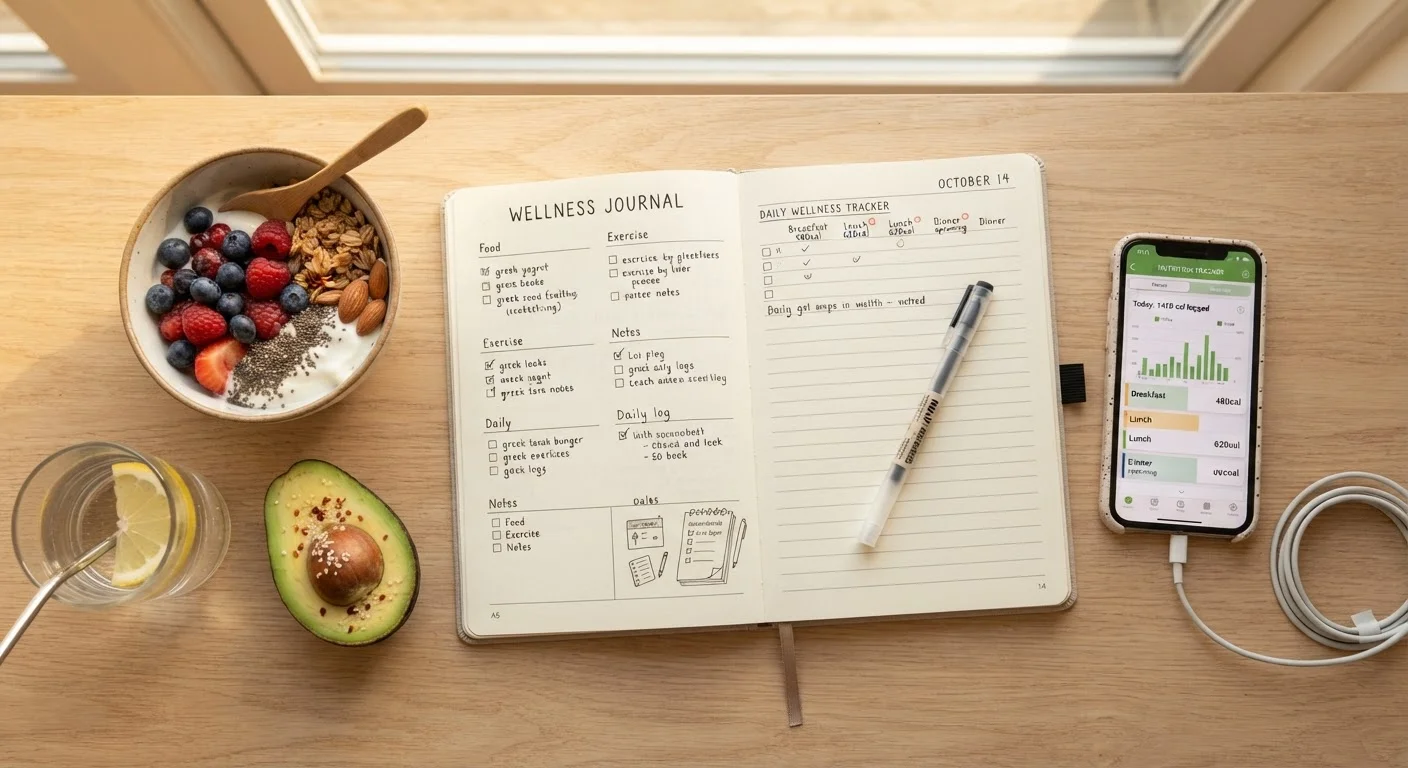
Select a logging method based on where your phone or notebook already lives during meals. Nutrition apps offer barcode scanning and built-in databases that reduce manual entry; paper journals remove screen friction and can be more honest for some users. Neither is universally superior — the one you will actually open consistently is the right choice.
If you choose an app, spend ten minutes exploring its food database before your first logged meal. Confirm it covers the foods you eat most often, including home-cooked dishes. You can explore health calculators to complement the data your diary produces.
Weigh portions instead of estimating
Visual estimation of portion size introduces significant error — studies consistently show that people underestimate portions, particularly for calorie-dense foods like oils, nuts, and cheese. Place a kitchen scale on your counter where it is easy to reach before or during food prep.
Weigh raw ingredients before cooking when possible, since cooking changes the weight of most foods through moisture loss or absorption. Log the raw weight and select the corresponding raw food entry in your diary for the most consistent results.
Log immediately after eating, not at day's end
Memory of what and how much you ate degrades rapidly. Research on dietary recall shows that same-meal logging is substantially more accurate than end-of-day summaries. Set a brief reminder — a phone notification or a sticky note — to log within 15 minutes of finishing each meal.
For meals eaten away from home, take a photo before eating. Even if you can't log precisely in the moment, the photo gives you a reliable reference when you sit down to enter it later.
Record context alongside food entries
A food diary that captures only food names and amounts misses information that helps explain patterns. Add brief notes about hunger level before eating (a simple 1–5 scale works), meal timing, eating location, and whether you were distracted. This context transforms a flat calorie log into a behavioral record you can actually learn from.
This approach also aligns well with integrated health tracking. See The Full Picture: How to Track Activity, Nutrition, and Sleep Together for guidance on combining food data with other health metrics.
Audit your log for common blind spots
Most food diaries systematically miss the same categories: cooking oils and fats used in preparation, beverages other than water, condiments and sauces, bites and tastes during cooking, and shared dishes where portions are unclear. Review your entries at the end of each day specifically looking for these gaps.
Create a short personal checklist of the foods you know you tend to forget and keep it visible near your logging tool. For shared or restaurant meals, log your best estimate and mark it with a flag or note so you can treat that data point with appropriate caution during review.
Build Logging Into an Existing Habit
Attach food logging to something you already do consistently — placing your fork down, washing your hands after eating, or making a post-meal drink. Habit pairing reduces the likelihood that logging gets skipped during busy or distracted days. Consistency over two to three weeks is more valuable than perfect entries on any single day.
Making Your Data Work for You
Raw log entries become useful only when you review them with intention. At the end of each week, look for patterns rather than fixating on individual days: Which meals are hardest to log accurately? Are there consistent gaps — such as unrecorded snacks or drinks? Is your protein or fiber intake clustering at one meal instead of spreading across the day?
Structured weekly review is a skill in itself. Reviewing Your Weekly Tracker Data: A Practical Routine walks through how to organize that process so it informs real decisions rather than generating anxiety about imperfect numbers.
If you track other health variables alongside diet — such as energy levels, digestion, or mood — a food diary can complement a broader symptom log. See Tracking Symptoms Over Time: What to Record and Why It Matters for guidance on building that kind of integrated record.
Pair your diary with a consistent meal planning habit and the logging process becomes easier — you'll already know what you're cooking before it's time to eat. Building a Weekly Meal Plan: A Practical Framework for Consistent Eating offers a structured approach that fits real schedules.
This article is for general informational purposes only and is not a substitute for personalized medical or dietary advice. Consult a qualified healthcare provider or registered dietitian before making significant changes to your eating habits, especially if you have a health condition.