

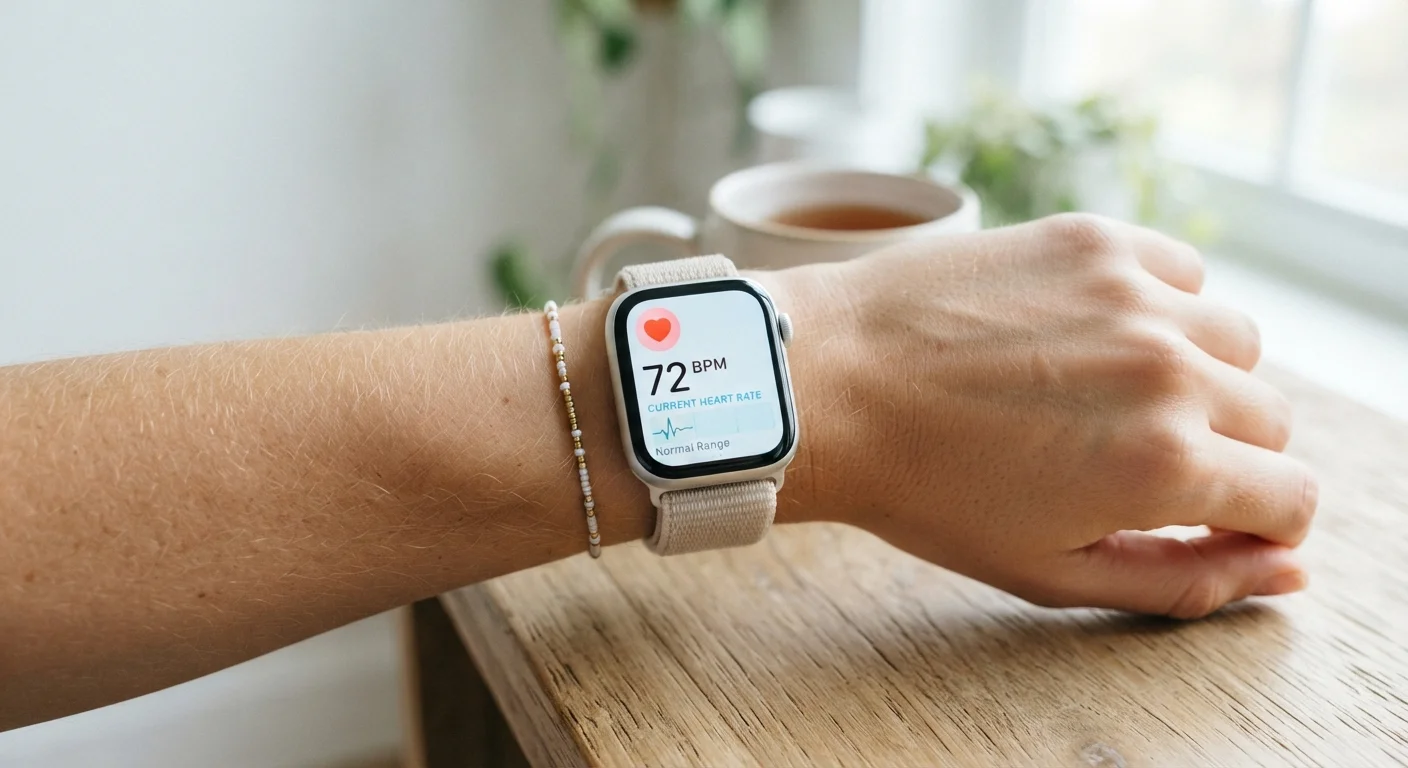
Key Takeaways
- A lower resting heart rate generally signals better cardiovascular fitness, but context always matters.
- Normal RHR for adults ranges from 60–100 bpm; athletes may consistently read below 60 bpm.
- Stress, illness, dehydration, and alcohol can temporarily raise your RHR.
- Consumer wearables measure RHR with reasonable accuracy but are not clinical-grade devices.
- Persistent unexplained changes in RHR warrant a conversation with a healthcare provider.
- RHR is one data point — it should be interpreted alongside other health metrics, not in isolation.
Resting Heart Rate
Resting heart rate (RHR) is the number of times your heart beats per minute when you are at complete rest — typically measured after waking but before getting out of bed. For most adults, a normal RHR falls between 60 and 100 beats per minute (bpm), though many healthy, active individuals register below that range. It reflects how efficiently your heart is pumping blood at baseline.
RHR is influenced by the autonomic nervous system's balance between sympathetic (excitatory) and parasympathetic (calming) activity; a lower RHR often indicates greater parasympathetic tone, associated with cardiovascular efficiency.
What Your Resting Heart Rate Actually Reflects
Your resting heart rate is one of the simplest windows into cardiovascular health — and one of the most misread. At its core, RHR tells you how hard your heart works to keep your body going when you're doing nothing at all. A heart that pumps efficiently fills more blood per beat, so it doesn't need to beat as often.
This is why aerobic fitness and RHR are so closely linked. Regular cardiovascular exercise — running, cycling, swimming — causes the heart muscle to strengthen and the left ventricle to expand its stroke volume (the amount of blood pumped per beat). The result over weeks and months of consistent training is a measurably lower resting rate. Elite endurance athletes sometimes register RHRs in the low 40s or even the 30s bpm.
Beyond fitness, RHR can serve as a sensitive early-warning signal. Research consistently shows that a persistently elevated RHR — even within the "normal" range — is associated with higher cardiovascular risk over time. Conversely, a downward trend in your personal RHR baseline, assuming no underlying illness, generally indicates improving heart efficiency.
For a broader look at how RHR fits among the many numbers on your wearable's dashboard, see Fitness Tracking 101.
60–100 bpm
Normal adult resting heart rate range
According to the American Heart Association, this is the established normal range for adults at rest.
~40 bpm
Typical elite endurance athlete RHR
Highly trained endurance athletes often exhibit resting rates well below the general population norm due to cardiac adaptation.
100+ bpm
RHR threshold for resting tachycardia
A consistent resting rate above 100 bpm (tachycardia) is considered clinically significant and should be evaluated by a provider.
What RHR Cannot Tell You
Despite its usefulness, resting heart rate has real limitations that fitness apps rarely explain. Here's what a single number — or even a trend — cannot reliably diagnose:
- It doesn't reveal the cause of elevation. A higher-than-usual RHR on a given morning could mean you're fighting off a cold, slept poorly, are dehydrated, consumed alcohol the night before, or are under significant emotional stress. Without context, the number alone tells you very little.
- It doesn't reflect all dimensions of cardiovascular health. Metrics like blood pressure, cholesterol, blood glucose, and heart rate variability (HRV) each measure different aspects of the cardiovascular system. A normal RHR doesn't rule out hypertension or arterial stiffness.
- It isn't a diagnostic tool. Consumer wearables are not medical devices. An abnormal reading on a fitness tracker is not a diagnosis — and a normal reading doesn't guarantee there's no underlying condition.
This parallels a broader truth about health tracking tools: data is most useful when it informs conversations with clinicians, not when it replaces them. For a similar perspective applied to nutrition monitoring, see what calorie logging can and cannot tell you.
Track Your Trend, Not Just Today's Number
Set a consistent morning measurement routine — same time, same body position, before caffeine — and log readings over at least two to four weeks before drawing conclusions. Most wearable apps display a rolling average that smooths out daily noise and makes meaningful patterns easier to spot.
How to Measure and Track RHR Effectively
Getting a meaningful RHR reading requires consistency. The most reliable method is to measure immediately upon waking, before sitting up or checking your phone — ideally after lying still for at least one minute. Use the same conditions daily so comparisons are valid.
Most fitness wearables calculate RHR automatically by averaging the lowest heart rate readings recorded during overnight sleep. This approach is generally reliable for trend tracking, though device placement and skin contact quality affect accuracy. For a detailed comparison of wrist-based trackers versus dedicated chest-strap monitors, see activity trackers vs. dedicated heart rate monitors.
Focus on your personal baseline trend rather than obsessing over daily fluctuations. A 5–10 bpm swing on any single day is usually unremarkable. What matters is whether your average RHR over weeks is rising, falling, or stable — and whether that aligns with changes in your lifestyle, fitness level, or health status.
This article is for general informational purposes only and does not constitute medical advice. If you have concerns about your heart rate or cardiovascular health, consult a qualified healthcare professional.