

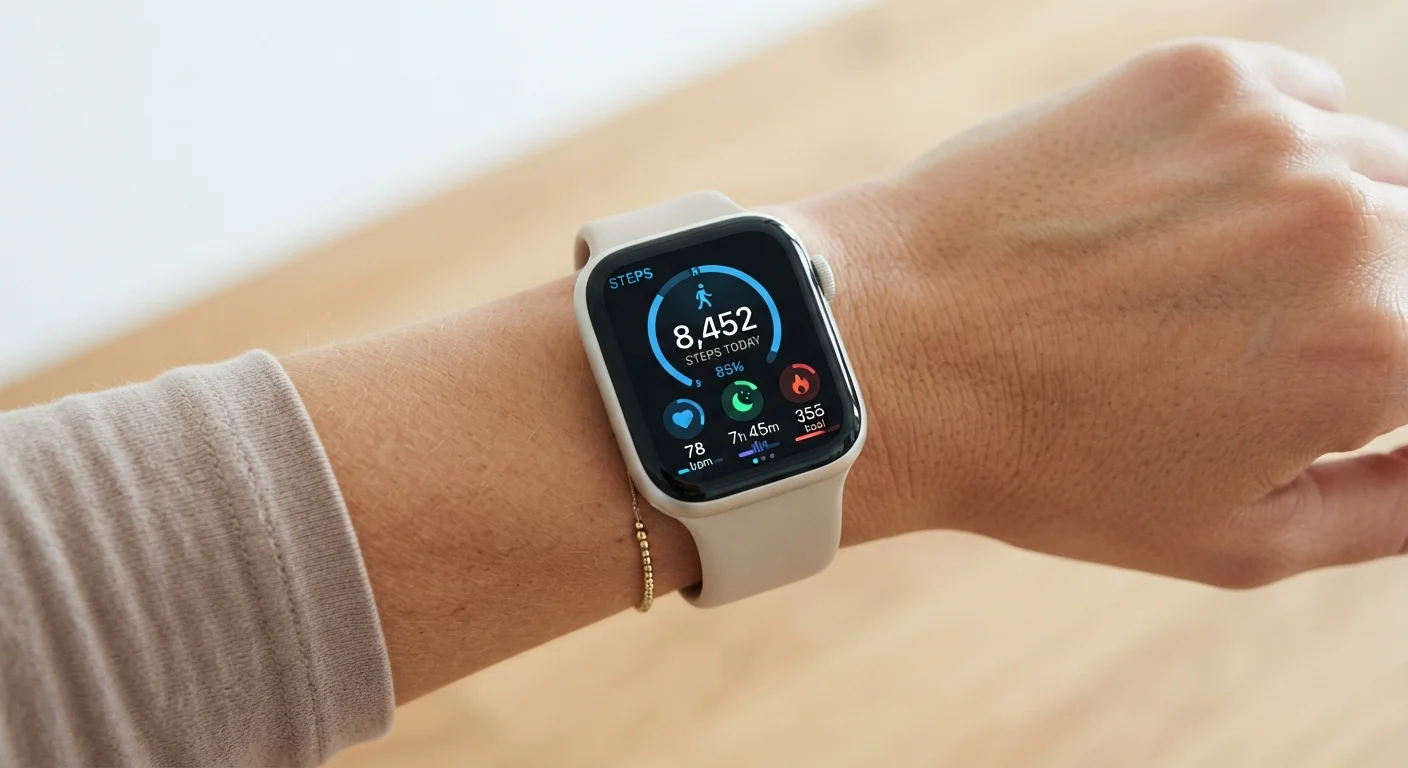
Key Takeaways
- 10,000 steps is a marketing-derived benchmark, not a clinically prescribed health target.
- Steps don't capture exercise intensity, making them poor indicators of cardiovascular fitness.
- Strength training, swimming, and cycling contribute minimally to step counts but significantly to health.
- Metrics like heart rate zones, sleep quality, and resting heart rate offer deeper fitness insights.
- A multi-metric approach to tracking gives a more accurate and actionable health picture.
The Step Count Myth — and Why It Stuck
Fitness trackers have made step counting one of the most common health behaviors in modern life. The metric is simple, concrete, and instantly satisfying — but simplicity can mislead. Understanding where step count falls short helps you use your tracker as the nuanced tool it actually is, rather than a single-number health report card.
Myth
10,000 steps per day is the scientifically established gold standard for good health.
Fact
The 10,000-step figure originated from a 1960s Japanese pedometer marketing campaign, not clinical research.
The number 10,000 was popularized by a Japanese device called the manpo-kei (meaning "10,000-step meter") ahead of the 1964 Tokyo Olympics. Research published in journals such as JAMA Internal Medicine has since found meaningful health benefits at step counts considerably below 10,000 — and that benefits tend to plateau well before very high daily totals. The right target varies by age, baseline fitness, and health status. Treating 10,000 as a universal prescription oversimplifies the evidence.
Myth
As long as you hit your step goal, you're getting enough physical activity.
Fact
Steps measure quantity of movement, not its intensity or type — two factors strongly linked to cardiovascular and metabolic health outcomes.
Public health guidelines, including those from the U.S. Department of Health and Human Services, recommend not just volume but also moderate-to-vigorous intensity activity — because intensity drives adaptations like improved heart efficiency, blood pressure reduction, and insulin sensitivity. A leisurely stroll and a brisk interval walk may produce similar step counts but very different physiological effects. Heart rate zone data and perceived exertion are far better proxies for intensity than steps alone.
Myth
If an activity doesn't add steps, it doesn't count toward fitness.
Fact
Swimming, cycling, rowing, strength training, and yoga all deliver measurable fitness benefits with little to no step contribution.
Step-based trackers use accelerometers calibrated around bipedal walking. Non-ambulatory activities register few or zero steps regardless of effort. Resistance training, for example, builds muscle mass and bone density — benefits largely absent from walking — but may register as near-zero steps during a 45-minute session. Modern trackers monitor far more than steps, including active minutes, heart rate, and workout-specific modes that better capture these activities.
Myth
More steps always means better health.
Fact
Research shows diminishing returns at higher step counts, and overuse injuries can result from dramatically increasing daily step totals too quickly.
Several large studies suggest that the greatest health gains occur when moving from very low step counts to moderate ones. Beyond a certain threshold — which varies by individual — additional steps add marginal benefit while increasing injury risk, particularly for joints. Sudden, large increases in daily walking volume are a known risk factor for stress fractures and tendon overuse injuries. Gradual progression matters more than chasing an arbitrary maximum.
Myth
Step count is a reliable measure of calorie burn.
Fact
Calorie estimates from step-based trackers carry significant error margins and vary with body weight, terrain, gait, and pace.
Consumer-grade trackers estimate energy expenditure using population-level formulas that often diverge considerably from individual reality. Studies comparing wearable calorie estimates to laboratory-grade indirect calorimetry have found errors ranging from 15% to over 40% depending on the device and activity. Using step-derived calorie data to precisely guide food intake can therefore be misleading. For nutrition tracking, pairing step data with health calculators and dietary logs gives a more grounded estimate.
For a broader understanding of what tracker dashboards are actually measuring, see our guide to common fitness tracker metrics.
What a Fuller Fitness Picture Actually Looks Like
Steps Are a Tool, Not a Diagnosis
Step count data is general health information, not a substitute for professional medical evaluation. If you have cardiovascular disease, joint conditions, or other chronic health issues, consult a qualified healthcare provider before setting or interpreting physical activity goals. No tracker metric should guide clinical decisions.
Rather than abandoning step tracking, the goal is to supplement it. Here are the key metrics worth layering in:
- Heart rate zones: Time spent in moderate or vigorous intensity zones reflects cardiovascular effort in a way steps cannot.
- Resting heart rate: A declining resting heart rate over weeks is one of the clearest signs of improving aerobic fitness.
- Active minutes: Many devices now track minutes of elevated heart rate activity separately from raw steps.
- Sleep quality: Recovery directly affects exercise capacity; poor sleep undermines fitness gains even when step goals are met.
- Strength and non-step workouts: Log these manually or use sport-specific tracker modes so they're not invisible in your data.
Don't Ignore Non-Step Activity
Relying solely on step count can lead you to undervalue workouts like strength training, cycling, or swimming — activities with well-established health benefits. If your tracker shows low steps on a day you lifted weights for an hour, that does not mean you were inactive. Cross-reference multiple metrics to avoid this blind spot.
Tracking activity, nutrition, and sleep together is the most comprehensive approach to understanding your health trends over time. And if you find yourself becoming anxious about hitting daily numbers, it's worth reading about when fitness tracking becomes counterproductive.
This article is for informational purposes only and does not constitute medical advice. Consult a qualified healthcare professional for guidance tailored to your individual health needs.