
Nutrient Density vs Calorie Density: A Comparison That Changes How You See Food

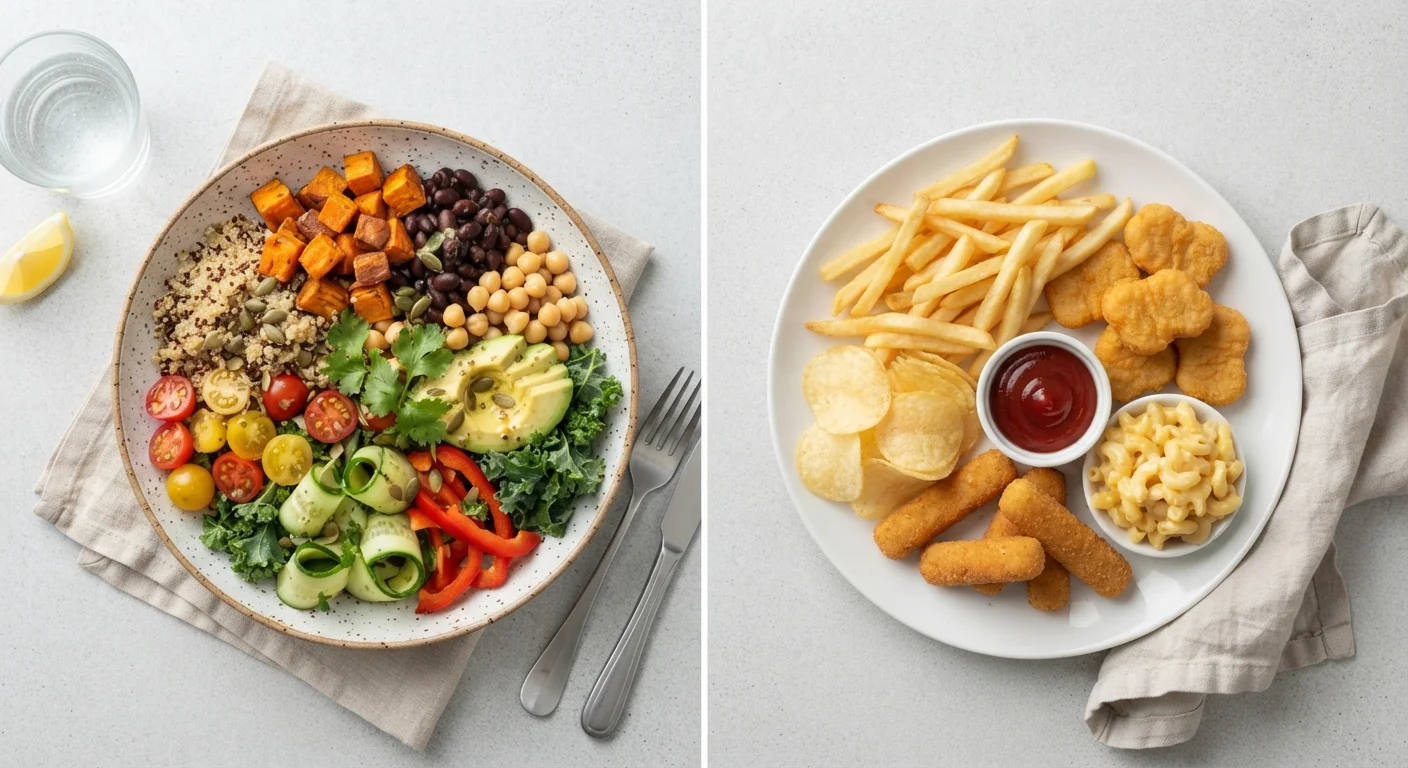
Key Takeaways
- Nutrient density measures how many vitamins, minerals, and beneficial compounds a food delivers per calorie.
- Calorie density refers to how many calories are packed into a given weight or volume of food.
- Two foods can share the same calorie count while delivering vastly different nutritional value.
- High nutrient density foods tend to support satiety, metabolic health, and long-term disease prevention.
- Understanding both concepts helps adults make more informed food choices without rigid calorie counting.
Our Verdict
Neither concept alone tells the full story of a healthy diet — but understanding both together gives you a far more useful lens than calories alone. Prioritizing nutrient-dense foods generally supports satiety and long-term health, while awareness of calorie density helps with portion context. The two frameworks are most powerful when applied together rather than in isolation.
| Best for | Recommended |
|---|---|
| Those focused on long-term health and disease prevention | Nutrient Density |
| Those managing energy balance or portion awareness | Calorie Density |
| Those building sustainable, flexible eating habits | Both frameworks combined |
Defining the Two Concepts
These two terms are often confused or conflated, but they measure fundamentally different things about food.
Nutrient density describes how much nutritional value — vitamins, minerals, fiber, protein, antioxidants, and other beneficial compounds — a food provides relative to its calorie content. A food is considered nutrient-dense when it delivers a meaningful amount of these components without contributing excess calories. Leafy greens, legumes, eggs, and oily fish are classic examples.
Calorie density (sometimes called energy density) describes how many calories are contained in a given weight or volume of food, typically expressed per 100 grams. Water-rich foods like cucumber and broth-based soups are low in calorie density; oils, nuts, and many processed snack foods sit at the high end.
These two axes are independent of each other. Nuts, for instance, are both calorie-dense and nutrient-dense. Sugary sodas are calorie-dense but nutrient-poor. Spinach is low in calorie density and high in nutrient density. Understanding where foods fall on each axis — rather than evaluating them on calories alone — gives a more complete nutritional picture. For a broader look at how these concepts fit into everyday eating, see what a balanced diet actually means.
Why Calories Alone Can Be Misleading
A 200-calorie portion of boiled lentils and a 200-calorie portion of a cream-filled cookie both register identically on a food tracker. But physiologically, they trigger very different responses. The lentils deliver plant protein, dietary fiber, folate, iron, and resistant starch — all of which influence satiety hormones, blood glucose response, and gut microbiome diversity. The cookie offers refined carbohydrates and added fats, with minimal micronutrient contribution.
This distinction matters because the body doesn't just run on energy — it requires specific micronutrients for thousands of enzymatic processes. Chronic shortfalls in vitamins and minerals can impair immune function, bone integrity, cognitive performance, and cardiovascular health, even when caloric intake is technically adequate.
~50%
Of US adults have inadequate micronutrient intakes
Research published in Nutrients (2017) found that approximately half of U.S. adults fall short on key vitamins and minerals despite meeting calorie targets.
2–3×
More fiber in minimally processed diets
Studies comparing whole-food diets to ultra-processed dietary patterns consistently find significantly higher fiber intake in the former, supporting gut and metabolic health.
This is one reason researchers and dietitians increasingly use nutrient density as a more meaningful measure of diet quality than calorie counts alone. If you're curious how calorie estimation tools handle this complexity, calorie calculators often miss important biological nuance.
How the Two Concepts Compare Across Key Dimensions
The table below illustrates how nutrient density and calorie density differ when evaluated across practical dietary considerations.
| Nutrient Density | Calorie Density | |
|---|---|---|
| What it measures | Nutritional value per calorie | Calories per unit of food weight or volume |
| Primary use case | Evaluating diet quality | Managing portion size and energy intake |
| Effect on satiety | Often high — fiber and protein promote fullness | Variable — depends on food composition |
| Typical high-scoring foods | Vegetables, legumes, eggs, oily fish | Oils, nuts, processed snacks, pastries |
| Micronutrient contribution | Central to the metric | Not accounted for |
| Relevance to long-term health | Strongly linked to chronic disease prevention | Relevant mainly to energy balance context |
Neither framework is superior in every context. Someone with very high energy needs — such as during endurance training or recovery from illness — may deliberately seek calorie-dense foods. Meanwhile, someone managing blood sugar or trying to improve diet quality would benefit most from prioritizing nutrient density. For more on how this connects to body composition rather than weight, see body composition versus body weight.
Applying Both Frameworks in Everyday Eating
The practical power of these two concepts emerges when used together. A simple mental model: aim for foods that are high in nutrient density and, where appropriate for your energy needs, moderate in calorie density. This naturally steers most people toward vegetables, whole grains, legumes, lean proteins, and whole fruit — without requiring calorie tracking.
Reading nutrition labels with this framework in mind makes panels more useful: instead of fixating on total calories, check whether a food delivers meaningful fiber, protein, or micronutrients per serving.
It's also worth exploring food groups beyond common defaults. For example, calcium-rich foods extend well beyond dairy — a reminder that nutrient density can be found across a wide range of dietary patterns. Similarly, whole foods versus ultra-processed options is a related comparison that shows how food processing typically reduces nutrient density while maintaining or increasing calorie density.
If you prefer a less tracking-focused approach, these frameworks complement intuitive eating well — calorie counting and intuitive eating represent different philosophies, but both benefit from foundational nutritional literacy.
This article is for general informational purposes only and does not constitute medical or dietary advice. Speak with a registered dietitian or qualified healthcare professional before making significant changes to your diet, especially if you have an existing health condition.